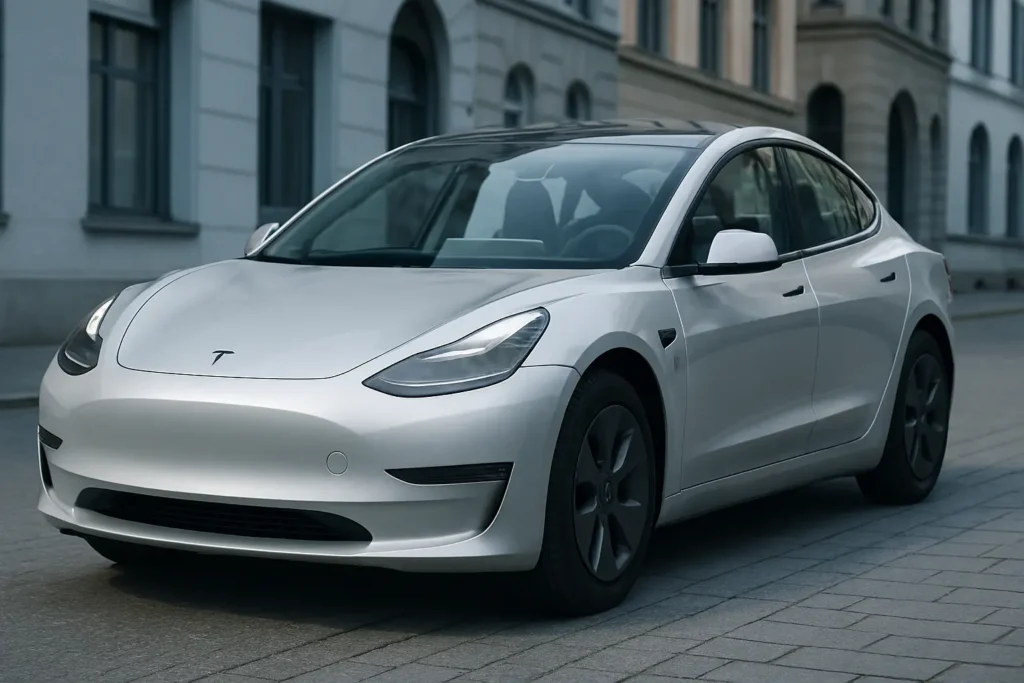
Tesla unveiled a lower-priced Model 3 on Friday across Europe, two months after its U.S. debut, as the electric carmaker scrambles to reverse sliding sales while competitors chip away at its dominance.
The new stripped-down version arrives at a critical moment. European buyers have been turning away from Tesla this year, with registrations fallen sharply as shoppers discover they have real alternatives now—Volkswagen’s ID.3, BYD’s Atto 3, and a growing roster of affordable electrics that didn’t exist just three years ago.
Tesla calls it an “ultra-low cost of ownership” car in a post on X, though that requires some interpretation. The launched variant drops premium finishes and features you’d find on pricier models. But here’s what matters: you still get a driving range above 300 miles (480 km), which beats most budget competitors.
In Germany, the Standard Model 3 lists at 37,970 euros ($44,299.60). Norwegian buyers see 330,056 crowns ($32,698), while Swedish customers face 449,990 crowns ($47,820). The German pricing puts it 8,000 euros below the existing Long Range version—significant savings, though still far from cheap.
Deliveries expected to start in the first quarter of 2026 mean you’re looking at several months before these actually hit roads. That timeline shows Tesla isn’t exactly rushing, even as competition intensifies and demand slows across the continent.
Europe’s EV market isn’t behaving like Tesla expected. The company is grappling with a reality where buyers have options, real ones, and many are opting for them. Volkswagen refreshed its Model Y competitors. Chinese manufacturers aren’t just showing up—they’re selling vehicles below $30,000 with features that surprise people used to thinking cheap means compromised.
CEO Elon Musk scrapped plans for an all-new $25,000 EV earlier this year, choosing instead to build lower-cost versions of existing models. That shift sparked concerns among analysts who worry about cannibalising higher-margin cars. If buyers who would’ve paid 45,970 euros now pay 37,970 euros, Tesla’s revenue takes a hit even if sales volume climbs.
The low-cost crossover approach in October seeks to defend market share, but it’s defensive, not innovative. That’s unusual for a company that built its reputation on being years ahead.
Walk into a European dealership today and you’ll find electric vehicles that weren’t there last year. BYD’s Atto 3 offers surprising quality at surprising prices. Volkswagen’s ID.3 line-up has matured beyond early complaints. Other European rivals are offering vehicles that feel finished, tested, ready—not like first attempts.
Chinese manufacturer brands keep arriving with aggressive pricing that undercuts everyone. They’re not household names yet, but market dynamics favor challengers when the leader stumbles. Tesla registrations falling sharply across Europe this year tells you incumbency means less than it used to.
You’re witnessing something larger: the normalization of electric cars. When Tesla was the only serious option, buyers tolerated quirks. Now they don’t have to. That changes everything about how the company needs to compete.
Elon Musk keeps shifting focus toward artificial intelligence, robotaxis, and humanoid robots as key hopes for near-term revenue growth. That’s forward-thinking, maybe, but it leaves questions about who’s minding the core business. Tesla sells cars, and those sales are softening while leadership talks about robots.
The dual approach—launched budget models while promising robotaxi futures—feels scattered. European buyers deciding between a Tesla and a Volkswagen don’t care about humanoid robots. They care about price, features, reliability, and whether the car fits their life.
Analysts wonder if Tesla can execute both strategies simultaneously. The company built its market position by focusing obsessively on electric vehicles when others dismissed them. That focus is harder to find now.
The Standard variant offers you 300-plus miles of range, which handles most driving needs across European countries where charging infrastructure keeps expanding. For daily commuting and weekend trips, that’s sufficient. You lose premium features—better interior materials, advanced options—but the fundamental car remains capable.
Price matters, obviously. At 37,970 euros in Germany, you’re still paying premium territory, just slightly less premium. Norwegian pricing at $32,698 looks more competitive, reflecting different tax structures and incentives. Swedish buyers at $47,820 might question whether the savings justify choosing Tesla over local alternatives.
Deliveries starting in first quarter 2026 means deciding now requires patience. A lot can change in several months. Competitors will launch their own updates. Incentives might shift. The lower-priced Tesla you’re considering today might face different competitive circumstances when it actually arrives.
Tesla is aiming to boost sales through price, the oldest strategy in business. Whether it works depends on factors beyond pricing—brand perception, service quality, charging convenience, and how European buyers feel about Musk’s increasingly political profile.
The company still leads in some metrics: charging network, software updates, brand recognition. But leads shrink. European and Chinese rivals aren’t standing still, and they’re offering vehicles that meet real needs at prices that make sense.
You’re watching Tesla adapt to being just another car company, not the revolutionary exception. That’s not necessarily bad, but it’s different. The launched lower-priced Model 3 represents that transition—practical, competitive, necessary, but no longer shocking.