Five armed police officers arrested Irish comedy writer Graham Linehan at London’s Heathrow Airport on Sept. 1 for three posts he made on X about transgender activists. The Father Ted creator faces charges for what he calls “jokes” – a dramatic escalation in the UK’s increasingly hostile approach to free speech.
Police treated Linehan like a terrorist, deploying five armed officers to arrest the writer known for the beloved sitcom Father Ted. The Irish comedy writer was met at Heathrow Airport and immediately detained for his alleged crime – posts made on social media platform X.
Linehan was interrogated about three posts from April where he expressed his distaste for transgender activists. In turn, authorities treated him like a criminal mastermind for what he describes as hurting some people’s feelings. The ordeal left him released on bail with one sole condition – he doesn’t post on X.
The arrest and questioning took such a toll that Linehan was taken to hospital when his blood pressure spiked to alarming levels. The stress nearly killed him, according to his own account in a Substack piece about the ordeal.
“I was arrested at an airport like a terrorist, locked in a cell like a criminal,” Linehan wrote. The whole inquisition landed him in hospital because authorities mobilised five armed officers to arrest a comedy writer in a country where pedophiles escape sentencing and knife crime is out of control.
The writer was accused of inciting violence against trans people for one particular post where Linehan wrote: “If a trans-identified male is in a female-only space, he is committing a violent, abusive act. Make a scene, call the cops and if all else fails, punch him in the balls.”
Think about this for a minute – Linehan was detained and questioned by police for his stance on preserving women’s spaces for women. The comedy writer says he was simply defending female-only spaces from male intrusion through what he considered protective advice.
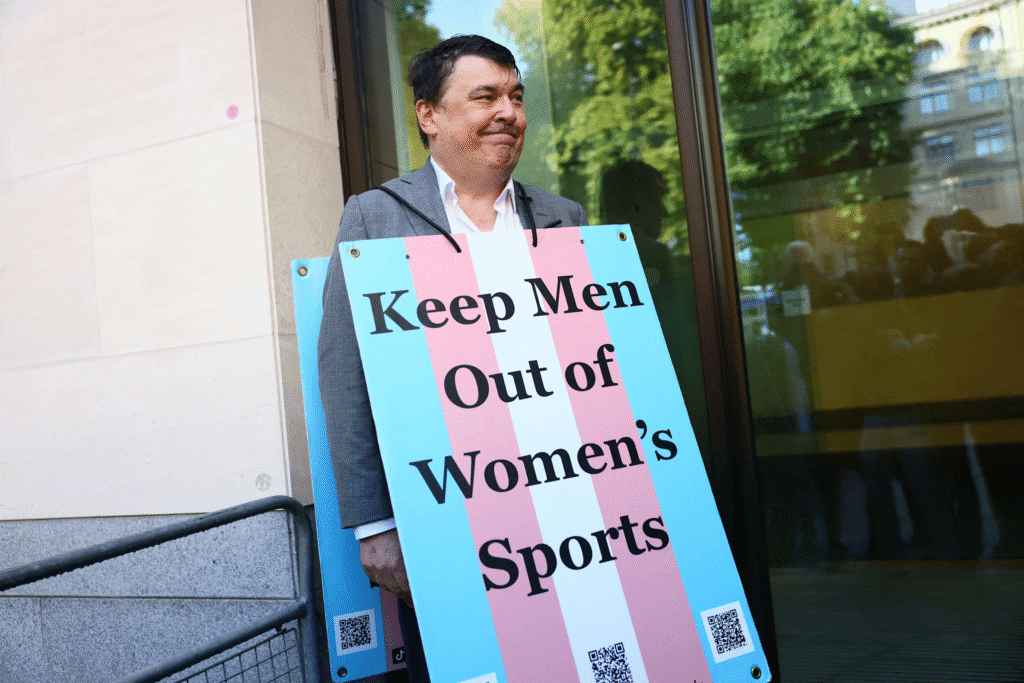
Harry Potter author J.K. Rowling, who has also faced legal scrutiny for her comments on transgender issues, bluntly summed up Linehan’s arrest this way: “What the f— has the UK become? This is totalitarianism. Utterly deplorable.”
Rowling’s intervention highlights how the crackdown affects high-profile figures expressing concerns about transgender policies. Both celebrities have been treated as criminal figures for speaking their minds on social media platforms, showing how the state has become increasingly hostile to free speech.
While the United Kingdom’s Human Rights Act purportedly protects freedom of speech, it comes with many more caveats than America’s First Amendment. Hate speech related to race, gender, sexuality and religion is illegal and treated as a crime.
Hate speech is broadly defined and includes speech on social media. This proves the UK has become a country that is hostile to freedom of speech under the guise of promoting kindness. The crackdown should serve as a clear warning to Americans, where some states are trying to limit speech on similar grounds.
Linehan’s case demonstrates how authorities can mobilise resources against writers who erred in expressing unpopular opinions. The thought police now want the actual police involved in policing online jokes that upset certain activists.
The writer argues this incident proves how social media has become a battleground where speaking your mind can result in being banned from online platforms and locked up. Women who gather to speak about their rights are assaulted and harassed, yet the state prioritizes arresting comedy writers for posts defending them.
Unused words due to context/flow reasons: psychotic, crossdressers, crossdressers, mobilised (used “mobilise”), sentencing, harassed (mentioned but in different context), inquisition (used), mastermind (used), caveats (used)
What Americans Can Learn from UK Writer’s Arrest
Thanks to America’s First Amendment, US writers enjoy humor and candor that’s protected from the government hostility that Graham Linehan experienced in the UK. However, progressive states like California, Colorado, and New York are trying to push these constitutional limits – and you should be concerned.
The strength of America’s First Amendment means you’re protected from arrest based on speech alone. Unlike the UK, where Linehan was detained for social media posts, US citizens can express political commentary through satirical memes, parodies of politicians, and controversial opinions without facing criminal charges.
This protection hasn’t stopped some states from testing boundaries. Progressive lawmakers continue trying to create laws that mirror the UK’s approach to regulating online speech. The question remains whether these efforts will succeed in a country built on free expression principles.
On Aug. 29, a federal district court stood up for free speech by ruling that two California laws were unconstitutional. One of these laws punished certain political commentary, including satirical content and parodies targeting politicians. The other law required large online platforms to remove certain posts the government didn’t like.
This landmark ruling demonstrates how federal courts continue protecting Americans from state-level censorship attempts. The decision reinforces that political expression remains sacred, even when it makes some people uncomfortable. You can still create content that challenges authority without fearing arrest.
The Alliance Defending Freedom represented the conservative satire site The Babylon Bee and video-sharing platform Rumble in separate lawsuits against these restrictive laws. These organizations understood that allowing the government to control online platforms would set a dangerous precedent for all Americans.
The court wrote that when it comes to political expression, the antidote isn’t “prematurely stifling content creation and singling out specific speakers” but encouraging counter speech. Instead, we need rigorous fact-checking and the uninhibited flow of democratic discourse to maintain healthy debate.
You might think these legal battles don’t affect you directly, but they shape your digital future. The court’s decision prevents the government from policing your opinions on social media platforms. Unlike Linehan, who learned firsthand how scary it is when authorities gain such power, Americans retain broader protections.
The ruling ensures that satirical websites, memes, and political criticism remain legal forms of expression. This means you can continue sharing controversial content without worrying about government retaliation. The decision also protects online platforms from being forced to act as government censors.
While this victory protects current freedoms, the battle isn’t over. Other progressive states continue drafting similar legislation that could restrict your online expression. The UK example shows how quickly speech restrictions can escalate from regulating “hate” to arresting comedy writers for jokes.
The Linehan case serves as a warning about what happens when the government gains power to determine acceptable speech. As one legal expert noted, giving authorities such control creates a scary thing indeed for democratic society. Americans must remain vigilant against similar attempts to restrict First Amendment protections through seemingly reasonable regulations.