Norfolk County Council has started using artificial intelligence to spot elderly and vulnerable adults who might fall at home. The system has already read through care records belonging to 12,000 people living across the county. Once the technology identifies someone as high risk, social workers pop round for a visit to review their situation and fit things like grab rails and ramps if they’re needed.
Here’s something that might surprise you: around 40% of people who end up in a care home get there because they’ve had a fall. That’s not a small number. Thousands of hospital admissions happen every year just from falls alone. So what Norfolk County Council is doing isn’t just about ticking boxes – it’s about catching problems before someone gets hurt.
The AI program works by going through case care notes and spotting patterns that suggest someone’s at risk of falling. Think of it like having an extra pair of eyes looking at everyone’s situation, figuring out who needs help most urgently. After a successful pilot scheme with 1,250 residents, the council decided to roll this technology out across the whole county. The pilot showed it actually works, which is why they’ve gone bigger with it now.
Real Stories from People
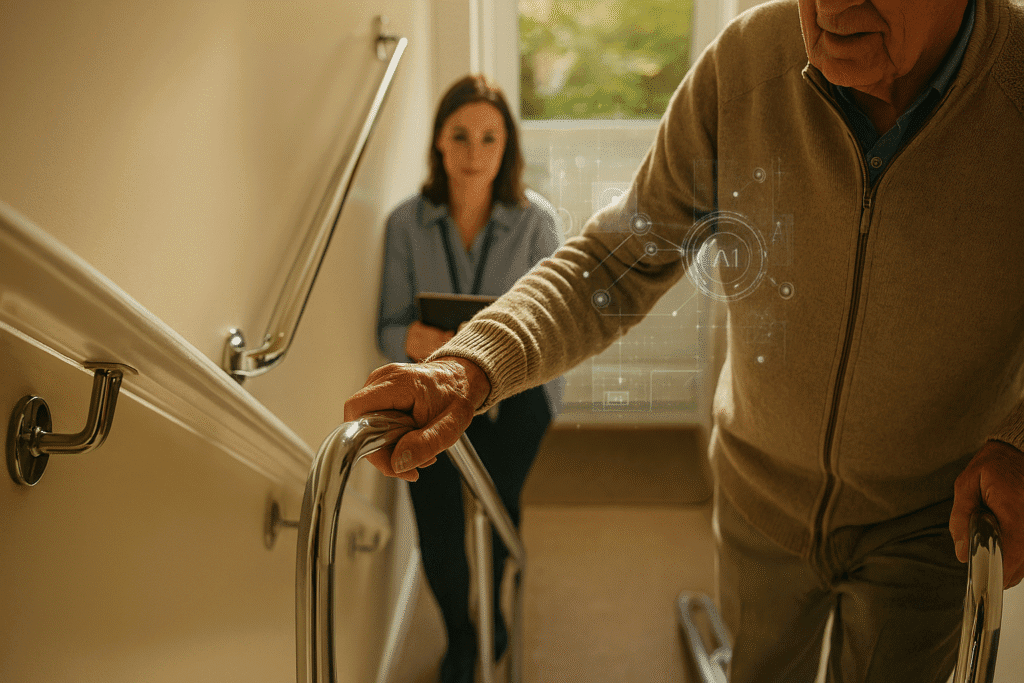
One couple who got supported through the pilot didn’t want their names used, but they were happy to share what happened. The husband and wife had new grab rails fitted by their front door and up the staircase. “We’re really happy they were fitted,” they said. “We think it’ll have a big impact – it’s making us feel more confident about going up the stairs.”
What struck them most was the chat they had with the team. They talked about practical steps they could take now to prepare for getting older. “We honestly didn’t realise what help was out there for us,” the couple said. Sometimes you don’t know what support exists until someone actually shows up at your door and explains it all.
The People Behind the Program
Alison Thomas, who’s the cabinet member for adult services, reckons the scheme has saved the authority quite a bit of money while also improving people’s wellbeing. That’s a win on both fronts. She’s been watching how the pilots have proved that intervening early with residents – whether they’re already known to adult social services or not – helps deliver a proper reduction in falls.
When falls go down, so do fractures. When fractures drop, hospital visits decrease. And when all that happens, social care costs naturally come down too. “This reduces associated problems and improves overall outcomes,” Thomas explained. It’s not rocket science, really – stop the fall, stop everything else that comes after it.
How Much Money We’re Talking About
Norfolk County Council has planned to spend over £707m pounds on adult social care during the financial year 2025/26. That’s a massive chunk of money. Part of why they’re backing this AI system is because it makes that spending go further. Nick Clinch, the director of transformation in adult social services, put it plainly: “It definitely has made a difference. We’ve got strong evidence now that supporting people to reduce falls will reduce how much social care they’ll need down the line.”
The authority has been careful to say they’ll use this technology in a “safe, ethical and transparent way”. Nobody wants their care records being read by machines without proper safeguards. The program doesn’t replace actual people doing the care work – it just helps them figure out who to visit first.
More Than Just Technology
This isn’t just Norfolk County Council working alone. The whole project is a collaboration involving voluntary groups, community organizations, social enterprises, local councils, and NHS bodies too. Getting all these different organisations working together means someone who gets identified as high risk can get help from multiple directions.
The roll-out builds on what they learned from those 1,250 residents in the trial phase. The technology was able to prioritise individuals who most urgently needed attention, and now social workers have a better system for making sure nobody slips through the cracks. When they visit someone’s home, they’re not just there to install equipment. They’re having proper conversations about what would make elderly or vulnerable adults feel safer day-to-day.
What Happens Next
If this works in Norfolk – and the early signs suggest it is – there’s no reason it couldn’t reshape how we look after older people everywhere. The whole idea is simple: don’t wait until someone is lying at the bottom of the stairs. Catch the warning signs, make a few practical changes, have an honest conversation about getting older, and suddenly a broken hip becomes something that didn’t happen.
Behind the scenes, care notes are still being reviewed, and the team is still making their rounds. For families with elderly relatives in Norfolk, that’s worth something. Not a perfect system, not a cure-all – but a genuine attempt to make sure the people who need a knock at the door actually get one.