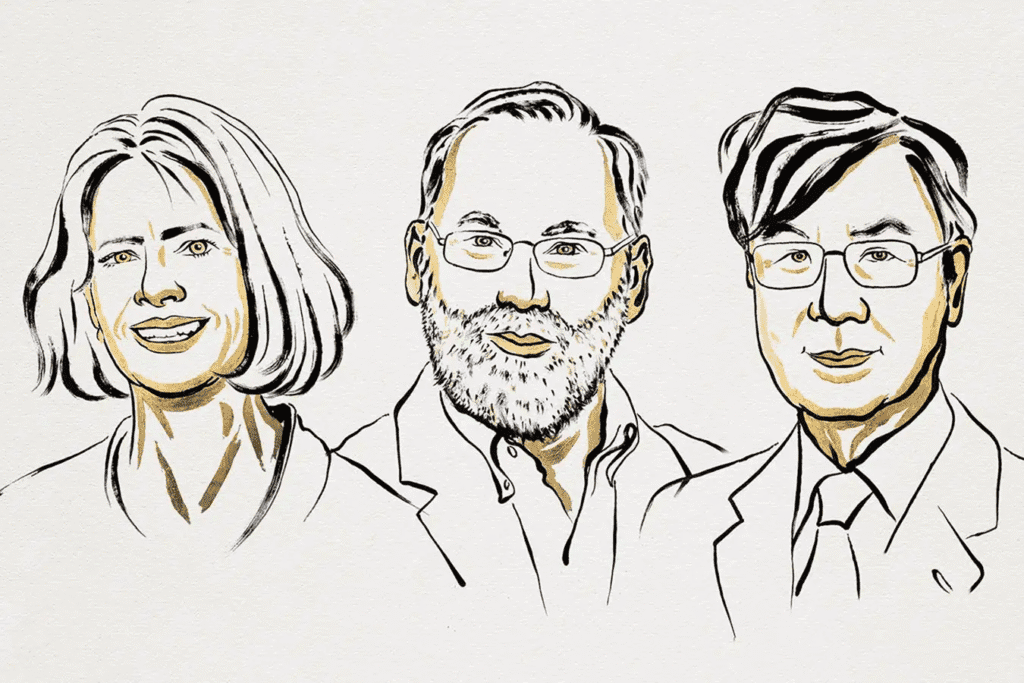
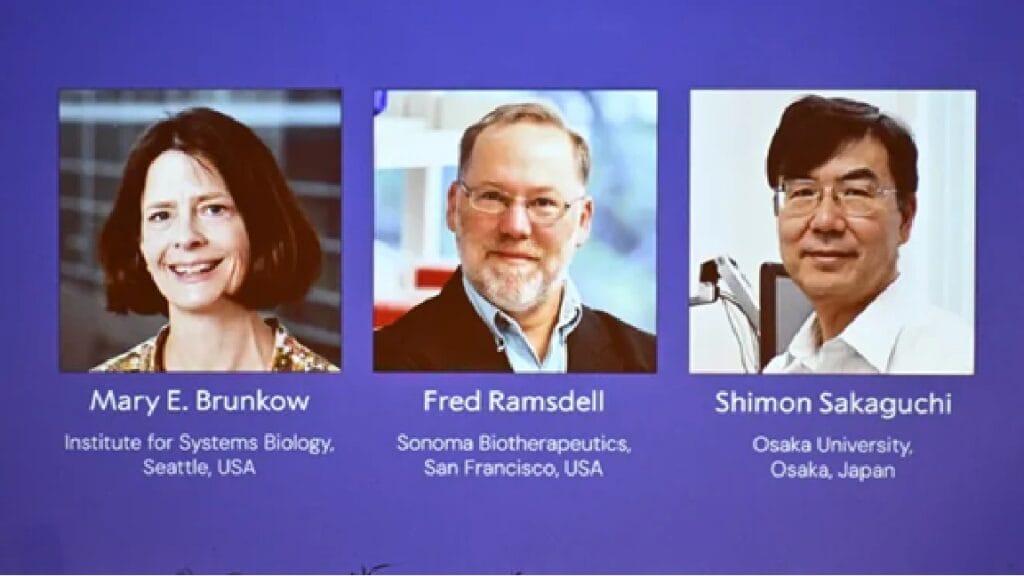
Three researchers have cracked a fundamental puzzle about how our bodies defend themselves without self-destructing. American scientists Mary Brunkow and Fred Ramsdell, along with Japan’s Shimon Sakaguchi, won the 2025 Nobel Prize in Physiology or Medicine on Monday for discovering how regulatory T cells keep the immune system in check, opening doors to new autoimmune disease and cancer treatments.
The Nobel Assembly of Sweden’s Karolinska Institute medical university announced the winners in STOCKHOLM, Sweden, recognizing work that could reshape medicine. Each scientist will receive a prize sum of 11 million Swedish crowns ($1.2 million) as well as a gold medal presented by Sweden’s king. Their breakthrough explains something doctors have puzzled over for decades: how we can fight all imaginable microbes without our defenses turning against us.
What Makes These Immune Cells Special
Think of regulatory T cells as peacekeepers patrolling your body. The laureates identified these specialized T-cells that act as the immune system’s security guards, constantly keeping immune cells from attacking our own body. Without them, your defense system would be like an army that can’t tell friend from enemy.
Marie Wahren-Herlenius, a rheumatology professor at the Karolinska Institute, put it simply: “This year’s prize relates to how we keep our immune system under control so we can defend against infections and still avoid autoimmune disease.” The discoveries have laid the groundwork for understanding why some people’s bodies attack themselves while others don’t.
Meet the Scientists Who Changed Medicine
Brunkow currently works as senior programme manager at the Institute for Systems Biology in Seattle. Ramsdell serves as scientific adviser at Sonoma Biotherapeutics in San Francisco, which he co-founded, focusing on turning this research into real therapies. Sakaguchi, a professor at Osaka University in Japan, has spent decades unraveling how these cells function.
When the institute’s Thomas Perlmann managed to reach Sakaguchi by phone at his lab, the moment was electric. “He sounded incredibly grateful,” Perlmann said. The professor told reporters outside his university laboratory: “I feel it is a tremendous honour,” the Kyodo news agency reported. Perlmann noted that Sakaguchi expressed the recognition felt like a “fantastic honour” and “was quite taken” by the unexpected call.
From Lab Discovery to Patient Treatments
Here’s where it gets exciting for you: more than 200 trials on humans involving regulatory T cells were ongoing, Perlmann said after announcing the winners. These trials target everything from types of cancer to inflammatory bowel disease. The prize-awarding body emphasized in a statement that “their discoveries have completely transformed our understanding of immune control.”
Right now, specific therapies had yet to win market clearance, but researchers are racing to translate this science into treatments. Perlmann said he could only reach one of the three scientists initially to break the news. The work has created openings for addressing conditions where the immune system goes haywire—autoimmune diseases like rheumatoid arthritis, lupus, and multiple sclerosis, as well as certain cancers where immunity needs boosting.
The Bigger Picture of Nobel Recognition
Alfred Nobel, the Swedish inventor of dynamite and wealthy businessman, established these awards through his will. They have been awarded since 1901 to honor outstanding contributions in science, literature, and peace, with interruptions mainly during the World Wars. The economics prize was added later and gets funded by Sweden’s central bank, the Riksbank.
In accordance with tradition, the award for Medicine kicks off the annual Nobels—arguably the most prestigious prizes in science, literature, peace, and economics. Winners are selected by expert committees from various institutions. All prizes get awarded in Stockholm, except for the Peace Prize, which goes to Oslo, a possible legacy of the political union between Sweden and Norway during Nobel’s lifetime.
Standing on the Shoulders of Giants
Past recipients of the Nobel Prize in Physiology or Medicine include renowned scientists such as Alexander Fleming, who shared the 1945 award for discovering penicillin—still one of medicine’s game-changers. In recent years, the prize has recognized major breakthroughs, including those that enabled development of COVID-19 vaccines, which saved millions during the pandemic.
Last year’s medicine prize went to U.S. scientists Victor Ambros and Gary Ruvkun for their discovery of microRNA and its key role in how multicellular organisms grow and live, helping explain how cells specialise into different types. Each year builds on previous work, showing how science progresses through collaboration and persistence.
What Happens Next
More than a century after their inception, Nobel Prizes remain steeped in tradition. The awards culminate in ceremonies attended by royal families of Sweden and Norway, followed by lavish banquets held on December 10—the anniversary of Alfred Nobel’s death. Winners dress in formal attire, give speeches, and join an exclusive club of humanity’s greatest minds.
The remainder of this year’s prizes will be announced over the coming days, continuing this first week of the Nobel season. Physics comes Tuesday, chemistry Wednesday, literature Thursday, and the Peace Prize Friday. Each announcement brings fresh excitement to Stockholm and the global scientific community, celebrating human curiosity and breakthrough thinking that pushes our understanding forward.