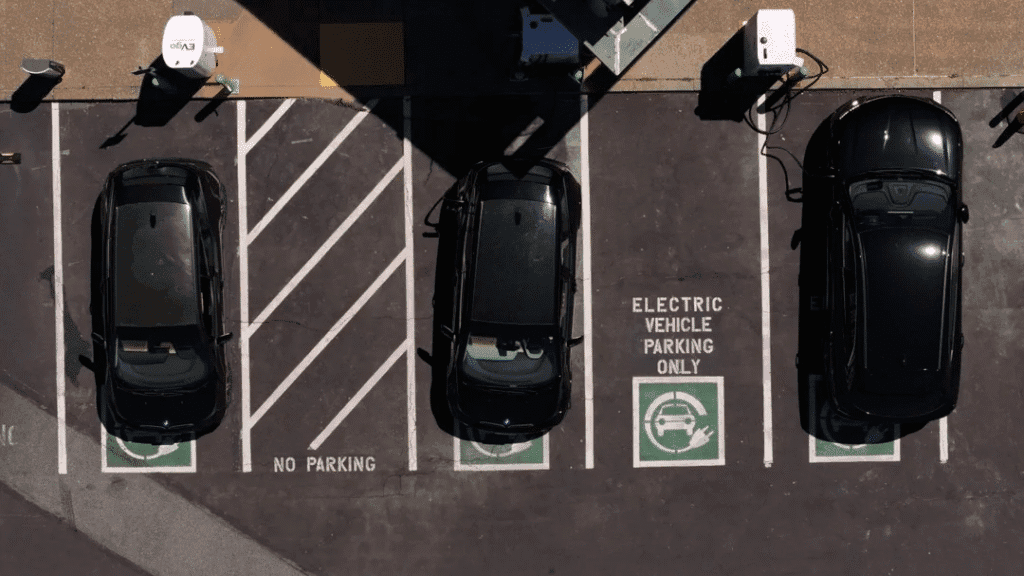
Electric vehicle sales are expected to plummet after the Trump administration eliminated the $7,500 federal tax credit a week ago, yet automakers like Ford, General Motors, and Tesla continue investing billions in EV production despite the gloomy outlook for America’s electric future.
The third quarter saw an EV sales surge as buyers rushed to grab vehicles before the discount expired, with GM selling more than doubled what it sold a year earlier and Tesla breaking a six straight months streak of declining numbers. But the sharp rise masks a troubling reality: Ford CEO Jim Farley warned last month that he expects EV sales fall to just 5% of US market, down from 7% last year, while General Motors CFO Paul Jacobson predicts EV demand drop off “precipitously” in the rest of year.
Big Money Still Flowing Into Electric Dreams
Despite the gloomy outlook, Ford announced in August a massive $5 billion investment in EV production, calling it their “next Model T moment” – a reference to the Ford car that helped introduce internal combustion vehicles to the mass market a century ago. “I think it’s going to be a vibrant industry, but it’s going to be smaller, way smaller than we thought, especially with the policy change,” Farley said at a recent company event.
Hyundai is also not pulling back on its EV investment plans in the US market, even after immigration officials arrested 475 workers at its new EV and battery plants under construction in Georgia. Hyundai CEO José Muñoz stressed at a recent investor day event that the plant shift between building EVs and traditional gasoline powered cars easily based on market demand as part of the company’s plan to stay flexible.
Regulations Created the Push, Politics Pulled the Plug
What forced automakers shift to electric vehicles in the first place were federal regulations from the Biden administration that aimed to have EVs make up 50% of the American new car market by 2030, with imposed steep penalties for automakers didn’t hit target. Those regulations rolled back under the Trump administration, and steep financial penalties for violating emission limits were eliminated in the July tax and spending bill passed by Republicans in July.
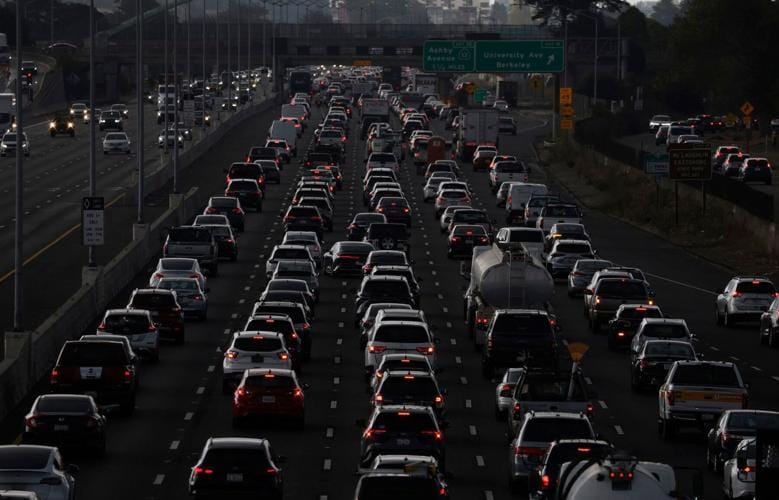
California and eight other states – Massachusetts, New Jersey, New Mexico, New York, Oregon, Rhode Island, Vermont, and Washington – had imposed mandates that essentially banned sale of gasoline-powered vehicles by 2035. These states account for a quarter of US car sales. But Congress moved to end California and other states’ abilities to impose own stricter emissions rules. The fight taken to federal court could take considerable time to resolve, meaning changes in administrations over the next decade could ultimately bring ban back by 2035. Meanwhile, Europe and China are moving ahead with own stricter emissions rules that force electric vehicle purchases.
Hybrids Make a Comeback as Gas Loses Its Stigma
Rather than going all-in on all-electric cars, automakers focusing on hybrid-vehicles that combine electric motors with internal combustion engines (ICE). “There’s still an aggressive push for EVs. But ICE no longer four-letter word anymore,” said Daniel Ives of Wedbush Securities, adding they’re “going back” to their “roots.”
America’s car companies say they didn’t see the same market demand for all-electric vehicles as cars powered by gasoline. The regulations in place under the Biden administration were “putting us in box” that would have “ultimately resulted” in a “significantly smaller US auto industry” because they “wouldn’t have been permitted” to “sell internal combustion vehicles” at “anywhere near volume” they would have “sold them,” GM CFO Jacobson told GM’s investors presentation last month. Despite regulations and support for EVs, “including $7,500 tax credit,” “customers weren’t adopting” at the “rate government wanted.”
Why Automakers Still Find Electric Attractive
Jacobson said GM sees “longer-term growth” in demand for EVs even “without tax credit” and other support for an all-electric future, with the company working to “meet growing EV demand.” They “need to let it settle” and “understand” where “natural EV demand” is “going forward” and how to “meet natural demand,” which will “take little bit of time” and they’ll “probably adjust” their “footprint” “a little bit.”
Automakers find EVs attractive for competitive reasons: it takes fewer hours of labor to produce EV than a gasoline powered car with its complicated engine and transmission, making them potentially more profitable than traditional gasoline powered cars. Demand for EVs could start to increase again if the cost of producing EVs, especially batteries that make up large part of the cost of electric vehicles, continues to drop. Virtually every automaker is announcing plans for less costly battery technology.
Affordable Electric Trucks Could Change Everything
As part of its $5 billion EV investment plan announced last month, Ford said it will sell EV pickup for $30,000, making one of the most affordable available. By comparison, the Ford F-150 Lightning pickup has a starting price of $55,000. The new line build for the affordable EV pickup is due up and running by 2027, Ford said last month.
Ford thinks the world changing, even if it’s changing more slowly than people originally thought. “We took inspiration from the Model T — the universal car that changed the world,” said Doug Field, Ford’s chief EV digital and design officer, said Monday. “We think today turning point for Ford Motor Company and the auto industry.”
The Tesla Factor and Wall Street Dreams
Automakers chasing higher stock prices with their EV plans looked at how Tesla greater market cap by far than any other automaker, even though it sells fraction of cars they do – a case for years even before CEO Elon Musk and the company’s fans on Wall Street started talking about ambitious-but-yet-to-be-realized plans for robotaxis and robots driving up value of the company in the future.
What happened in the last quarter tells the story: 10% of all cars sold in the US were electric during that record sales period. But that come back to Earth with a heavy thud is now unlikely get back up for a long time. The time ahead will test whether the auto industry can navigate a future where policy shifts as fast as technology.