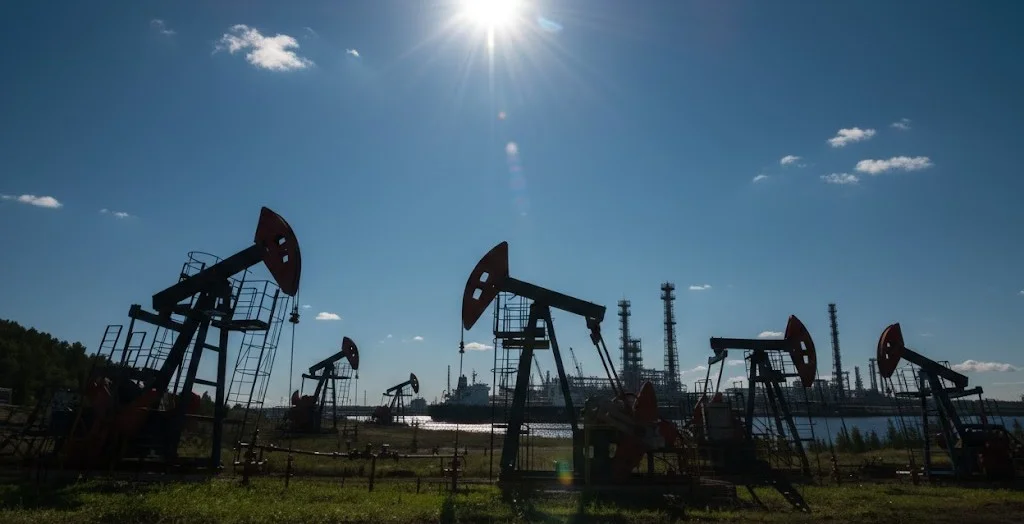
Oil prices crept higher Tuesday. Not by much, but enough to keep traders guessing about where things go from here. Brent crude added 22 cents to reach $62.29 a barrel by early afternoon ET (1813 GMT). West Texas Intermediate climbed 25 cents to $58.26.
Monday saw bigger moves. Prices jumped over 2% that day. Brent had its best single-day performance in two months, while WTI posted gains not seen since mid-November.
Here’s what’s got everyone scratching their heads. The U.S. economy grew faster than anyone expected in the third quarter. Consumer spending stayed robust, according to numbers the Commerce Department’s Bureau of Economic Analysis dropped Tuesday morning. Sounds great, right?
Well, hold on. Other data from the same day tells a different story. Consumer confidence fell in December. People are getting nervous about their jobs and income. Factory production didn’t budge in November—it actually declined back in October. So which signal do you trust?
Phil Flynn, who analyzes markets for Price Futures Group, put it pretty simply: “The market is trying to decide whether we should be more excited about the demand coming from the strong growth or worried that the Fed is going to have to put on the brakes on that growth to get inflation under control.”
That’s the gamble traders face right now. Strong GDP means people want more oil. But it might also mean the Federal Reserve steps in with rate hikes to cool everything down. Nobody’s sure which way this tips.
Then there’s Venezuela. President Donald Trump made waves Monday saying the United States might keep—or just sell off—oil it seized near the Venezuelan coast over recent weeks. He’s pushing what amounts to a blockade, stopping oil tankers under sanctions from getting in or out of the South American country.
Tanker loading practically stopped Monday. Ships that used to haul Venezuelan crude internationally? Most are now just moving stuff between domestic ports. The U.S. crackdown on vessels really squeezed exports.
And Russia’s back in the headlines. Late Monday, Russian forces hit Ukraine’s Black Sea port of Odesa. Damaged some port facilities and a ship and sending drones and missiles screaming across multiple Ukrainian regions. . Ukraine responded with drone strikes that damaged two vessels, a couple of piers, and even sparked a fire in some village in Russia’s Krasnodar region.
Janiv Shah from Rystad Energy sees the confusion. “The market appears to be wrestling between the oversupplied bearish factors and the latest supply concerns from the U.S. blockade reducing Venezuelan loadings and exports, as well as Russia and Ukraine trading blows to vessels and ports late on Monday,” he said.
Ukraine’s been going after Russia’s so-called shadow-fleet. These are oil tankers trying to slip past sanctions. The targeting focuses on maritime logistics—the whole network moving Russian crude to buyers willing to ignore international pressure. Every hit on vessels or port infrastructure cuts into Russian export capacity.
But step back a second. Markets aren’t exactly tight right now. Barclays released a note this week saying oil markets should stay well supplied through early 2026. Plenty of crude sloshing around. However—big however here—they expect that oil surplus to shrink down to just 700,000 barrels per day by the fourth quarter of 2026. Any prolonged disruption could make things tighter fast.
What’s this mean for regular people? Your fuel costs could swing hard depending on what wins out. Economic growth usually pumps up demand. More driving, more shipping, factories running overtime. All that needs oil. But if Venezuelan supply stays offline and Russian exports get whacked by attacks, prices climb no matter what demand does.
The economic picture gets murkier when you dig into details. Sure, third-quarter GDP looked solid. But December’s consumer confidence drop? That’s people signaling they’re worried. Worried consumers don’t spend as much. Less spending means less demand for crude eventually.
Factory production staying flat in November after October’s decline doesn’t inspire confidence either. Manufacturing drives industrial oil demand. Factories sitting idle or running below capacity don’t burn through much energy.
Venezuela remains the biggest question mark. How long does Trump keep this blockade going? The seized oil off the coast isn’t reaching anyone right now. That’s supply just sitting there, not meeting demand anywhere. Political winds in Washington and Caracas will determine when—or if—that changes.
Traders are basically stuck. Fundamentals say markets are oversupplied. Geopolitics says supply could get cut fast. The attacks on infrastructure in Ukraine and Russia prove how quickly situations shift. One drone strike changes calculations overnight.
There’s also the Fed angle nobody can ignore. If growth stays strong and inflation ticks up, interest rates could rise. That slows the economy and kills oil demand. But right now? Too early to call. Data’s all over the place.
Looking toward 2026, that shrinking surplus Barclays mentioned matters more than it might seem. Markets feel comfortable now with decent supply cushions. But 700,000 barrels per day of surplus isn’t substantial. One serious disruption—geopolitical chaos, weather disasters, surprise OPEC cuts—flips everything into deficit territory fast.
Tuesday’s small gains reflect all this uncertainty. Traders aren’t making bold moves either direction. They’re waiting. Waiting to see if economic strength holds. Waiting to see if Venezuelan supply comes back online. Waiting to see if Russia and Ukraine escalate further. The next few weeks tell us whether Monday’s 2% rally was the start of something bigger or just a brief spike before reality sets back in.
The tug-of-war between demand signals and supply risks isn’t resolving anytime soon. Strong consumer spending fights against deteriorating confidence. Venezuelan blockades fight against oversupplied fundamentals. Every data point pulls in a different direction. That’s why oil prices only edged up modestly Tuesday instead of making dramatic moves. Markets hate uncertainty, and uncertainty’s all anyone’s got right now.