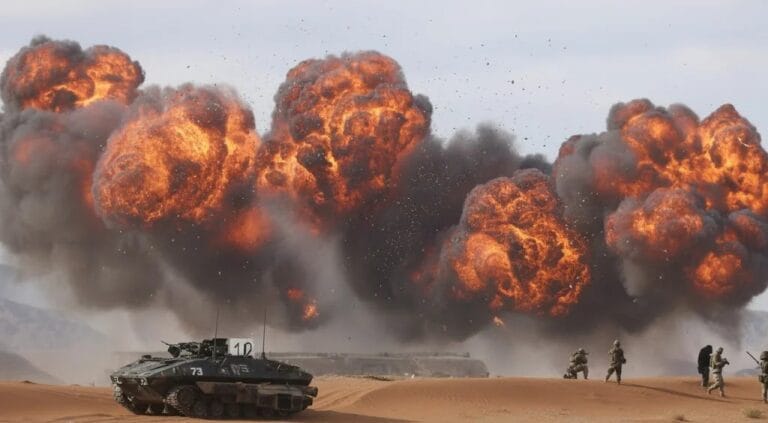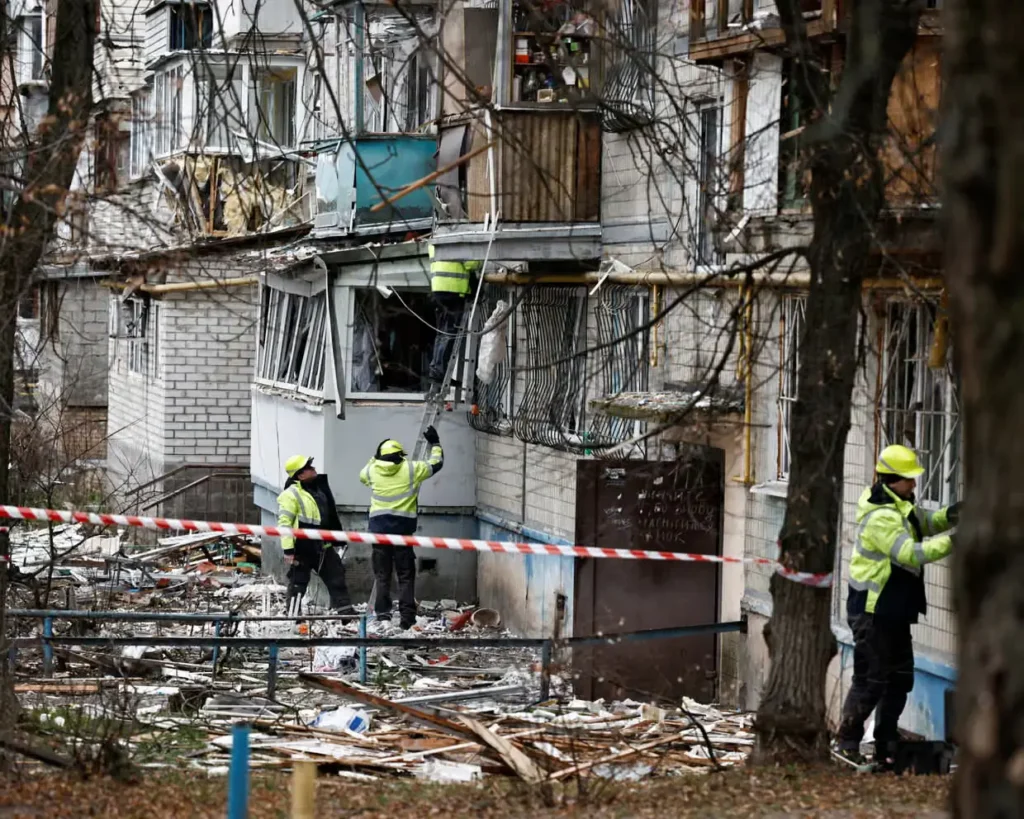
Russian strike launched a deadly assault on Ukraine early Tuesday, firing drones and missiles at energy infrastructure across multiple regions. Two people were killed. Thousands lost power as temperatures dropped near freezing.
Emergency power outages hit several areas after the strikes, the Ukraine’s energy ministry said on Telegram. Russia was attacking power systems again.
One person died in Khmelnytsky, a western region official confirmed. Another was killed in Kyiv. Local authorities reported several wounded, including children, though exact numbers weren’t immediately available.
The power operator Ukrenergo said fires broke out in multiple locations. The massive missile and drone attack hit as winter weather settled across the country. Workers scrambled to assess damage.
Neighbouring Poland scrambled jets to protect its airspace, the military announced in a post on X. The move came as Russian projectiles flew near the border.
Frigid conditions made the outages more dangerous. Electricity and heating systems failed across affected areas. Temperatures dipped toward zero in most Ukrainian cities.
Russia has intensified attacks on Odesa over the past several days, Ukrainian officials said. The southern port city on the Black Sea faces what authorities describe as an attempt to completely destroy maritime logistics.
Fresh strikes hit the city Tuesday. Emergency services reported damage but no injuries. The Russian campaign has been hitting bridges and ports systematically, cutting power to coastal communities in the middle of winter.
The Black Sea regions now face unstable power supplies. Some areas get electricity for hours, then lose it again. Thousands of residents deal with rotating blackouts while repair crews work in dangerous conditions.
Odesa and surrounding ports remain strategic targets. The attacks aim to cripple Ukraine’s economic connections, officials said. Infrastructure damage mounts daily.
The violence followed weekend negotiations the US held in Miami. Russian and Ukrainian delegations met with American officials in Florida for separate talks.
Steve Witkoff, a US envoy, met with negotiators from both sides. Jared Kushner, the president’s son-in-law and adviser, also attended.
Sergei Ryabkov, Russia’s deputy foreign minister, told state media that “slow progress is being observed.” Witkoff called the meetings “constructive discussions.”
But no breakthrough emerged. The talks represented an effort to find diplomatic solutions, yet strikes continued.
The war began with Moscow’s full-scale invasion of its neighbour in February 2022. Nearly three years later, both sides show few signs of backing down.
Several communities struggle with extended power disruptions. For elderly residents and families with young children, the situation grows more difficult daily. Heating systems remain offline in many areas.
Emergency services respond to damage reports while preparing for additional attacks. The number of affected households climbs as teams survey destruction across targeted regions.
The systematic nature of infrastructure attacks raises questions. Russia targets civilian systems during the coldest months. Power grids, heating facilities, and essential services face repeated bombardment.
Ukrenergo crews work around the clock. They repair damaged systems while new strikes threaten. The result is an unstable grid that struggles to meet demand.
The latest assault came as diplomatic activity increased. Yet military action continues despite negotiations. The disconnect between talks in Miami and violence in Ukraine remains stark.
Polish military actions highlight regional concerns. When NATO members scramble fighters to protect their airspace, it shows how the conflict affects neighboring states. The war threatens stability beyond Ukraine’s borders.
Russian forces have been systematically targeting energy systems for months. The strategy aims to break civilian morale during winter. Previous large-scale attacks left millions without power.
Tuesday’s assault followed a familiar pattern. Multiple waves of missiles and drones hit infrastructure across the country. Fires broke out. Power failed. People died.
The effort to restore services continues. But each attack sets recovery back. Some areas regain power only to lose it in the next strike.
International observers note the timing. Attacks intensify even as diplomatic channels remain open. Russian delegations talk peace while Moscow launches missiles.
Weather forecasts predict temperatures will drop further this week. The combination of damaged infrastructure and harsh winter conditions creates a humanitarian crisis. Authorities warn of difficult days ahead.
The Black Sea campaign shows strategic focus. Ports and coastal infrastructure face concentrated bombardment. Ukraine’s maritime trade routes remain under threat.
Odesa has absorbed repeated hits. The city’s strategic importance makes it a priority target. Each attack damages facilities critical for international shipping.
Residents adapt as they can. Some neighborhoods organize community warming centers. Others share generator power. But resources remain limited.
The Kyiv death reported Tuesday adds to a growing toll. Each strike brings new casualties. The wounded include both adults and children.
Medical facilities strain under pressure. They treat blast victims while managing limited power supplies. Emergency generators keep critical equipment running.
Local authorities coordinate response efforts. They work with national agencies to restore services and assist affected populations. The scale of damage complicates recovery.
As night fell Tuesday, many Ukrainian homes remained dark. Families waited for power restoration. The frigid weather offered no relief.