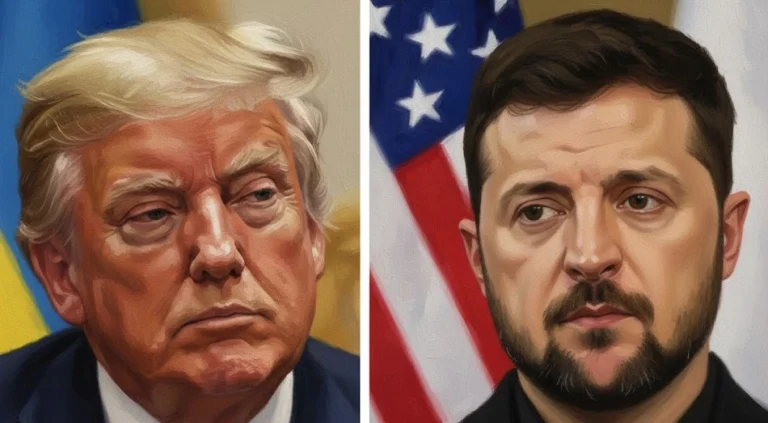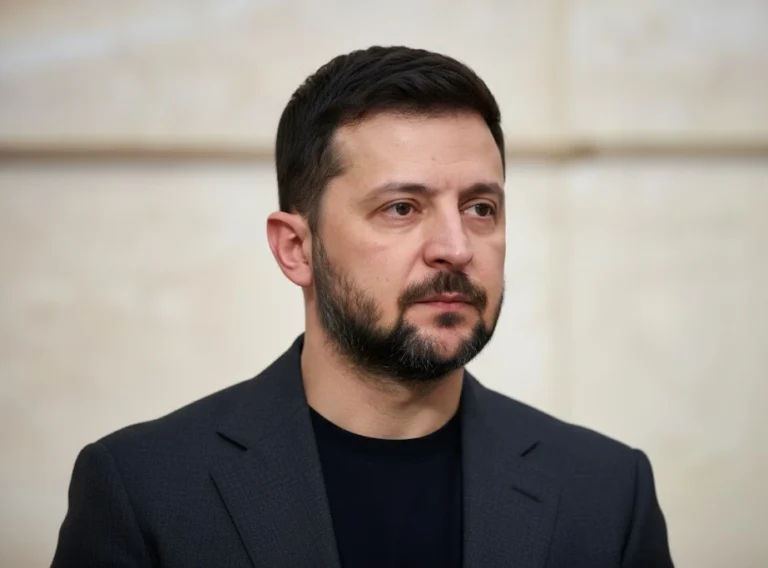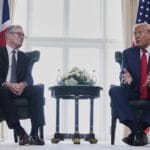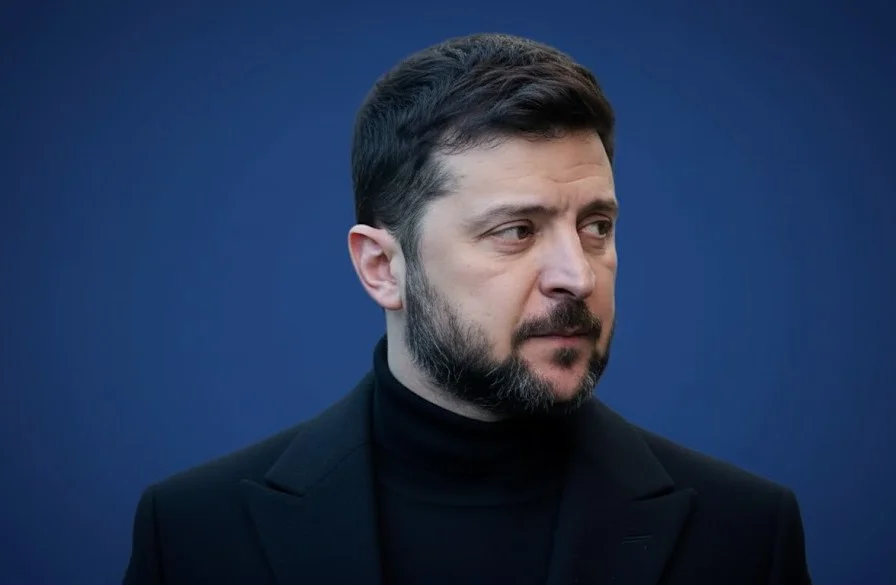
President Volodymyr Zelensky says Ukraine is ready for elections if partners guarantee security for voters, responding directly to US President Donald Trump’s accusations that Kyiv exploits war to dodge democratic responsibility. The Ukrainian president threw down this challenge after Trump told Politico that Ukraine wasn’t acting like a real democracy anymore. These comments came during a wide-ranging interview that sparked fresh discussions about electoral legitimacy and wartime governance.
Trump hasn’t been subtle about his frustrations. During his Politico interview, the American president flat-out suggested that Zelensky blocks peace efforts, though he offered no evidence to back that claim. “They talk about democracy, but it gets to a point where it’s not a democracy anymore,” Trump said, echoing a talking point that Russia has been pushing since the invasion started. The US leader has personally made this argument multiple times, stating it as fact despite lacking concrete proof.
Zelensky fired back quickly. He told reporters he’s heard the “hints” that he’s “clinging to power” and called that narrative “frankly, completely unreasonable.” The facts tell a different story—Zelensky won election in 2019 with 73% of the vote. His five-year term got suspended when martial law kicked in after Russia’s full-scale attack. Moscow keeps demanding new elections as part of any ceasefire deal, and now Trump’s repeated that same line. The Russian leader has consistently declared Zelensky illegitimate, a position that’s become a central obstacle in peace negotiations.
Here’s what Zelensky’s actually proposing: elections could happen in 60 to 90 days if the US and European friends help ensure security. “I’m asking now, and I’m stating this openly, for the US to help me, perhaps together with our European colleagues, to ensure security for the elections,” he explained. That means proposals need to be drawn up fast to change the law and make this work. His team believes concrete plans can be outlined within weeks if international backing materializes.
But Zelensky made one thing crystal clear—this issue “depends foremost on our people.” It’s “a question for the people of Ukraine, not the people of other countries,” he said, drawing a line with respect to partners but insisting Ukrainians get the final say. The presidency isn’t something he’s trying to avoid giving up, he insisted, pushing back against claims he’s personally clinging to the position. The problem isn’t political will. It’s figuring out how one million soldiers fighting on the front line can vote while ongoing strikes threaten cities across the country.
Lesia Vasylenko, a Ukrainian opposition MP, told the BBC World Service’s Newsday programme that fair elections mean every Ukrainian gets to participate, including soldiers and four million refugees scattered across Europe. She pointed out that “elections are never possible in wartime,” alluding to how the UK suspended voting during World War Two. Getting everyone allowed to cast ballots presents massive logistical hurdles that haven’t been faced before at this scale.
The Ukrainian government, opposition, and regular people have routinely dismissed talk of holding elections, arguing that unity in the war effort comes first. A poll from the Kyiv International Institute of Sociology back in March showed 78% of people opposed voting even after a ceasefire with security guarantees. They wanted a complete settlement first. By September, that share fell to 63%, and 22% said elections could happen after a ceasefire—up from just 9% earlier. Public opinion has shifted somewhat, though most Ukrainians remain cautious about voting while conflict continues.
Hanna Shelest from Ukrainian Prism told the Media that Zelensky has been ready for this moment for months, facing previous pressure to commit. The challenge is creating the conditions he’s outlined—securing polling stations when Russian missiles still hit Ukrainian cities most weeks. The ongoing nature of these threats makes planning nearly impossible without external help.
You can’t guarantee voter safety in unsecured areas where fighting continues. Shelest put it bluntly: “You cannot guarantee the security of the polling stations.” That’s not a political excuse—it’s reality when ongoing strikes threaten civilian infrastructure and millions live in active combat zones. The Ukrainian military can’t continue protecting voters and defending territory simultaneously without risking both missions. These aren’t abstract concerns—they’re practical problems that require allies to produce real solutions.
Meanwhile, Zelensky’s facing continued heat from Trump to agree to a peace deal that gives Moscow what it wants. The US leader’s been urging Kyiv to “play ball” by ceding territory, while he’s criticised European leaders as “weak” and suggested America could scale back support. Zelensky has ruled out surrendering land, though, and just finished a diplomatic tour across Europe after intensive talks with US and Ukrainian negotiators over the weekend failed to produce a deal everyone could stomach. The Ukrainian president fears any agreement that leaves his country exposed to future attacks from Russia.
The Ukrainian president’s pressed European and Nato leaders to help deter Washington from backing any arrangement that leaves Ukraine exposed to renewed aggression. Russia keeps claiming Zelensky’s illegitimate, making this an obstacle to peace efforts and turning elections into leverage for ceasefire negotiations. Moscow’s demands center on holding new votes before any talks can broker lasting agreements.
Discussions around voting have made headlines since the invasion started, but Trump’s pressure changes everything. If European partners step up with real security guarantees, Zelensky might actually move forward with electoral proposals. If they don’t, the narrative that he’s blocking democracy gains steam, even though martial law legally suspended the normal term limits back in May 2024. The ending of his official term didn’t mean he was clinging to power illegitimately—it reflected standard wartime protocols declared under Ukrainian law.
The coming days will show whether US, European, and Ukrainian officials can create conditions that make voting possible without endangering people or weakening the war effort. Zelensky’s stated he’s willing—now he needs allies to help make it happen. The whole question boils down to whether international partners can produce the security framework that makes democratic participation realistic during active conflict.