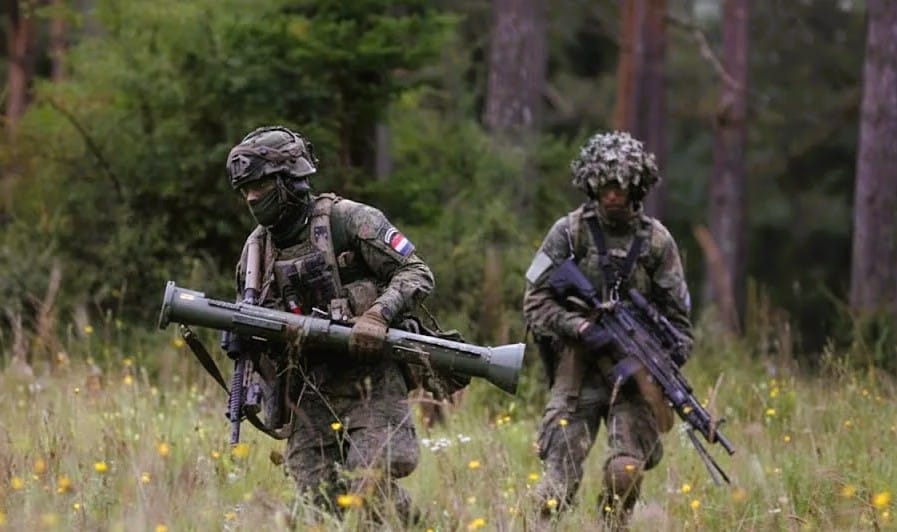
The United States wants Europe to take over the majority of NATO’s conventional defense capabilities by 2027—everything from the US intelligence gathering to missiles. Pentagon officials delivered this message to diplomats in Washington this week, and it didn’t go down well. Five sources familiar with the discussion say several European officials think the tight deadline is completely unrealistic.
Pentagon staff overseeing NATO policy sat down with several European delegations and laid it out plainly. A U.S. official recounted what happened: Washington basically told them Europe needs to step up, fast. This isn’t just about spending more money. It’s about fundamentally changing how the United States, a founding member of the post-war alliance, works with its most important military partners.
Here’s where it gets serious. U.S. officials told their counterparts that if Europe does not meet the 2027 deadline, America may stop participating in some NATO defense coordination mechanisms. The sources, who requested anonymity to discuss private conversations, said this threat surprised many people in the room. Washington indicated it was not yet satisfied with the strides Europe has made to boost its defense capabilities since Russia’s expanded invasion of Ukraine in 2022. That’s a blunt assessment, considering European members have already increased their military spending significantly.
Conventional defense capabilities include non-nuclear assets—troops, weapons, surveillance systems, you name it. But officials did not explain how the U.S. would measure Europe’s progress toward shouldering most of the burden. That’s a big problem. How do you hit a target when nobody can tell you what the target looks like?
It was also not clear whether this 2027 ultimatum represented the Trump administration position across the board, or if it’s only coming from certain Pentagon officials. There are significant disagreements in Washington over what military role the U.S. should play in Europe these days. Some want to pull back. Others think abandoning NATO would be disastrous.

Several European officials said a 2027 deadline just won’t work, no matter how Washington measures progress. Since Europe needs more than money and political will to replace certain U.S. capabilities, the timeline seems disconnected from reality. You can’t conjure up advanced military systems overnight.
Among other challenges, NATO allies face production backlogs for military equipment they are trying to purchase. While the U.S. has encouraged Europe to buy more U.S.-made materiel, here’s the catch: some of the most prized U.S.-made weapons and defense systems would take years to be delivered if ordered today. The wait times are brutal. For complex systems, we’re talking about half a decade or more.
Then there’s stuff you can’t just order from a catalog. The U.S. also contributes capabilities that cannot simply be purchased, like unique intelligence, surveillance, and reconnaissance assets that have proven key to the Ukrainian war effort. These systems took decades to develop. Europe doesn’t have ready-made replacements sitting on a shelf somewhere.
Officials on Capitol Hill are aware and getting concerned about the Pentagon’s message to the Europeans, one U.S. official said. Congress knows that threatening to walk away from NATO defense coordination mechanisms could backfire spectacularly. The alliance has kept the peace in Europe for decades. Messing with that formula makes a lot of senators and representatives nervous, regardless of party.
Asked for comment, a NATO official speaking for the alliance said European allies have already had begun taking more responsibility for the continent’s security. But they did not comment on the specific 2027 target. Smart move—why box yourself in publicly?
“Allies have recognized the need to invest more in defense and shift the burden on conventional defense from the U.S. to Europe,” the official said. Translation: yes, we’re working on it, but don’t hold us to impossible deadlines.
The White House did not immediately respond to requests for comment. Pentagon press secretary Kingsley Wilson said: “We’ve been very clear in the need for Europeans to lead in the conventional defense of Europe. We are committed to working through NATO coordination mechanisms to strengthen the alliance and ensure its long-term viability as European allies increasingly take on responsibility for conventional deterrence and defense in Europe.”
That’s the official line. Behind closed doors, it sounds like the conversations are much more tense.
The 2027 deadline represents something bigger than procurement schedules and budget lines. It’s about whether the North Atlantic Treaty Organization can survive a fundamental power shift. If Europe actually manages to take over the majority of conventional military responsibilities, the alliance would look completely different than it has since its creation.
But can they actually do it? European countries face serious obstacles beyond production backlogs. They need to develop independent capabilities across multiple domains simultaneously. They need to show measurable progress to satisfy Washington while also dealing with their own domestic political pressures. And they need to do all this while supporting Ukraine and managing their own security concerns.
NATO’s future might well depend on whether European leaders can somehow square this circle in the next two years. The alliance has survived plenty of crises before. Whether it can survive this particular test—with such a compressed timeline and so much uncertainty about what success even looks like—remains very much an open question. One thing seems certain: the transatlantic relationship is entering uncharted territory, and not everyone is confident about where it’s headed.