US forces have killed two people in a strike on an alleged drug boat in the Pacific Ocean, marking the first such operation in Pacific waters. The Pentagon confirmed the incident, with defence secretary Pete Hegseth stating no American personnel were harmed during the operation against a vessel suspected of carrying drugs along a known trafficking route in international waters.
This strike marks a significant expansion of American counter-narcotics operations, representing the eighth attack against suspected drug boats since 2 September. However, it’s the first time US forces struck a target in the Pacific, shifting focus from previous operations concentrated in Caribbean waters. Video footage appears to show a long, blue speed boat moving through the water before being hit by US ordinance.
The vessel was already known to US intelligence and was believed to be transporting narcotics along an established smuggling route. According to information added by Pete Hegseth, the two people on board were killed instantly during the operation. The strike demonstrates the Trump administration’s determination to intercept drug shipments wherever they operate across the hemisphere.
In a leaked memo recently sent to US lawmakers, the Trump administration determined it was involved in what it describes as a “non-international armed conflict” with drug-trafficking organisations. This legal framework has justified increasingly aggressive strikes against vessels alleged to be transporting narcotics. President Donald Trump and administration officials have repeatedly defended these counter-narcotics measures as necessary to fight what they characterise as an existential threat.
Pete Hegseth wrote on X that “narco-terrorists intending to bring position to our shores will find no safe harbour anywhere in our hemisphere.” He drew parallels between drug cartels and Al Qaeda, saying both wages war on the American homeland. “Just as Al Qaeda threatens our security, these cartels are waging war on our border and our people,” he added. “There will be no refuge or forgiveness – only justice.”
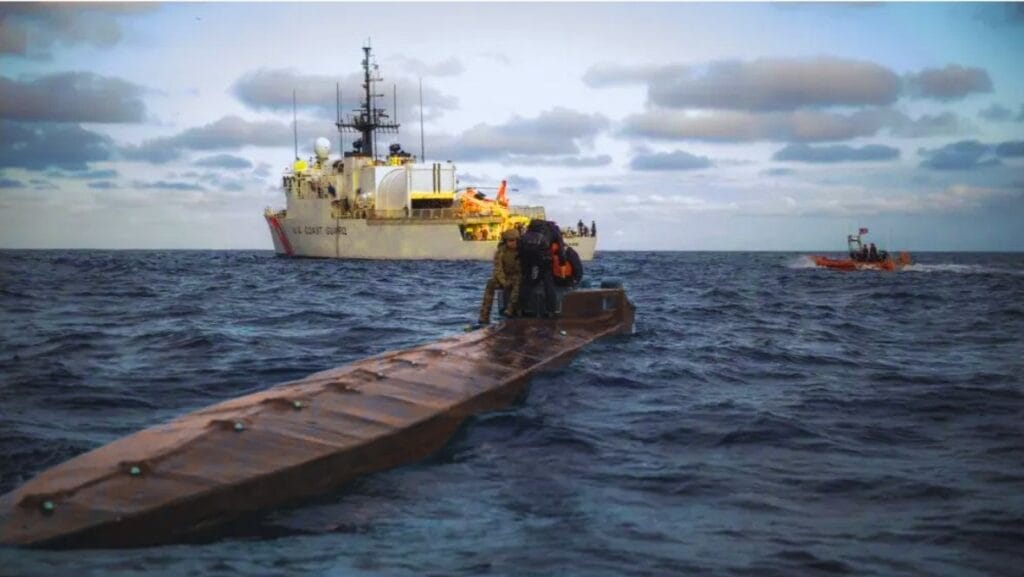
At least 34 people have been killed in American strikes on alleged drug boats since operations began, including a recent strike on a semi-submersible vessel in the Caribbean. The human cost continues mounting as the Trump administration expands its military response. Two men survived a strike last week and were repatriated to Colombia and Ecuador, though their fates diverged sharply.
Ecuador’s government later released one survivor – identified as Andrés Fernando Tufiño – saying there was no evidence of wrongdoing. The other man, from Colombia, reportedly remains hospitalised with injuries sustained during the attack. To date, US officials have offered few details on the identities of those killed or which drug-trafficking organisations they allegedly belong to. Several of these organisations have been designated as terrorist organisations by the US government.
Citing a defence official, CBS has reported that the strike took place in international waters near Colombia. Both Colombia and nearby Ecuador have significant Pacific coastlines that experts have said are used to funnel drugs north towards the US through Central America and Mexico. US estimates from the Drug Enforcement Agency, or DEA, indicate that the vast majority of cocaine bound for US cities passes through the Pacific rather than Caribbean routes.
Drug seizures in the Caribbean – where the bulk of confirmed US strikes have so far taken place – account for a relatively small percentage of the total, although US officials have warned it is rising. The shift to Pacific operations reflects intelligence showing how drug-trafficking organisations have adapted their smuggling methods. You might see more military activity in Pacific waters as authorities respond to these evolving trafficking patterns.
News of the strike comes amid rising tensions between the Trump administration and the Colombian government of President Gustavo Petro. On Sunday, Trump denounced Petro as an “illegal drug leader” who is “strongly encouraging the massive production of drugs, in big and small fields, all over Colombia.” The accusations mark a dramatic deterioration in relations between two nations historically considered among the closest allies in Latin America.
Trump added that the US will no longer offer subsidies to Colombia, threatening decades of cooperation on security and counter-narcotics efforts. The diplomatic rift complicates regional cooperation at precisely the moment when American strikes are intensifying. Around 10,000 US troops, as well as dozens of military aircraft and ships, have been deployed to the Caribbean as part of the operation, representing a massive mobilisation of resources.
With 10,000 troops, warships, and aircraft actively patrolling Caribbean and Pacific smuggling routes, the Trump administration’s military-driven counter-narcotics campaign ranks among the largest such operations in modern history — a stark signal of its resolve to deploy combat power against suspected drug smugglers.
You can expect continued military presence as officials maintain that disrupting drug-trafficking organisations requires sustained pressure across multiple fronts. The measures extend beyond traditional law enforcement, treating the situation as an armed conflict requiring military intervention rather than solely civilian agency response. Whether this approach proves effective at reducing drug flows remains a subject of intense debate among policy experts and regional governments.