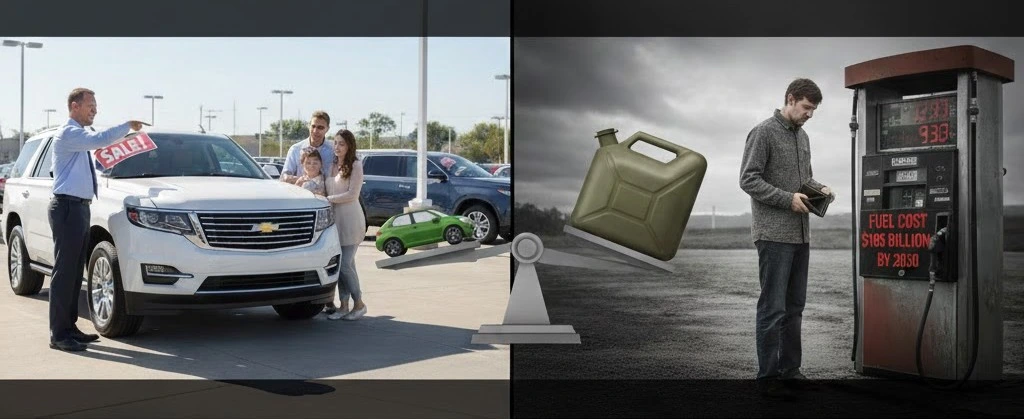
The Trump administration proposal to roll back Biden-era vehicle fuel efficiency standards could save automakers billions but will cost American car buyers far more at the fuel pumps. The National Highway Traffic Safety Administration and Environmental Protection Agency proposed cutting fuel economy requirements for cars to 34.5 miles per gallon by 2031, down from 50.4 miles per gallon set by former President Joe Biden, potentially lowering upfront purchase costs by $930 per vehicle while raising fuel consumption by 100 billion gallons through 2050.
The proposal analyzed by industry experts reveals that any savings at the dealership will vanish quickly as drivers are forced to shell out more cash across the nation. The administration projections show automakers would save tens of billions of dollars through 2031, but the same economic analysis finds the plan would raise fuel consumption by around 100 billion gallons through 2050 relative to the Biden standard, costing Americans up to $185 billion.
The National Highway Traffic Safety Administration economic analysis in support of the Trump administration proposal projects automakers would save $35 billion through 2031 as a result of reduced technology costs. The EPA and NHTSA proposed the changes Wednesday, targeting an average of 34.5 miles per gallon by 2031 instead of 50.4 miles per gallon (21.4 km per liter) under the Biden-era standards. Assuming manufacturers pass along the savings, upfront purchase costs would decline by about $930 per vehicle.
However, Jason Schwartz, legal director at New York University’s Institute for Policy Integrity, warns the larger technology costs savings upfront will evaporate in the face of money spent at the gas pump. “The Department of Transportation is estimating larger upfront savings on technology costs, but they are also estimating even larger losses in fuel savings,” Schwartz said. The projections show you will start paying more from the very first day of driving your less-efficient vehicle.
Your Fuel Bills Will Erase Any Purchase Savings Immediately
Car buyers with long-term financing may not feel even the short-term benefits of reduced purchase prices, as the savings would be spread out over time alongside higher fuel bills. From the very first day of driving, it will cost consumers more to operate their less-efficient cars: more for gas, more for repairs, and more time wasted pumping fuel at stations across the United States.
Dave Cooke, senior scientist for the clean transportation program at the Union of Concerned Scientists, said he believed the proposal amounted to a financial hit to consumers. His analysis shows consumers will be paying more in lifetime fuel costs than saved in technology costs beginning in model year 2027 in every single one of three alternative scenarios compared to the original standards under Biden. The scientists challenge the administration analysis for omitting foregone financial benefits associated with increased tailpipe pollution and greenhouse gas emissions.
Detroit’s Big Three Stand to Gain Most From Rollback
The biggest beneficiaries of the proposal include U.S. automakers Ford and GM, according to NHTSA analysis, along with Europe-based Stellantis, which produces vehicles under the Chrysler, Dodge, and Ram brands in the United States. The White House defends the rollbacks as a boost to the auto industry and a benefit for consumers by potentially allowing a comeback of less-efficient vehicles like station wagons, once a staple of family travel.
The Trump administration touted the changes as relief from what they criticized as a mandate for electric vehicles that are expensive and which American automakers have struggled to produce profitably at scale. The plan would help manufacturers avoid investments in efficiency technology costs while giving you more vehicle choice, the administration argues.
The NHTSA analysis showed the proposal would raise vehicle carbon dioxide emissions by around 5% relative to the Biden standards. Transport remains the top source of U.S. carbon dioxide output, according to the EPA. Trump has called global warming a “con job” and pulled the United States out of international efforts to combat climate change.
Scientists note the administration analysis is omitting critical data about pollution costs. The increased tailpipe pollution and greenhouse gas emissions associated with less-efficient cars carry foregone financial benefits that aren’t included in the economic analysis. The NHTSA did not immediately respond to a request for comment on these concerns.
EPA administrator Lee Zeldin has made revitalizing the American auto industry one of his priorities. The agency remains “committed to delivering on this promise and giving consumers choice through rulemaking within EPA’s jurisdiction,” the agency said in a statement. The new standards would save manufacturers compliance costs while potentially lowering sticker prices at dealerships.
Edmunds, a consumer research guide, told Reuters it may be too early to forecast how quickly the projected upfront savings on vehicles might be offset by higher fuel costs. Product development cycles are typically planned years in advance, so any meaningful impact would take quite a while to materialize. If you’re planning to buy a car soon, the savings you see at the dealership will likely disappear at the pump within months of driving.