Elon Musk’s seemingly untouchable wealth has been proven wrong as Oracle CEO Larry Ellison briefly became the world’s richest man on Wednesday, ending Musk’s more than 300 day streak at the top of the rich list. The sudden surge for the 81-year-old Ellison came after shares in his company surged nearly 40 per cent, creating an AU$151.1 billion single-day gain that pushed Ellison’s fortune to AU$597 billion, ahead of Musk’s AU$580.2 billion according to the Bloomberg Billionaires Index.
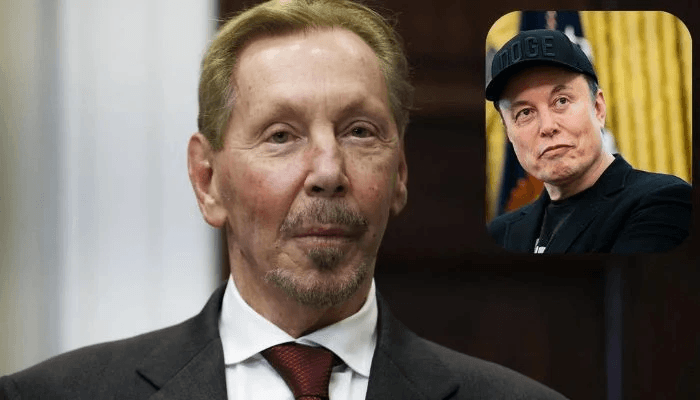
While Musk has since edged back ahead as Oracle stock settled at the end of the day, Ellison is right on his heels at AU$578.7 billion. This marks the first time anyone has challenged Musk’s position so directly since he reclaimed the title, proving that even insane wealth isn’t guaranteed to stay at the top forever.
Record-Breaking Single Day Gains Reshape Billionaire Rankings
Ellison, who co-founded Oracle and now serves as chairman, owns about 1.16 billion shares of Oracle, earning him more than any person has ever made in a single day. The jaw-dropping projections announced by the software giant sent shares soaring 36 per cent at one point, hitting a record high of US$345.69 before closing at $328.33 – its best day since 1992.
Most of Musk’s fortune remains tied to his stake in Tesla, which only inched up .24 per cent Wednesday. The contrast couldn’t be starker: Ellison has added just shy of AU$302.2 billion to his fortune this year, while Musk’s wealth has dropped by nearly AU$75.6 billion.
The AI Revolution Driving Oracle’s Explosive Growth
The sudden surge in Oracle’s value stems from announcing that the software giant will reap half a trillion dollars in the future from its AI business. CEO Safra Catz revealed during an earnings release on Tuesday that Oracle signed four multibillion-dollar contracts with three separate customers in the first quarter.
“We have signed significant cloud contracts with the who’s who of AI, including OpenAI, xAI, Meta and many others,” Catz said during a call with investors after the earnings report. These deals pushed Oracle’s Remaining Performance Obligations – or future revenue it will deliver based on contracts – up 359 per cent to US$455 billion.
OpenAI Deal Worth Nearly Half a Trillion Drives Unprecedented Growth
The vast majority of this new revenue will come from OpenAI, which agreed to purchase AU$453.3 billion in computing power over roughly five years in a massive cloud contract, according to the Wall Street Journal. Oracle expects to sign several more multibillion-dollar contracts and for its RPO to exceed half a trillion dollars (AU$755.5 billion), Catz said.
The software company has made its fortune by stockpiling a massive supply of Nvidia AI chips and renting out its computing power through its cloud business to tech giants like Amazon and Google. This strategy has proven incredibly lucrative as demand for AI infrastructure explodes around the world.
Ambitious Revenue Projections Signal Tech Industry Transformation
Oracle expects its cloud revenue to jump to AU$217.6 billion by its 2030 fiscal year – a massive spike from its projection of less than AU$30.2 billion in its current fiscal year. “We expect Oracle Cloud Infrastructure revenue to grow 77 per cent to $18 billion this fiscal year and then increase to $32 billion, $73 billion, $114 billion and $144 billion over the subsequent four years,” Catz said Tuesday.
Like many others in the industry, Oracle has funnelled billions of dollars into its AI investments. To save on costs, the company has laid off workers and reportedly discussed eliminating raises and bonuses for employees this year, demonstrating the insane focus on maximising returns from this technological shift.
Stock Performance Defies Traditional Earnings Expectations
Oracle saw its stock roar full-steam ahead despite reporting earnings that slightly missed estimates on Tuesday. The company reported revenue of US$14.9 billion in the first quarter, slightly below projections of US$15 billion, and adjusted earnings per share of US$1.47, which missed estimates of US$1.48.
Capital expenditures will jump to roughly US$35 billion in 2026, up from previous estimates of around US$25 billion for the year, the company added. This massive investment underscores how seriously Oracle takes the AI opportunity that’s driving Ellison’s rise up the billionaires rankings.
Forbes Rankings Show Different Picture of Wealth Race
For the record, Forbes, which also has a billionaires list, has Musk ranked number one with AU$659.1 billion and Ellison at number two on AU$585.7 billion. The 54-year-old Musk became the richest person in the world for the first time in 2021 before he lost the title to Amazon’s Jeff Bezos and LVMH’s Bernard Arnault.
He reclaimed the title last year and had held it for nearly an entire year until Wednesday’s dramatic shake-up. The competing methodologies between Bloomberg and Forbes highlight how volatile these wealth calculations can be, especially when stock prices experience such dramatic swings.
Stargate Project Connects Oracle to Trump Administration Infrastructure Plans
Ellison’s software giant is also involved in Stargate, a massive AU$755.5 billion AI infrastructure deal involving OpenAI and SoftBank that President Trump unveiled at the White House in January. Stargate, which was created to ramp up AI data centre construction in the US, has sharply scaled back its short-term plans as its partners have struggled to complete deals, the Wall Street Journal reported in July.
In June, Oracle said it had clinched a new deal set to bring in over $30 billion in annual revenue starting in its 2028 fiscal year. Several media outlets reported the customer was OpenAI, further cementing the partnership that’s driving Oracle’s explosive growth and Ellison’s climb toward the top of global wealth rankings.