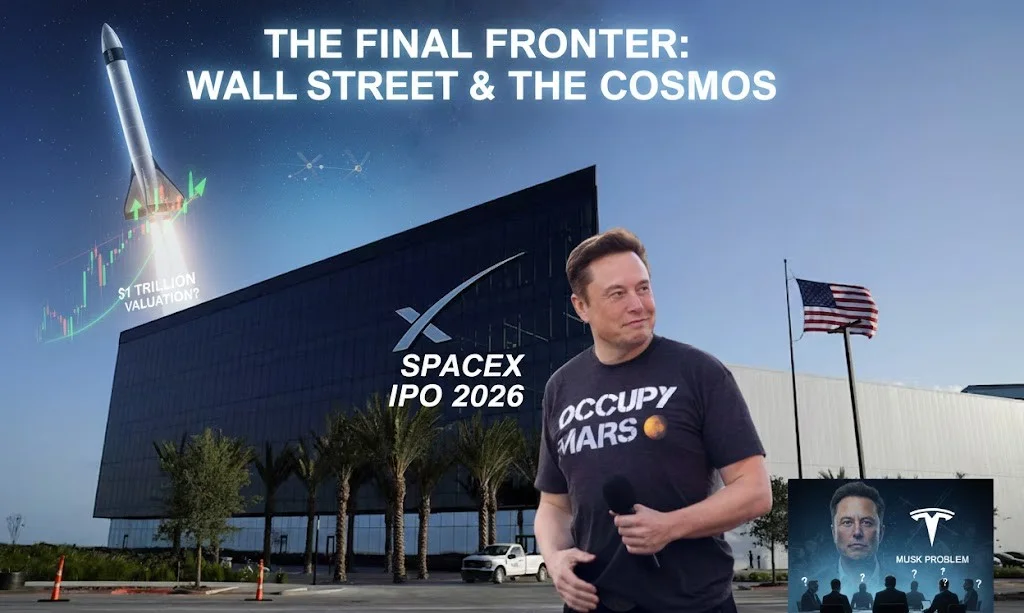
Elon Musk’s SpaceX wants to raise more than $25 billion next year through what could become one of history’s biggest stock market debuts. A source close to the matter told Reuters on Tuesday that the rocket-maker’s valuation might hit over $1 trillion once shares start trading in 2026.
The push toward going public isn’t random. SpaceX’s Starlink satellite internet business keeps growing fast, and the company just announced plans for direct-to-mobile service. Meanwhile, its massive Starship rocket program—designed for Moon and Mars missions—keeps hitting new milestones. These factors are driving the move toward a public listing, according to people watching the company.
SpaceX kicked off talks with major banks about launching the offering sometime around June or July next year. The person sharing this information asked not to be named because these discussions remain confidential. SpaceX didn’t respond when Reuters reached out for comment.
The timing makes sense when you look at what’s happening on Wall Street. After three rough years where barely any companies went public, the IPO market finally came back to life in 2025. Top executives at big investment firms expect this momentum will carry into 2026, helped along by several high-profile companies now preparing to test whether investors are ready to buy again.
Samuel Kerr runs equity capital markets at Mergermarket. He told media outlets that SpaceX represents one of the most exciting opportunities in the global market right now. “It’s been sitting on the dream-list of several investors for years,” Kerr explained. He pointed out that genuine growth in space technology is seen as a key frontier touching both defense and satellite proliferation, plus the tech infrastructure needed for things like orbital data centers.
Plenty of big startups stayed private longer than companies used to, continuing to raise capital in private markets instead of going public. But a listing from a company like SpaceX could prompt more of them to move toward public offerings.
Right now SpaceX ranks as the world’s second most-valuable startup after ChatGPT maker OpenAI, according to data from Crunchbase. Anthropic is also reportedly in talks for an IPO next year. If all these deals come through, Kerr said, the U.S. market will experience a genuine revival. “We’re already seeing the green shoots this year,” he added.
The news about this potential mega-deal comes just days after a media report said SpaceX was kicking off a secondary share sale that would value the company at $800 billion. However, Musk dismissed that report, calling it inaccurate.
Only one completed IPO in history ever achieved more than $1 trillion in valuation at debut. Saudi Aramco, the state-owned petroleum and natural gas giant, debuted in December 2019 with an estimated market capitalization of $1.7 trillion. That record still stands.
SpaceX expects to use funds from the public listing to develop space-based data centers, including purchasing the chips required to run them, according to Bloomberg News. Bloomberg was first to report details about the terms of the offering.
The rocket-maker held preliminary discussions with investment banks to structure what insiders already call a transformative moment for commercial space. The 2026 timeline gives SpaceX valuable runway to showcase sustained growth across Starlink operations and continued Starship development before facing public market scrutiny.
A New Space Race Takes Shape
Several billionaires and private firms keep pouring money into rockets, satellites and lunar missions. SpaceX leads the pack, but Jeff Bezos’ Blue Origin isn’t far behind. NASA now relies more on commercial partnerships while defense spending rises, turning the space industry into a high-stakes arena where technological dominance, national security and economic opportunity all intersect.
The competitive business landscape shows measurable progress across multiple fronts. Rival companies race to establish critical infrastructure for future space operations. This environment created a genuine commercial market for space services—everything from global internet connectivity to sophisticated rocket systems capable of supporting complex missions well beyond Earth’s orbit.
The expansion isn’t slowing down either. New plans emerge regularly as companies push boundaries and test new technologies.
The Musk Problem Nobody Wants to Talk About
Questions about Musk’s ability to simultaneously lead multiple publicly listed companies — each potentially valued above $1 trillion — are making institutional investors increasingly cautious, according to several market analysts. Dan Coatsworth, investment analyst and head of markets at AJ Bell, spoke candidly to Reuters about the risks ahead.
“SpaceX could easily become one of the most divisive stocks to enter the market in recent memory,” Coatsworth cautioned. He anticipates mounting shareholder pressure on Musk to declare a clear commitment — either to Tesla or SpaceX — should the rocket company proceed with its public listing. “It’s genuinely difficult to imagine one person effectively steering two separate trillion-dollar enterprises at the same time,” he noted.
For Musk, this IPO push marks a defining moment in his career as a serial entrepreneur. He currently holds executive responsibilities at Tesla while actively directing SpaceX operations and maintaining substantial stakes in several other high-profile ventures. With the offering window targeting mid-2026, Musk has a narrow 12 to 18-month runway to resolve these deepening governance concerns and prove he can scale his leadership across both organizations.
Wall Street is already paying close attention. Institutional investors are demanding clearer answers on time allocation, executive focus and long-term strategy — questions Musk has largely sidestepped until now. The IPO process will almost certainly force those uncomfortable conversations into the open.