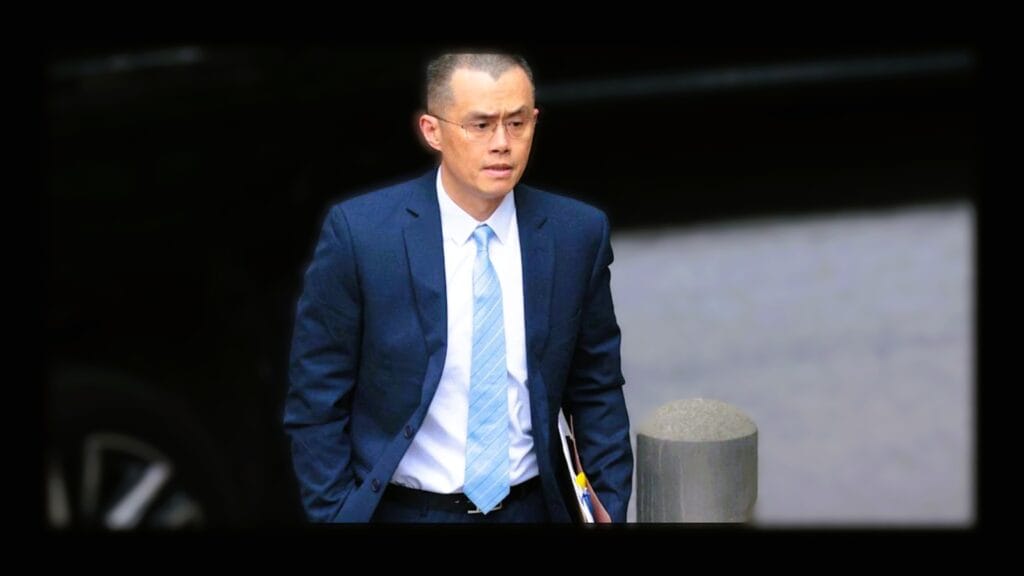
President Donald Trump pardoned Changpeng Zhao, the Binance founder who served prison time for anti-money-laundering violations, sending shockwaves through financial regulatory circles. The pardon, issued Thursday, effectively erases the criminal record of a man whose crypto exchange facilitated transactions involving child sex abuse, narcotics trafficking, and terrorist financing. Legal experts say this decision fundamentally rewrites the rules for white-collar prosecution in the digital assets industry.
The Trump administration’s move comes as the president’s family crypto ventures have received billions in investments through Binance platforms. Zhao, widely known as CZ, had actively lobbied for clemency after his September 2024 release from federal prison, where he completed a four-month sentence. The White House defended the decision, claiming Biden administration prosecutors had “overly prosecuted” the case, though Zhao had pleaded guilty to charges that represented one of the largest corporate settlements with federal authorities in US history.
The Binance Case: What Actually Happened
Changpeng Zhao built Binance into the world’s largest crypto exchange by operating with minimal regulatory oversight. Federal investigators spent years documenting how the platform allowed criminals to freely transact, enabling actions that prosecutors detailed in court filings. The yearslong investigation revealed systematic failures in anti-money-laundering protocols that Zhao himself acknowledged when pleading guilty in 2023.
The company and Zhao reached a settlement requiring Binance to exit United States markets and pay billions in penalties. Federal authorities called it a major victory for financial regulation, coming just weeks after a jury found Sam Bankman-Fried guilty of multiple counts of fraud and conspiracy in connection with the collapse of FTX, a onetime rival to Binance. Legal observers at the time viewed both cases as establishing clear boundaries for crypto industry behavior.
Trump Family’s Billion-Dollar Crypto Connections
Trump’s financial entanglement with Zhao and Binance raises unprecedented conflict-of-interest questions. The Trump family’s crypto platform, World Liberty Financial, is hosted by Binance, and the exchange has been a key driver in the growth of World Liberty’s dollar-pegged token, USD1. Earlier this year, as Zhao was actively seeking a pardon, Binance accepted a $2 billion investment from an Emirati-backed investment firm using USD1.
Trump, once a skeptic of digital assets, is now a full-fledged crypto mogul. Having amassed more than $5 billion in paper gains through his own and his family’s various crypto projects, Trump’s digital asset portfolio now eclipses his real estate holdings. The president’s success in crypto is thanks in no small part to connections he and his eldest sons have forged with industry bigwigs, including Zhao, whose own net worth is estimated at more than $85 billion.
Pattern of Pay-to-Play Pardons Emerges
Zhao isn’t the only crypto mogul to discover that plowing money into Trump’s crypto ventures tends to make nettlesome charges disappear. Justin Sun, the Chinese crypto billionaire who poured tens of millions of dollars into World Liberty Financial soon after it launched, had been facing civil fraud charges in the United States under the Biden administration. The Securities and Exchange Commission dropped the case against Sun in February.
Sun, who’d reportedly avoided setting foot on US soil for fear of being arrested, was a VIP guest at Trump’s private crypto dinner in May. Other white-collar defendants Trump has blessed with pardons include Ross Ulbricht, a cause célèbre of the Libertarian crypto world, who had been sentenced to life for creating the Silk Road marketplace. Trump also pardoned Trevor Milton, founder of bankrupt electric vehicle startup Nikola, who was sentenced to four years in prison. Milton and his wife donated more than $1.8 million to a Trump re-election campaign fund, according to public records.
Industry Reaction
“It’s just the latest example of Trump’s Pay-to-Pardon Scheme,” former Labor Secretary and prominent Trump critic Robert Reich wrote on X. Democrats and even some Republicans on Thursday called the Zhao pardon inappropriate, given the close connections between Binance, Zhao and the Trump family business. Financial regulators who had an icy stance toward crypto during the Biden administration now find their major victories being systematically dismantled.
Tech entrepreneur Joe Lonsdale captured the industry’s internal conflict: “I love President Trump; this is possibly the greatest admin of my lifetime – except for these pardons. POTUS has been terribly advised on this; it makes it look like massive fraud is happening around him in this area.” While news of CZ’s pardon sent a Binance-linked token higher, the broader crypto market remained relatively muted. Crypto advocates who helped galvanize support for Trump during his re-election campaign find themselves torn between celebrating regulatory relief and worrying about reinforcing the industry’s long association with fraud.
Means for Crypto Regulation
Trump defended his decision to pardon Zhao during a roundtable in the White House State Dining Room on Thursday. “Let me just tell you that he was somebody that, as I was told, I don’t know him, I don’t believe I’ve ever met him,” Trump told Media. “He had a lot of support, and they said that what he did is not even a crime. It wasn’t a crime, that he was persecuted by the Biden administration, and so, I gave him a pardon at the request of a lot of very good people.”
This statement directly contradicts the fact that Zhao pleaded guilty to criminal charges related to anti-money-laundering violations. Prosecutors and financial regulators had built their case methodically, demonstrating how the company allowed criminals access to platforms that enabled child sex abuse, narcotics trafficking and terrorist financing. The pardon is expected to help Binance return to the United States after being forced to exit following the settlement. Crypto entrepreneurs operating on the fringes of the law now have an unambiguous message from the Trump administration: regulatory violations that once carried prison sentences may instead lead to presidential clemency, provided the right financial connections exist.
Impact on White-Collar Crime
The Trump administration excels at sowing uncertainty across multiple policy domains, but it is sending an unambiguous message to crypto entrepreneurs who may be operating on the fringes of the law, or outside of it. Federal prosecutors who spent years building cases against major figures in digital assets now watch as their work gets erased with presidential signatures. The implications extend beyond crypto into all white-collar criminal prosecution.
Sam Bankman-Fried, who was sentenced to 25 years in a federal prison for his role in the FTX collapse, is also angling for a pardon, according to the New York Times. If granted, it would complete a remarkable reversal of what the Biden administration viewed as a major victory in establishing accountability for crypto fraud and conspiracy. The fact that helped galvanize crypto advocates to support Trump during his campaign was the industry’s perception of hostile regulatory treatment. Now those advocates must reckon with whether they’ve traded principled oversight for a system where wealth and political connections determine legal outcomes.
Financial Stakes and Calculus
The effective bank deposit of $2 billion that World Liberty Financial received through the Binance investment demonstrates the extraordinary sums flowing through these interconnected relationships. The Trump family’s enriched position in crypto markets creates ongoing conflicts that Democratic critics argue make objective policy decisions impossible. Republicans who have called the pardon inappropriate face pressure from party leadership to remain silent.
Zhao’s case represents a test of whether traditional white-collar prosecution can survive in an environment where the president has amassed a digital asset portfolio worth billions in paper gains. Prosecutors who secured the largest corporate settlements in US history watch their achievement reduced to what the White House calls “overly prosecuted” cases. The coming weeks will reveal whether Congress has appetite to investigate the connections between presidential pardons and payments to Trump family ventures, or whether the pattern of pay-to-play clemency becomes the new normal for white-collar defendants with sufficient resources to invest in the president’s business interests.