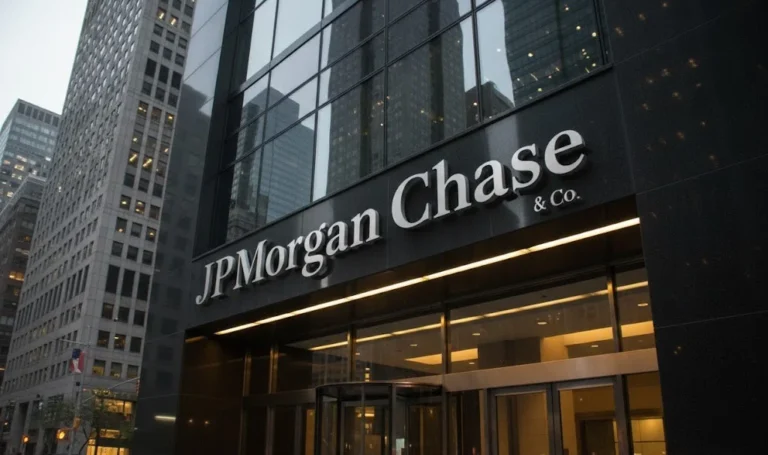
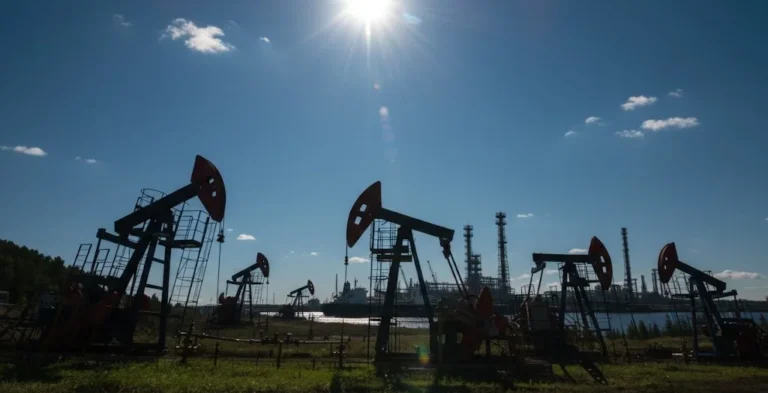
Australia’s major banks and energy stocks plunged on Tuesday despite Wall Street achieving fresh record highs overnight. The ASX 200 Index dropped 46.1 points to 8803.5, with eight of 11 sectors finishing in the red as local investors ignored strong gains from US markets.
Australia’s big four banks suffered significant losses as profit-taking combined with ANZ’s announcement of massive job cuts. CBA shares plummeted 1.28 per cent to $166.08, while Westpac fell 0.82 per cent to $37.65. NAB slipped 0.14 per cent to $42.78, and ANZ closed down 0.21 per cent at $32.88.
The sell-off intensified after ANZ revealed plans to cut 3500 staff and 1000 contractors over the next 12 months as part of major restructuring to “simplify the bank”. Chief executive Nuno Matos acknowledged in a statement posted to the ASX Tuesday morning that this would be “difficult news” for affected employees.
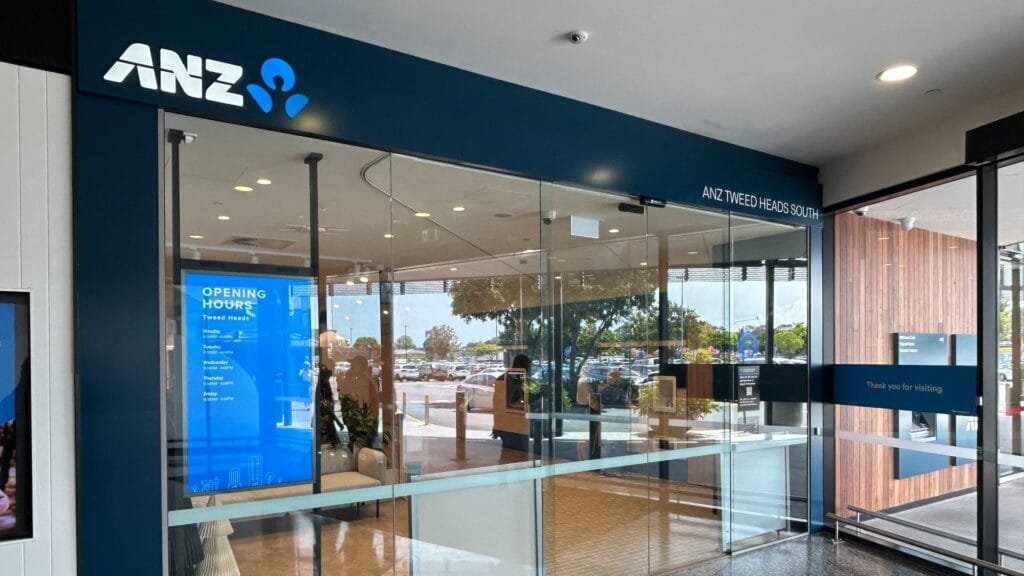
The energy sector emerged as the biggest loser, down 1.2 per cent following OPEC+’s weekend decision to increase production by 137,000 barrels per day starting in October. This production boost triggered a broader slide across energy stocks that had already been under pressure.
Woodside shares traded 1.20 per cent lower at $24.68, while Santo slipped 0.91 per cent to $7.64. The sector’s weakness comes despite rising global oil demand and geopolitical tensions that typically support energy prices.
Despite a strong lead-in from Wall Street, which reached another record high due to forecasts of further rate relief next week, the local market couldn’t maintain momentum. The tech-heavy Nasdaq composite rose 0.45 per cent to a fresh highest, while the S&P 500 continued its lift up 0.21 per cent and the Dow Jones gained 0.25 per cent.
Australia’s dollar marched higher and is currently trading at US 65.99 cents, reflecting some confidence in the local economy. However, this currency strength failed to prevent the broader All Ordinaries from falling 46.2 points or 0.51 per cent to 9080.70.
Iron ore provided one of the rare positives during Tuesday’s trading, continuing its rally for a sixth consecutive day and heading towards its highest level in six months. Futures for the commodity briefly surpassed $US107 per tonne, the highest price since major Australian miners shut down production in February due to flooding issues in Western Australia.
Despite rising commodity prices, BHP shares slumped 0.97 per cent to $40.97 after settling a class action for $110m related to the Fundao Dam disaster in 2015. Rio Tinto fell 1.07 per cent to $116.94, though Fortescue bucked the trend and jumped 1.49 per cent to $19.09.
AMP head of investment strategy and chief economist Shane Oliver said Australia’s economy was likely to pick up, which should lift Australian stocks in coming months. “Momentum for the average company looks to be improving,” he noted, pointing to improved earnings trends.
Particular data shows 61 per cent of companies reported earnings growth a year ago and 62 per cent raised their dividends, both significantly improved figures consistent with profits returning to growth this financial year. This occurs despite earnings per share falling 3.1 per cent over the last reporting period, down for the third straight year.
In company news, Telix Pharmaceuticals gained 1.6 per cent to $13.82 after informing the market it had reached an agreement with the US Food and Drug Administration over its application for approval for its brain cancer imaging agent. The healthcare sector showed resilience despite broader market weakness.
JB Hi-Fi gained 0.6 per cent to $116.20 despite subsidiary The Good Guys admitting that store credit promotions run between 2019 and 2023 were misleading. The business will pay a $13.5m fine, demonstrating how regulatory issues continue to impact retail operations.