The European Union just wrapped up years of firefighting mode. Crisis after crisis tested the foundations of what this union stands for. Now? There’s a different energy in Brussels. Europe means business; and this time, it’s not empty rhetoric. Last year’s European elections delivered a verdict nobody could ignore, forcing a return to basics that should have happened sooner.
Walk into any cafe in Paris, Berlin, or Rome, and you’ll hear the same frustrations. People are exhausted by complexity. They want systems that actually work instead of creating more headaches. The political shift wasn’t subtle. Voters handed their leaders a to-do list: fix the economy, create jobs, and make us feel safe again.
The European Parliament—think of it as Europe’s version of U.S. Congress; actually listened. Roberta Metsola, the parliament’s president, put it plainly when she said their agenda became the voters’ agenda. Not the other way around.
The messages from voters echoed loud enough that even tone-deaf politicians understood. Three things topped everyone’s list. First, economic stability; not flashy projections, just reliable systems. Second, real opportunity through a business environment that lets companies actually innovate without drowning in paperwork. Third, security; the kind where parents don’t worry about their children walking to school or playing on the street.
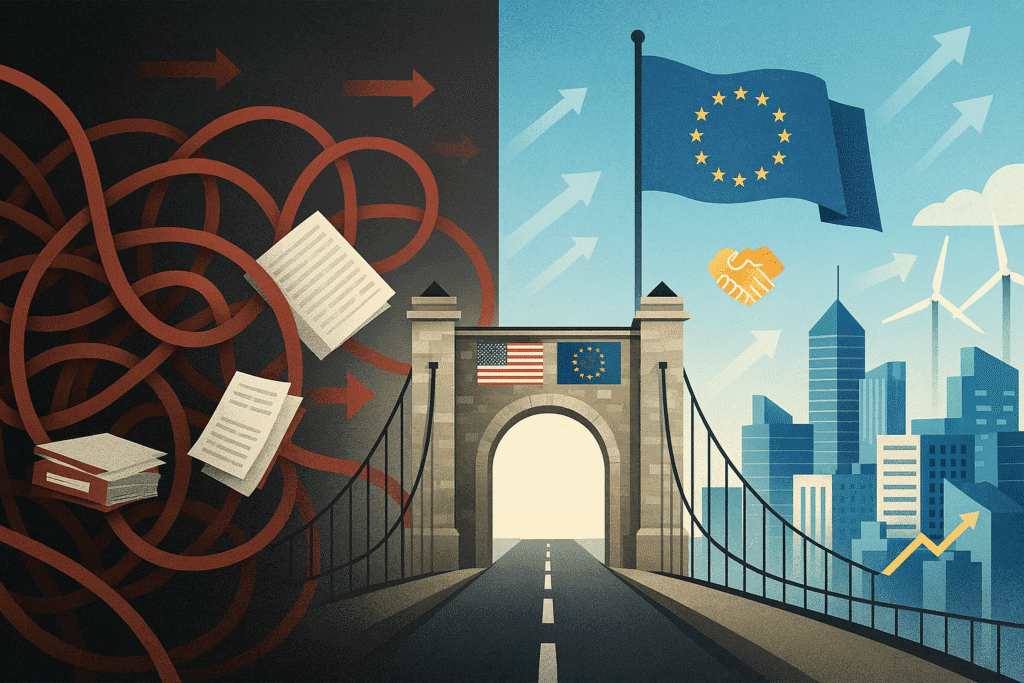
The European Parliament started slashing through bureaucracy like it suddenly remembered what government should do. In two weeks, there’s a vote that will free about 85 percent of companies from suffocating corporate sustainability requirements. Not eliminate them; just make them work for businesses.
Look at the specifics. 90 percent of importers got exempt from the carbon tariff. The automotive industry received a temporary pass on certain regulatory fines. Battery supply rules got suspended while everyone figures out how to strengthen supply chains without killing them first. They represent a commitment to simplification that acknowledges a harsh truth: good intentions paved a road to regulatory hell.
The thinking isn’t complicated. If you want companies to invest in Europe, to create actual jobs instead of just filing reports, you need to cut away the unnecessary layers. A stable, predictable business environment beats aspirational regulations that complicate everything.
Earlier this year, the United States and European Union found common ground on a trade deal that resets their relationship. Why does this matter? Because the transatlantic economy is ridiculously intertwined—7.5 trillion dollars in commercial sales annually, 16 million jobs, one third of global GDP. It’s the largest economic relationship in the world, yet we barely emphasize how much our prosperity depends on it.
This U.S.-EU partnership provides stability that companies on both sides of the Atlantic desperately need. When businesses can look ahead with confidence instead of constantly hedging against policy whiplash, they invest. They grow. The trade deal sets a new footing for cooperation at a time when the world seems determined to fragment.
Don’t mistake this for protectionism. The European approach to global economics has always been about open, free, and fair trade. Nobody wins when everyone’s losing—or when some lose more than others. The preferable path forward means building relationships based on mutual benefits, not zero-sum thinking. That economic philosophy isn’t naïve idealism.
Russia’s illegal war in Ukraine taught anyone paying attention a critical lesson: energy is political, always has been, always will be. The European Parliament voted to phase out all gas and oil imports from Russia. Not because it’s convenient—it isn’t—but because some partners you simply can’t trust.
This linked the continent’s energy security to its broader defense posture. For too long, Europe leaned on the United States for protection while criticizing American military spending. Since 2021, defense spending across the European Union went up by more than 30 percent. Member States in NATO are racing to meet the 5 percent of GDP target.
The brutal wake-up call from Ukraine forced a reckoning with new realities. Soft power alone doesn’t stop tanks or threats to sovereign countries. The responsibility for Europe’s own security can’t keep acting like someone else’s problem. This renewed focus on defense isn’t militarism—it’s adults finally accepting that peace requires strength.
Strip away the policy jargon, and here’s what’s happening: Europe is attempting something difficult but necessary. The commitment to make things easier for businesses while maintaining safeguards requires threading a needle. Lowering complexity without lowering standards. Removing obstacles without removing protections. Adjusting the scope of laws to reflect exactly how they work in practice.
The decision to defer, postpone, or exempt various regulations comes from guided analysis of what actually enables economic growth. Take the due diligence requirements that sounded great until companies currently tied-up in compliance realized they couldn’t simultaneously innovate and document every decision in triplicate. Being freed from that red tape doesn’t mean abandoning corporate sustainability.
This isn’t about doing less—it’s about doing better. The European way that people believe in requires delivering actual prosperity, not just aspirational frameworks. The agenda needs to ensure that economic stability creates the opportunity for jobs, for businesses to grow, for entire supply chains to function efficiently.
There’s something deeply human about the third priority voters expressed: wanting to feel safe. Not abstract security measured in military budgets, but the peace of mind that comes from knowing your kids can go to school without fear. That neighbors on your street aren’t facing threats nobody will address. That when your country faces genuine danger, partners will step into the breach rather than debate response options.
This sense of security allows normal life to continue. It enables people to plan futures, businesses to invest, communities to build something lasting. The desperate need for this feeling drove much of last year’s electoral message. Europeans were essentially saying: we’re tired of feeling vulnerable.
The response has been precisely what the situation demanded. More defense spending, yes, but also recognition that security encompasses economic resilience. It means not being dependent on imports from hostile powers. It means supply chains that don’t collapse when geopolitics shift. It means the transatlantic partnership functions as genuine mutual support.
The start of this legislature marked a turning point. No longer could Europe afford complacency about its competitive position. The European Parliament began delivering changes that seemed impossible just years ago. Roberta Metsola and other leaders recognized that voters hadn’t received the results they deserved, so the institution adapted.
The adjusting continues, the vote outcomes remain uncertain on specific measures. But the direction has shifted fundamentally. From managing crises reactively to building proactively. From complicating through endless additions to simplifying by cutting what doesn’t work. From leaning on others for defense to accepting responsibility for Europe’s future.
The transatlantic relationship sets a foundation that both continents depend on more than most realize. When the United States and European Union cooperate, they’re not just protecting themselves; they’re providing stability for the global system. The commercial ties that generate trillions in sales and support millions of jobs create incentives for continued partnership.
This renewed sense of purpose driving European policy isn’t about returning to some imagined golden age. It’s about correcting course after recognizing current approaches weren’t delivering what people actually want. The basics of good governance got lost somewhere between grand visions and technical specifications. Bringing focus back to economic growth, opportunity, and security doesn’t mean abandoning other priorities; it means recognizing foundations come first.
The building blocks being assembled now; simpler regulations, stronger defense, closer transatlantic ties, energy independence—will define what this generation leaves behind. Whether Europe means business becomes reality or remains aspiration depends on following through. The political shift created an opening. The agenda is set. The vote outcomes in coming weeks will show whether Europe is really committed to this new direction.
What happens next matters for everyone; not just Europeans. The transatlantic economy touches too many lives, employs too many people, generates too much of the world’s economic activity to fail. When Europe gets stronger economically and strategically, it benefits partners across the Atlantic and beyond. Years of accumulated complexity don’t disappear with a few votes. But the shift from crisis management to purposeful direction marks real progress. Voters demanded change, leaders listened, and institutions are delivering.