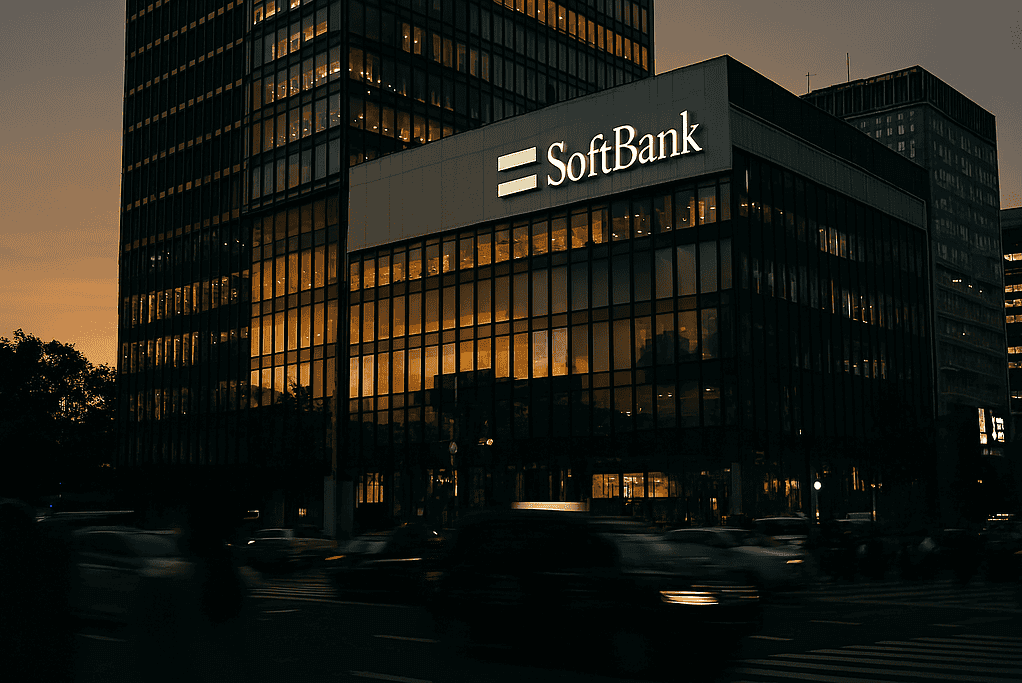
Japan’s SoftBank Group reported Tuesday that its second-quarter net profit more than doubled to 2.5 trillion yen ($16.6 billion), driven by explosive valuation gains in its holdings of OpenAI. The results crushed analyst expectations and underscored how the artificial intelligence boom is minting fortunes for early backers of the ChatGPT creator. Three analysts surveyed by LSEG had estimated an average of just 207 billion yen in net profit for the period, making the actual figures a stunning surprise that caught Wall Street off guard.
SoftBank’s Vision Fund unit posted a staggering investment gain of 3.5 trillion yen for the July-September quarter, with the lion’s share primarily deriving from the group’s holding in OpenAI. The gains from the AI startup alone totalled 2.16 trillion yen for the quarter, dwarfing returns from other portfolio companies and proving that Masayoshi Son’s bet on artificial intelligence is paying off in spectacular fashion.
The company’s profit also compared favorably against the 1.18 trillion yen profit it made in the same period of the previous year, showing how quickly AI investments are reshaping the Japanese conglomerate’s financial performance. These results coincide with a bull run in technology-related stocks that has sent SoftBank’s share price to record highs, rewarding investors who stuck with Son through years of volatile performance. The timing couldn’t be better for the billionaire founder, whose reputation had taken hits from past missteps but now looks vindicated by the AI revolution.
OpenAI’s valuation has risen steadily and sharply through the year, creating windfall profits for SoftBank as the AI startup attracts unprecedented investor interest from Silicon Valley to Tokyo. In March, SoftBank agreed to lead a funding round of up to $40 billion in OpenAI at a valuation of $300 billion, positioning itself as a major backer of what many consider the defining technology of this decade.
By October, a source told Media that SoftBank was among a consortium of investors acquiring $6.6 billion worth of shares from OpenAI employees at an even higher valuation of $500 billion. This represents a remarkable appreciation in just seven months, reflecting the wave of investment in artificial intelligence infrastructure and data centers that continues apace across the globe. As frontruners in AI development project rapid growth over coming years, SoftBank has emerged as a major beneficiary of this technological transformation that’s reshaping everything from customer service to scientific research.
The numbers tell a compelling story about how fast money moves in the AI sector. What started as a research lab has become one of the world’s most valuable private companies, and SoftBank holds a significant stake in that success story.
SoftBank finds itself in the midst of massive AI-related investments, representing its most ambitious investments since the launch of the Vision Fund vehicles in 2017 and 2019. This aggressive expansion has created a pressing need for funding to support Son’s latest vision, forcing the company to tap multiple financing sources simultaneously.
In October, the company sold 32.1 million shares of Nvidia, including those held by its asset management subsidiary, for $5.83 billion. The move raised eyebrows given Nvidia’s central role in AI infrastructure, but it freed up cash for SoftBank’s other priorities. Since the start of April, SoftBank has issued bonds in three currencies worth 620 billion yen, $2.2 billion, and 1.7 billion euros, respectively, showing how aggressively it’s pursuing capital.
The company also took out a bridge loan of $8.5 billion for its investment in OpenAI and arranged a $6.5 billion bridge loan for its acquisition of semiconductor design company Ampere, which it has not yet drawn. This multi-pronged financing approach demonstrates the scale of resources SoftBank is marshaling for AI dominance, even as it juggles debt obligations and investor expectations.
Nevertheless, growing concerns among investors about an “AI bubble” are tempering enthusiasm even as profits soar to historic levels. Critics worry that the enormous sums committed to capital investment by leading firms may not generate the high profits needed to justify the investments pouring into artificial intelligence infrastructure worldwide. The debate centers on whether current valuations reflect genuine business fundamentals or speculative excess fueled by hype.
Some market watchers point to parallels with previous technology booms that ended badly for late investors. Others argue this time is different, given AI’s proven applications across industries. The truth probably lies somewhere in between, but the stakes are enormous for companies like SoftBank that have bet billions on this technology.
SoftBank founder and chief executive Masayoshi Son is experienced in making leveraged bets on what he sees as transformative technologies, though his track record remains mixed over three decades of dealmaking. While an early bet on Chinese e-commerce site Alibaba proved lucrative, generating returns that still support SoftBank’s balance sheet today, other bets have gone awry, such as the disastrous investment in shared office provider WeWork that wiped out billions.
The question facing investors now is whether AI represents another Alibaba-sized winner or another WeWork-style misstep for the Japanese billionaire’s latest grand vision. Early results suggest the former, but only time will tell if these paper gains translate into sustained profits.