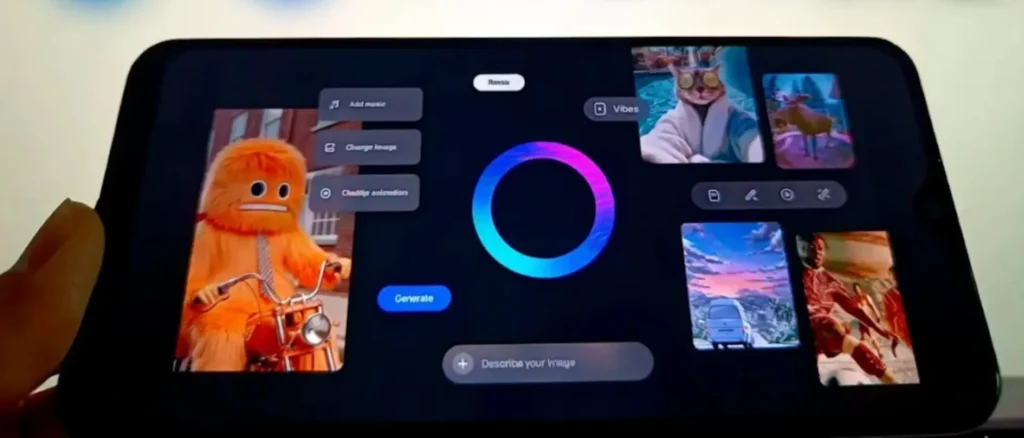
Meta’s Vibes AI feed has quietly crossed 2 million daily active users as of November 9, internal data viewed by media agency reveals. The AI-generated videos platform grew 1% from the previous week, giving us an early look at how people are actually using Meta’s experimental video feed in the real world.
The numbers paint an interesting picture when you compare them to Meta’s other platforms. Vibes, which Meta added to the Meta AI app in late September; just days before OpenAI debuted its rival Sora—lets you create and scroll through AI-generated videos. It’s a completely new way to interact with AI content, and the data suggests people are actually open to it.
For comparison, Meta recently said its Threads app, which launched back in July 2023, now has 150 million daily act-ive users. That’s a massive difference, but remember that Threads has been around much longer. There aren’t any publicly released figures for Instagram, Facebook, or OpenAI’s new Sora app this year, which makes these internal documents particularly valuable.
External estimates help illustrate where Sora stands. Data provided by digital intelligence firm Similarweb to media shows that Sora was accessible only by invitation for most of October and had an average of roughly 110,000 daily active users that month. That number jumped to roughly 673,000 in November after OpenAI temporarily opened it to the general public. Meanwhile, Meta’s wider ecosystem of apps, measured through what the company calls its “family daily active people metric,” reached 3.54 billion users in September 2025, according to what Meta revealed in its latest earnings report.
Here’s where things get interesting. The documents break down exactly how people use the feed, showing where the feature is growing and where it’s lagging. Returning users behave differently depending on their comfort level with the platform. About 52% prompted the AI to generate something specific, while roughly 30% scrolled through what others had made. New users often try both parts—they’ll scroll for a bit, then experiment with prompting their own creations.
The data also describe something unexpected about engagement. About 40% opened the feed because the app directed them toward it through notifications or suggestions. This group tended to interact less actively, with only 38% going on to actually prompt the AI or spend time scrolling through videos. Even so, around 60% returned the following week. Those who did engage initially were far more likely to come back regularly, according to what the numbers show.
Sources familiar with the platform told electronic media that usage has continued to grow since the launch, though the pace varies significantly by location. Meta declined to comment on the specific metrics when contacted.
The growth in early November came almost entirely from two countries: India and Brazil. In India, which is one of Meta’s largest markets outside the US, daily active users reached 704,000, representing a solid 22% increase from the previous week. Brazil wasn’t far behind, with its number climbing to 114,000, representing a 13% increase. These two markets are clearly contributing the bulk of Vibes’ momentum right now.
Europe launched access on November 6 and has pulled in 23,000 users since then—not huge numbers yet, but it’s still early. The strongest uptake came from France, Italy, and Spain, with each country contributing between 4,000 and 5,000 daily active users. That suggests the feature might have stronger appeal in certain European markets than others.
Not everything is trending up, though. Usage declined in parts of Southeast Asia, which is worth paying attention to. The Philippines saw the largest drop among major countries, with users falling about 9% as a burst of viral videos tapered off, the documents indicate. Thailand experienced a similar decline, decreasing by about 7% compared to the previous week. This pattern suggests that initial curiosity doesn’t always translate into sustained engagement.
Meta tracks several kinds of engagement inside the feed to understand what’s actually working. The company monitors how people open the dedicated platform each day, whether they rely more on scrolling or prompting, and how long they stick around. By measuring everything from first impressions to return behavior, Meta can see which elements of Vibes actually resonate with users across different demographics and regions.
This level of detail helps illustrate how Meta evaluates success for new AI features. The data shows that getting people to open the app is one challenge, but keeping them engaged enough to create their own AI-generated videos is another entirely. The latest numbers suggest Meta is making progress, but there’s clearly room for improvement in certain markets and user segments.
Since its launch, critics have said much of Vibes is filled with what they’re calling “AI slop“—low-quality, repetitive content that floods the feed. This includes a wave of politically charged clips, with many of them centered on President Donald Trump. It’s become a real concern about whether the platform can maintain quality as it scales.
Meta hasn’t publicly addressed these content issues yet, and sources suggest the company is still figuring out the right balance between creative freedom and quality control. The challenge is that Vibes lets anyone generate content instantly, which means there’s no traditional editorial filter. As more people use the platform to both create and consume videos, the pressure to solve this problem will only increase. What happens in the next few months will likely determine whether Vibes becomes a lasting part of Meta’s ecosystem or fades into the background.