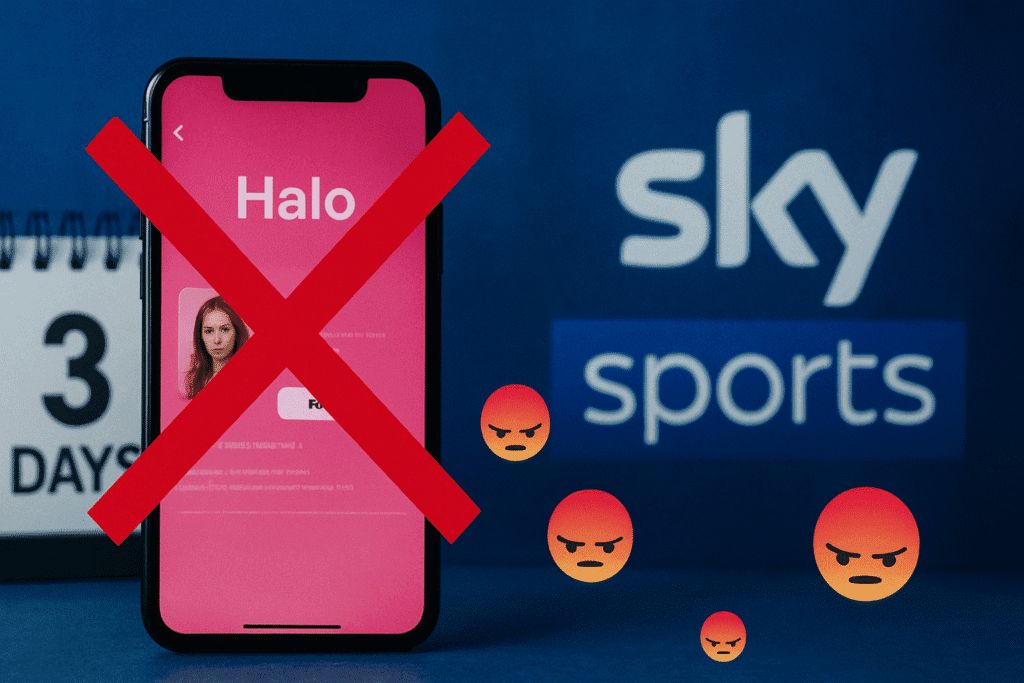
Sky Sports was forced to ditch its female-targeted TikTok channel Halo just three days after launch following widespread criticism that the content was patronising and unbelievably sexist. The broadcaster pulled the plug on Saturday after the youth-focused content, which positioned itself as the “lil sis” of Sky Sports, was greeted with instant derision from women sports fans who didn’t get it right.
The new Halo channel launched on Thursday with a now-deleted post promising to champion ALL sports and female athletes while building culture, community and connection. But instead of resonating with its aimed audience of young, female fans, the TikTok channel was littered with pink hearts, references to “hot girl walks“, “matcha” and “Barbies” that felt more like stereotypes than celebration. Despite claiming to focus on women, five of the channel’s first 11 videos featured male sports stars including Manchester City player Rayan Cherki linking up with Erling Haaland for one of the latter’s goals against Bournemouth.
The content quickly became heavily criticised across social media. One TikTok post titled “Explaining 2008 Crashgate in girl terms” was written in pink text with pink nail-polish emojis, prompting one user to call it an “absolute embarrassment”. Another video featured a clip accompanied by the caption “How the matcha + hot girl walk combo hits”, which viewers described as “most insanely patronising and misogynistic activations I’ve seen from a brand”.
Sky Sports initially backing the channel quickly performed a U-turn after listening to the backlash. The broadcaster sharing a post on X on Saturday, admitted: “Our intention was to create a space alongside our existing channel for new, young, female fans. We’ve listened. We didn’t get it right. As a result we’re stopping all activity on this account.”
The statement continued that they’re “learning and remain committed to creating spaces where fans feel included and inspired”. This unceremonious ditching came after just 72 hours, with social media users noting the channel had a shorter lifespan than the European Super League and this weekend’s international break in football. The rapid shutdown demonstrated how quickly brands can stumble when they misjudge their audience.
The women’s football website GirlsontheBall didn’t disguise its dismay when Halo launched. “The branding (one day can we please be past the pink/peach stage?!), the premise, the copy,” the site posted on X. “Can’t imagine this is what women sports fans want and taking a brief look at the comments it seems like we’re not alone.”
Women’s football magazine She Kicks called some posts “strange”, adding: “It is clear that Sky Sports are trying to grow their brand in women’s football but the new Halo channel seems to be going the wrong way about it.” One post about mayor-elect of New York with the caption “Thinking about Zohran Mamdani rizzing us and Arsenal up” particularly confused viewers. A commenter added: “Women don’t need a dumbed down version of sports, we’re perfectly capable of watching sports and following regular pages rather than needing to watch videos about wags or putting matcha in your caption.”
Under one critical comment, a user wrote: “Can’t believe this is what you think female sports fans like.” Halo’s response – “Can’t believe you brought that kind of energy” – only intensified the criticism. This defensive tone suggested the team behind the channel failed to understand the depth of concern about how they were representing women’s sports.
The backlash revealed a fundamental disconnect between what Sky Sports thought female fans wanted and what they actually wanted. Rather than content that treated them as serious sports enthusiasts, the TikTok posts included stereotypical references that many found insulting. The premised approach of creating a separate space for women backfired spectacularly when that space felt more limiting than liberating.
What This Means for Sports Broadcasting
The Halo debacle serves as a warning for broadcasters and brands attempting to reach female audiences in sports. You don’t need pink aesthetics or references to matcha to engage women who live and breathe sports. The incident shows that creating genuinely inclusive content requires understanding your audience rather than relying on gender stereotypes.
Fans welcomed the channel’s removal, with some joking that Halo had “passed away” and others sarcastically writing “RIP u will live on forever. Wanna run to u. Really can’t believe this.” While perhaps delivered with humour, the message was serious: women want to be treated as knowledgeable fans, not as a separate demographic requiring simplified content. The account’s rapid closure suggests Sky Sports understands they need to fundamentally rethink their approach to championing women in sports broadcasting.