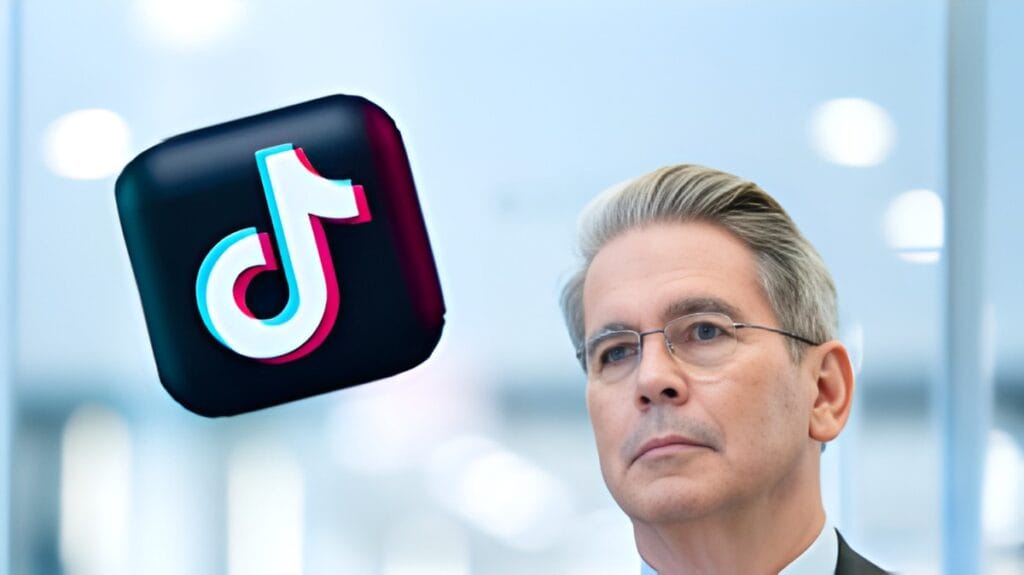
Treasury Secretary Scott Bessent dropped major news Thursday: the U.S. and China have finalized an agreement on TikTok. The deal means the popular social media platform can stick around for American users. Bessent wrapped up the talks in Kuala Lumpur, where he got Chinese approval on the whole thing.
Scott Bessent told Media he hammered out the final pieces while meeting with Chinese officials in Malaysia. “In Kuala Lumpur, we finalized the TikTok agreement in terms of getting that Chinese sign-off,” Bessent said. He’s expecting things to move pretty fast now. “And I expect it’ll go forward in the next few weeks and months. We’ll finally see a resolution to this whole mess.”
The timing matters here. TikTok users—there’s about 170 million of them in America—have been stuck in this weird waiting game for almost a year. Nobody knew if their favorite app would suddenly disappear. Now Bessent’s announcement gives them something solid to hold onto, though the paperwork still needs finishing.
Here’s how it actually went down: President Trump approved the deal last month after receiving the green light from Xi Jinping. Trump needed that go-ahead from China’s president before anything could happen. This wasn’t just some random policy move either. Trump promised to fix the TikTok situation during his 2024 campaign. He kept saying he’d save the app, and now he’s delivered.
Under what they worked out, TikTok will be spun off into its own separate U.S. entity. Think of it like TikTok getting divorced from its Chinese owners and remarrying American companies. The whole point is keeping the app alive while cutting ties with Beijing. Trump repeatedly delayed the ban deadline—like, over and over again—to buy time for these negotiations.
So who’s taking over? TikTok gets majority owned by American investors such as Oracle and Silver Lake. Oracle’s already running a lot of TikTok’s backend tech stuff anyway. Silver Lake brings the money and the business know-how. Both companies have deep connections in Washington, which doesn’t hurt when you’re trying to satisfy government security types.
The whole setup is designed to limit how much control ByteDance—that’s TikTok’s China-based parent company—keeps over the American version. ByteDance built TikTok, sure, but Congress wanted them out. This new structure lets ByteDance keep a small piece while American companies run the show. It’s about making the U.S. government comfortable that Beijing can’t get its hands on American user data.
Back up a second. There’s a 2024 law that forced this whole situation. Congress passed it with huge support from both parties—rare these days. The law basically said ByteDance had to divest or watch TikTok get banned across U.S. networks and app stores. No middle ground. Either sell it off or face total shutdown.
The app’s future remained in limbo for nine months while everyone figured this out. Trump kept pushing back the deadline, which gave negotiators room to work but also drove TikTok creators crazy. These people built entire businesses on the platform. The effort to reach some kind of agreement took forever because you’re balancing national security concerns, business interests, and the fact that millions of Americans use this thing every single day. The divest-or-ban law wasn’t a suggestion—it was a hard deadline that Trump kept extending.
Don’t expect Beijing to throw a party over this. China is being careful about how it talks about the deal. A spokesperson from the Chinese Ministry of Commerce said Thursday that Beijing will “work with” Washington to sort out TikTok issues. Notice they’re not celebrating or making big promises. Just tepid acknowledgment that talks are happening.
The Ministry of Commerce picks its words carefully. China doesn’t want to look like it’s caving to American pressure, but they also don’t want to blow up a deal that took months to build. More details about how Chinese rules fit with the new American structure? Still being worked out. Both sides are tiptoeing around anything that might restart arguments and kill the whole thing.
This TikTok news didn’t happen in a vacuum. The latest development came right as Trump and Xi met in South Korea for major talks. The two world leaders sat down in Seoul—a highly anticipated meeting—to hash out way more than just TikTok. They agreed to ease recent trade tensions that had been getting ugly. Trump’s scaling back tariffs on Chinese goods. China’s delaying export controls on rare earth minerals—the stuff you need for phones and military gear.
China also said it’s resuming some soybean purchases from American farmers, which matters a lot to farm states. And the tariffs thing? That’s been hurting both countries’ economies. Rare earth minerals became this whole bargaining chip because China controls most of the world’s supply. They threatened export limits, which would’ve been a mess for American tech companies. By delaying those controls, Beijing gave Washington something it desperately wanted. All these pieces—TikTok, trade, tariffs, soybean deals—they’re connected. You can’t separate the tech fights from the bigger economic relationship between these two countries. Trump and Xi needed to make progress on multiple fronts at once, and this South Korea meeting gave them the chance to package everything together where both sides could claim wins.