Federal Reserve board governors are in some serious drama this Monday because member Stephen Miran basically called out his fellow central bankers for keeping interest rates way too high. This guy just gave his first speech after leaving the White House to join the Fed, and he’s already defending that weird consensus-breaking vote to lower rates last week. You don’t usually see Fed officials going at each other like this in public. Miran straight up said the bank was threatening the U.S. job market by sticking with the current level of rates, saying they seem close to a range that neither stimulates nor restricts the economy. The Federal Open Market Committee (FOMC) – basically the panel of Fed officials who are responsible for setting interest rates – had this crazy 11-1 decision last week to cut rates by 0.25 percentage points, reducing borrowing costs for the first time this year.
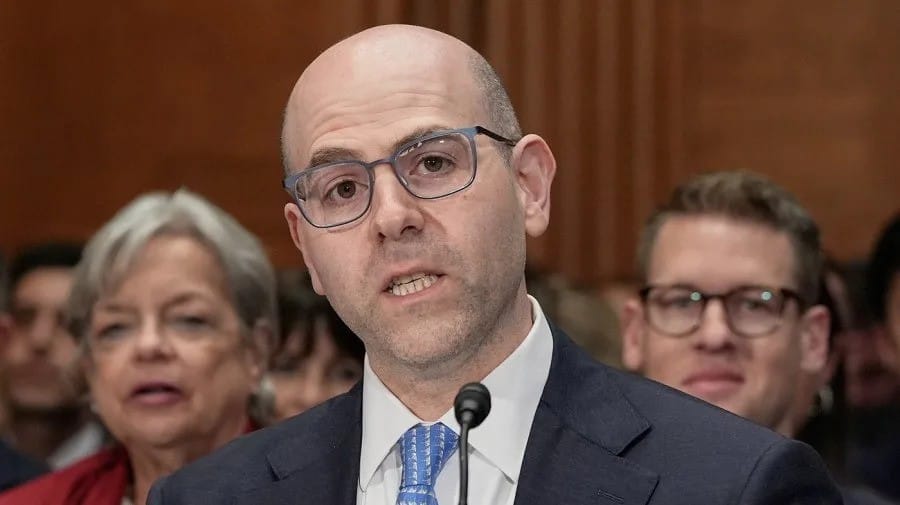
Miran’s whole view that appropriate monetary policy diverges from other FOMC members boils down to him thinking rates are still very restrictive and pose material risks to the employment mandate. He used his speech to explain why he voted against everybody else. The President’s massive changes to taxes, trade, and immigration policies have touted several Trump administration policies that Miran believed justified steep cuts. The way these changes require much more aggressive action to keep the economy growing is pretty clear now. Miran argued his fellow bankers haven’t really pushed for the true neutral rate they need given what’s happening, and the order of priorities needs fixing to maintain stable growth.
Economic Advisor’s Controversial Transition Creates Fed Independence Concerns
Only until recently, Miran served as Trump’s top White House economist before taking a temporary leave from his position as chair of the White House Council of Economic Advisers (CEA). Now he’s serving the remaining four months of a vacated term on the Fed board of governors. Democrats and economists have described his presence and refusal to resign as clear violations of the bank’s independence. Throughout the Senate confirmation process, Miran insisted he would make interest rate decisions exclusively based on his own view of the economy, even with Trump’s frequent calls for lower rates and tirades against Fed officials. The overlap between his work for Trump and his maiden speech as a governor was super obvious when he credited the administration’s policies with reshaping economic conditions, citing research he produced under his watch at the CEA. This kind of policy continuity between roles is definitely raising eyebrows.
Miran said the combination of Trump’s mass deportations of undocumented immigrants and higher tariff revenues would sap enough energy from the economy to require significantly lower interest rates. He opposed the recent move and instead called for a 0.5 point cut, citing steep declines in hiring and job openings at the start of 2025. Fed officials have attributed these changes to immigration policy, with estimated 2 million people who could be deported by the end of the year. Labor market statistics and anecdotal evidence suggest the border policies are exerting a major impact, though this effect will likRate Precision Versus Unemployment Risk in Policy Settingely normalize over time with a reduced level of population growth consistent with zero net migration in 2026 and 2027. Accounting for expected increases in investment driven by tax law changes and deregulation, Miran argued the result justifies cutting rates to somewhere between 1.5 percent, far below the bank’s current range of 4 to 4.25 percent.
Fed Rate Precision Versus Unemployment Risk in Policy Setting
Miran acknowledged that his analysis isn’t built on absolute precision, noting that the economics behind his recommendations could face scrutiny. Monetary policy decisions inherently rely on assumptions and approximations, he explained. Even so, policymakers must take a firm stance grounded in their best assessment of economic conditions. His analysis concludes that monetary policy remains deeply in restrictive territory, posing serious risks to the labor market. Keeping short-term rates at their current level leaves them roughly 2 percentage points above what he considers appropriate, unnecessarily tightening financial conditions and raising the risk of avoidable layoffs and rising unemployment. Miran’s push for far more aggressive rate cuts than his colleagues are willing to support underscores his central concern — that prolonged policy tightness could inflict real and preventable damage on American workers.