A Tennessee religious charter school fight is heading to court, potentially setting up another Supreme Court showdown after justices deadlocked on a similar Oklahoma case earlier this year. Christian nonprofit Wilberforce Academy filed a lawsuit against the Knox County School Board, challenging a state law that bans religious institutions from operating charter schools, just days after Attorney General Jonathan Skrmetti issued a legal opinion supporting such schools.
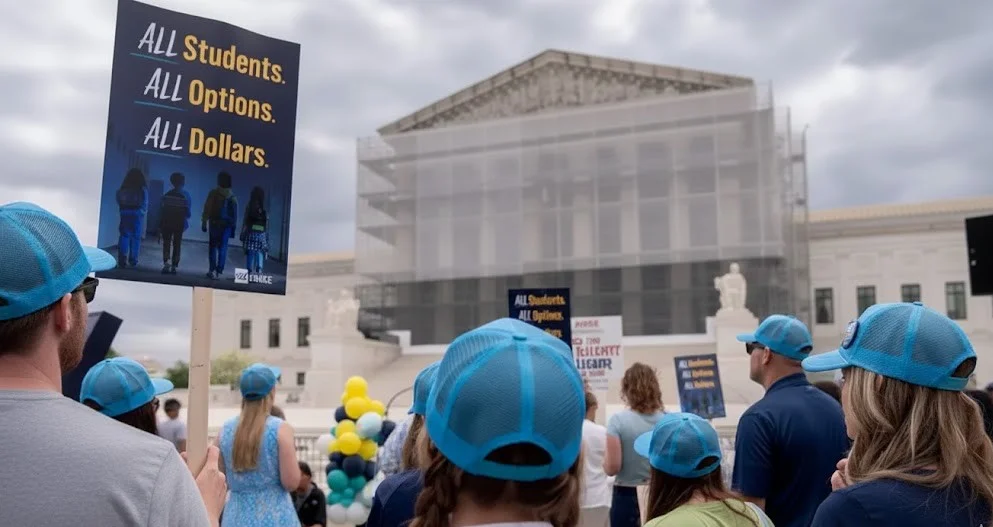
The new legal battle comes months after the Supreme Court deadlocked in May on the constitutionality of what would have been the nation’s first religious charter school in Oklahoma. Justice Amy Coney Barrett recused herself from that decision due to personal connections to one of the plaintiffs, leaving the high court split evenly at 4-4. This effort could allow all nine justices to vote if the case is eventually taken up for a court decision.
The Tennessee lawsuit represents a direct challenge to how America approaches the separation of church and state in public education. Opponents argue that allowing religious entities to operate charter schools with taxpayer funding would flagrantly violate constitutional principles. The ban exists because state law traditionally prevents religious institutions from receiving public benefit solely based on their religious character.
Attorney General Skrmetti’s legal opinion, released late last month, argues the Supreme Court has held that excluding religious entities from public funding penalizes free exercise and triggers the “most exacting scrutiny.” This interpretation set the stage for Wilberforce Academy to file its alleged discrimination claim against the Knox County School Board just days later, claiming they deserve equal treatment under the law.
Legal observers expect the Tennessee process to follow a similar path to Oklahoma, where officials were at odds over a virtual Catholic school that was set to receive public funding. The Drummond case became a live issue that exposed deep divisions on the court. Jeremy Dys, senior counsel at the First Liberty Institute, sees this as an opportunity for the court to address the matter with a proper vehicle.
“Obviously, the Supreme Court did not come to a decision in the Drummond case. They were split evenly. And so, this case is a live issue. This matter is a live issue that the court, I think, wants to address, but is obviously going to have to have a vehicle by which to address it, which requires a lawsuit. Maybe this will be the one or not,” Dys said. Activists on the right are looking for another way to bring the question back before all nine justices.
The conservative members of the Supreme Court, apart from Chief Justice John Roberts, proved friendly to the idea of allowing religious charter schools. Liberal justices balked at the concept, viewing it as a dangerous slope for the schooling system. During oral arguments in the Oklahoma case, Justice Brett Kavanaugh defended the position that religious schools aren’t asking for special treatment or favoritism.
“They’re not asking for special treatment. They’re not asking for favoritism,” Kavanaugh said during oral arguments. “They’re just saying, ‘Don’t treat us worse because we’re religious.'” This perspective highlights how conservative justices view the issue as one of equal access rather than establishment of religion. The disappointed conservative bloc, minus one recused justice, couldn’t secure the decision they wanted.
Charter schools present themselves as another public school option that receive public funding but run independently with more freedom in terms of enrollment and curriculum. This structure creates tension when religious institutions seek to participate. Opponents fear this could fundamentally change how the country approaches public education and represents a reversal of longstanding principles.
George Theoharis, a professor at the School of Education at Syracuse University, warns of the implications. “I think it becomes a really slippery and dangerous slope for our public schools in our schooling system… this country was built on the idea of religious liberty, religious freedom, and that means that the government doesn’t take a position on religion, and publicly funding religious schools is a reversal of that,” Theoharis explained. The debate centers on whether equal access or separation should prevail.
The next step involves arguments and a decision from the United States District Court for the Eastern District of Tennessee. There’s no guarantee the case will reach the nation’s highest court, according to legal experts. Patrick Elliott, legal director for the Freedom from Religion Foundation, believes it’s speculative to assume the Supreme Court would be interested in taking up this particular case.
“I think it’s speculative to say that this case would make it to the Supreme Court. We don’t really know whether the Supreme Court would be interested in a case like this. There are a number of reasons why this case wouldn’t be appropriate for Supreme Court review. For one, at this point, there does not appear to be a split among lower courts,” Elliott said. Secondly, this issue relates a lot to state law, and there may be state law reasons why this type of charter school couldn’t form, regardless of if it’s affiliated with a particular religion or religious institution. Elliott hopefully expects the case will end at the district court with Knox County prevailing.
The brewing showdown will test whether the Supreme Court takes cases back-to-back on similar issues and whether it’s possible to resolve this live issue without a full bench decision. The potential for this challenge to become the vehicle the court needs remains uncertain, but the lawsuit filed by Christian nonprofit organizations signals a determined effort to say religious schools deserve equal standing. Whether officials find themselves at odds again or the court delivers a clear ruling will shape America’s public education landscape for generations.