International students newly enrolling in American universities have plummeted by 17% this fall—the sharpest drop in over a decade if you don’t count the pandemic year. Figures released Monday, Nov. 17 by the Institute of International Education paint a troubling picture: America is losing its appeal as the top destination for foreign talent, and visa restrictions under the Trump administration seem to be the main culprit.
Walk onto any university campus these days and you’ll notice something’s different. There are simply fewer international students around. The study, which looked at over 800 higher education institutions, found that 57% of universities reported a decrease in new foreign arrivals. Just 29% saw increases. The rest held steady, barely managing to maintain last year’s numbers.
What’s particularly alarming is that the total number of international students across all US campuses decreased by 1% from the last academic year. Now, that figure includes everyone already here—students who enrolled in years prior. Strip that away and look only at fresh arrivals, and you’re staring at a 17% freefall. That’s not a gentle slide. That’s a nosedive.
Most schools cited visa-related concerns and travel restrictions when asked what’s going wrong. And honestly, can you blame foreign-born students for having second thoughts? The application process has turned into something of a gamble.
President Donald Trump’s second term in office has made life decidedly harder for anyone trying to study in the United States. The hurdles imposed aren’t just bureaucratic annoyances anymore. We’re talking visa terminations, harsher screenings, and—here’s the kicker—actual detentions for students who voiced support for pro-Palestinian causes.
In May, the administration moved to halt students from entering the country to study at Harvard University. A federal judge blocked that particular move, but the damage was done. The message rang loud and clear: you’re not exactly welcome here. That same month, Secretary of State Marco Rubio announced the U.S. would “aggressively revoke visas” from Chinese students.
The Institute of International Education, a nonpartisan organization that’s been tracking these patterns since 1919, calls this a developing trend. Last year’s annual report already noted a 7% decline. This year’s 17% shows we’re not just sliding—we’re accelerating downhill.
Then things got weird. Last week, Trump defended a plan he’d announced back in August to give 600,000 visas to Chinese students looking to study here. His reasoning? “It’s not that I want them, but I view it as a business,” he said during an appearance on Electronic Media. He argued that foreign students are “vital to keeping American universities afloat.”
So let me get this straight. In spring, the Trump administration was essentially clamping down on international students, drawing rebuke from educators and triggering legal challenges from universities. By summer, there’s talk of handing out 600,000 visas. By fall, enrollments have plummeted to levels we haven’t seen in a decade.
The mixed messages aren’t just confusing—they’re destructive. Students trying to navigate this landscape are making plans two or three years out. They need stability. They need to know the rules won’t change halfway through their degree. Right now, they’re getting neither.
University admissions directors I’ve spoken with off the record describe the situation as “chaotic” and “unprecedented.” One told me they’ve lost count of how many prospective students have simply withdrawn applications mid-process, citing uncertainty. Another said international recruitment feels like “selling a product that might not exist tomorrow.”
Researchers who study these trends keep pointing out something politicians seem to miss: international students don’t just pay tuition. They contribute somewhere north of $40 billion annually to local economies. They rent apartments. They buy cars. They eat at restaurants. They help create roughly 450,000 jobs across the United States.
A foreign-born graduate student in engineering isn’t just filling a seat—they’re often conducting research that leads to patents, startups, and medical breakthroughs. About half of America’s billion-dollar startups were founded by immigrants. You don’t build that kind of innovation ecosystem by moving to halt the very people who fuel it.
The obstacles these students now face go beyond normal visa paperwork. We’re talking about a fundamental shift in how welcoming America feels. When you couple policy uncertainty with occasional detentions and aggressive rhetoric, talented people start looking elsewhere. Canada’s universities are seeing record applications. So are Australia’s. So are Germany’s.
Talk to anyone at a state university heavily dependent on out-of-state tuition, and they’ll tell you the financial model is breaking. International students typically pay full freight—no in-state discounts, no need-based aid in most cases. That money funds everything from faculty salaries to lab equipment.
Some schools are already cutting programs. Others are freezing hiring. A few are considering mergers. The ripple effects touch everything from campus housing occupancy to the viability of certain graduate programs. An engineering department that once attracted top talent from India and China finds itself with half-filled seminars. A business school watching its international MBA cohort shrink by 30% starts questioning whether specialized programs can continue.
The sampled institutions in this study represent just a snapshot. Smaller schools that didn’t make the cut are often hurting worse. They lack the endowments and name recognition to weather a sustained drop in enrollments.
The Bigger Picture
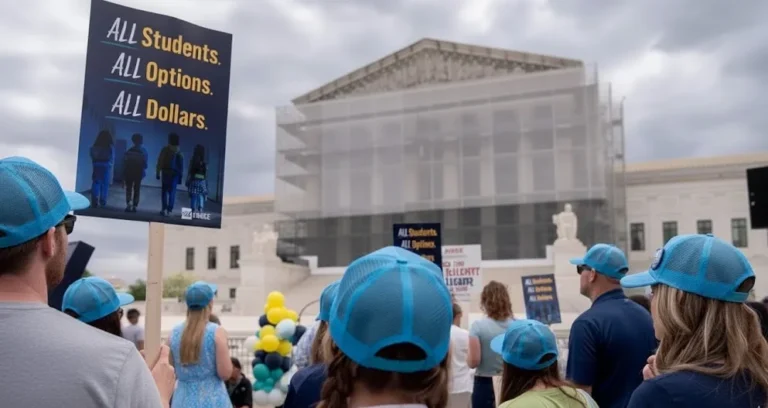
This isn’t happening in a vacuum. The Trump administration has sent signals throughout the year that foreign-born students occupy an ambiguous space in American policy—sometimes valued for economic contributions, sometimes viewed with suspicion. That ambiguity is lethal for international recruitment.
The stance regarding these students keeps shifting. One month brings protests on campuses demanding more open policies. The next brings policy tightening. Students faced with this whiplash increasingly decide it’s not worth the hassle.
America spent decades building a reputation as the place ambitious students worldwide wanted to be. That reputation is burning down faster than anyone expected. The question isn’t whether this matters—it obviously does. The question is whether the damage can be reversed, or whether we’re watching a permanent shift in global education patterns.
Universities nationwide are holding their breath, hoping next year brings better news. Based on current trajectories, that hope might be misplaced.