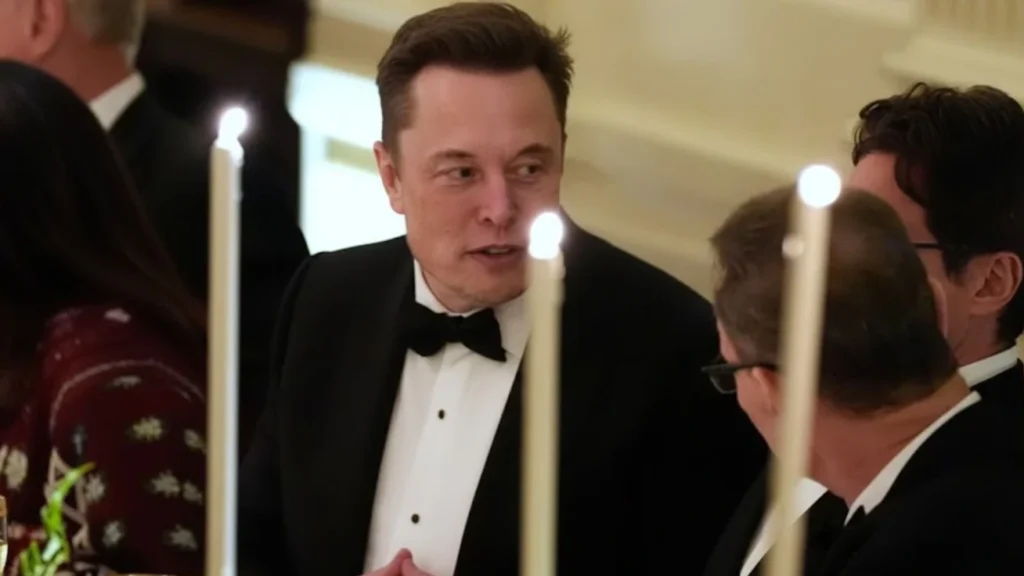
Elon Musk dropped a bombshell Wednesday at the U.S.-Saudi Investment Forum: work might become completely optional in the future, and money could lose all meaning. The billionaire Tesla CEO made these eye-popping claims while addressing fears about what artificial intelligence means for jobs. Speaking alongside Nvidia CEO Jensen Huang, Musk painted a picture of tomorrow that sounds more like science fiction than reality.
His comments have sparked heated discussion among tech leaders, economists, and workers worried about their careers. Is this a realistic forecast or just another wild prediction from the world’s richest man? Either way, the statement forces us to think differently about employment, labor, and what drives our economy.
Elon Musk used a surprisingly down-to-earth analogy when the tech mogul explained his vision. Think about vegetables, he said. You can walk into any store and buy them, or you can spend hours in your backyard trying to grow them yourself. Most people choose the easier path because, let’s face it, gardening takes real effort.
“It’s much harder to grow vegetables in your backyard, but some people still do it because they like growing vegetables,” Musk explained. That’s exactly how work will function down the road—something you do out of personal preference, not survival. Want to pursue a career? Great. Prefer playing sports or treating life like a video game? That works too. The choice becomes yours when AI and robotics handle everything we currently consider necessary labor.
The comparison makes sense when you think about it. Gardening shifted from necessity to hobby for most Americans. Musk believes employment will follow the same pathway, transforming from obligation into optional activity. Right now, that sounds crazy. But between where we stand today and that future state, there’s “actually a lot of work to get to that point,” he added.
This transition period won’t happen overnight. Musk acknowledged the journey requires massive advancement in technology before his vision becomes reality. We’re talking about continued improvement in AI systems and robots that can handle the mundanely boring stuff, the arduously tough tasks, and even things we find difficultly complex today.
The timeline stays fuzzy. “My guess is, if you go out long enough, assuming there’s a continued development in AI and robotics, which seems likely, money will stop being relevant at some point,” Musk said. That’s a big assumption. It means automation needs to reach levels where productivity explodes and scarcity disappears. The probability of that happening depends on whether the AI boom keeps powering forward or hits unexpected walls.
This progression toward a post-work world remains speculation for now. The current state of AI shows promise but hasn’t revolutionized the job market yet. Experts point out that artificial intelligence barely registers in employment data so far. The transformation might take decades, giving the workforce time to adapt rather than face sudden displacement.
Musk didn’t stop at reimagining work—he went straight for our entire financial system. The bold forecast suggests currency itself becomes obsolete when AI reaches full maturity. No more cash. No more worrying about payment systems or checking your bank account. The whole monetary system just fades away because everything you need gets produced effortlessly.
“Money will stop being relevant,” Musk declared with characteristic confidence. This idea pushes way beyond automation replacing factory jobs. We’re talking about abundance so complete that tracking wealth becomes pointless. The economic model flips entirely. Instead of careers determining your lifestyle, you pursue whatever brings enjoyment without financial pressure.
Sound futuristic? Absolutely. Jensen Huang clearly thought so too. “When currency doesn’t matter anymore, let me know right before,” he joked in an aside to Musk, drawing laughs from the panel. The Nvidia CEO clearly approaches these long-range predictions with healthy skepticism while staying focused on nearer-term realities.
Huang offered a more measured perspective during the same discussion at the international investment conference. His company supplies the chips that power the entire AI revolution, so he knows the technology’s capabilities and limits. “Everybody’s jobs will be different, I think that’s for sure,” Huang said, keeping his outlook grounded in what’s actually happening now.
The Nvidia chief executive believes AI will change how students learn and how people handle work, but not eliminate employment entirely. All those tasks we find tedious or challenging? They’ll get done more simply, freeing up time and mental space. “So we’re going to be productive in that sense,” he explained. You’ll become busier, not jobless, with more time to chase new ideas and innovation.
Huang even predicted that Elon himself will be “busier as a result of AI.” The efficiency gains from simplified tasks don’t mean less work—they mean different work with higher output and enhanced productivity. Your workload shifts toward creativity and opportunities rather than routine drudgery. That vision feels more achievable than Musk’s post-money world.
Huang has repeatedly argued in recent months that technology will change jobs but not trigger mass job loss. His consistent messaging aims to calm anxiety and uncertainty in the workforce. The tech industry leader sees adaptation, not elimination, as the real story.
But not everyone shares his optimism. Anthropic CEO Dario Amodei has warned that AI could wipe out half of entry-level white-collar jobs in the next few years. These contrasting views from major tech figures show how much uncertainty clouds the future. Will AI create more opportunities than it destroys? Or are millions of junior positions and professional jobs facing displacement?
The truth probably lands somewhere between Musk’s radical vision and Amodei’s darker warnings. The near-term impacts matter most for workers today. You need to know whether your occupation faces risk or transformation, and what skills might help you adapt.
The debate playing out at forums like the U.S.-Saudi gathering affects everyone’s career planning. Whether work truly becomes optional or just dramatically different, the job market faces real evolution. The semiconductors and processors driving the AI boom keep getting more powerful. The hardware improves. The software gets smarter.
Where does that leave you? The transition gives you time to adjust if you start now. Focus on skills that complement AI rather than compete with it. Think about what parts of your job involve creativity, complex problem-solving, or human connection. Those areas stay relevant even as automation spreads. The pathway forward requires learning new approaches while staying flexible.
Musk might be right about the distant future. Maybe work does eventually become something you choose like a hobby, and money really does stop mattering. But that long-term vision doesn’t change what you need to do today. Stay informed. Keep building valuable skills. And don’t panic every time a billionaire makes a wild prediction about robots taking over.