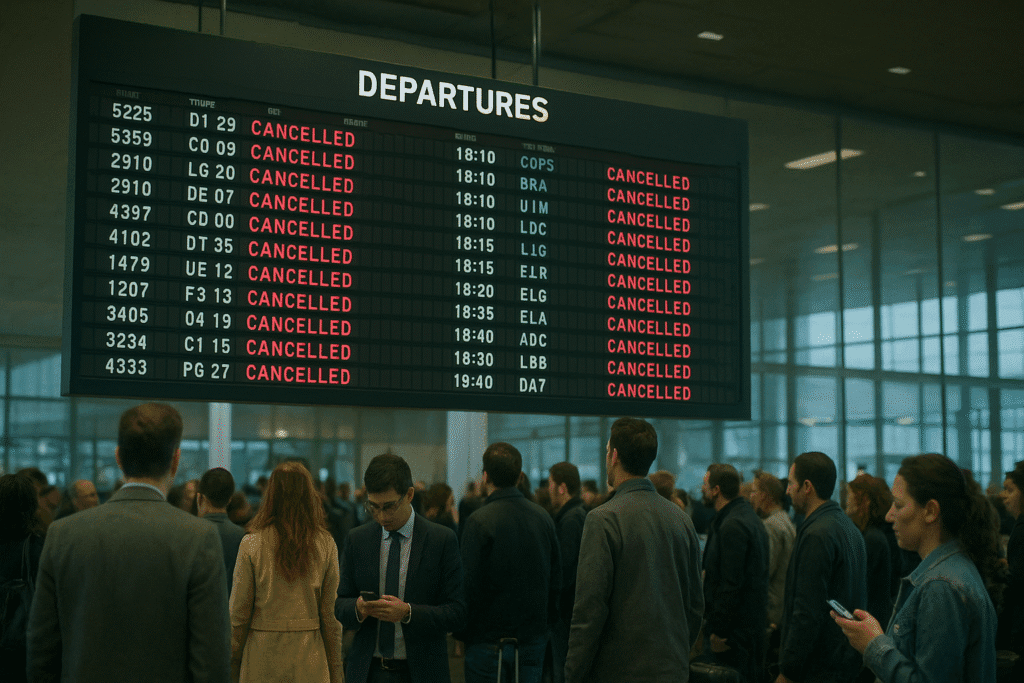
The nation’s air travel system teetered on the edge of chaos Friday as Transportation Secretary “Sean Duffy” delivered a stark warning: if the government shutdown drags on, airlines might face mandatory cuts of up to 20% of their flights.
It’s already happening. Starting at 6 a.m. Friday morning, the Federal Aviation Administration ordered airlines to slash 4% of flights at 40 major airports. That’s roughly 700 flights from just the big four carriers—American, Delta, Southwest, and United. And this is just the beginning.
By Tuesday, that 4% jumps to 6%. Come November 14, we’re looking at 10% cuts across the board. Unless Congress and the White House end this impasse, Duffy says he’s prepared to go even higher.
“I assess the data,” Duffy told reporters Friday. “We’re going to make decisions based on what we see in the air space.”
What he’s seeing isn’t good. Planes getting too close together. Ground incursions at airports. Pilots complaining that controllers seem stressed and less responsive. The numbers, as Duffy put it bluntly, “are going in the wrong direction.”
Here’s the brutal math: During this 38-day shutdown—already the longest on record—13,000 air traffic controllers and 50,000 TSA screeners have been showing up to work without paychecks.

FAA Administrator “Bryan Bedford” dropped a bombshell earlier this week: on any given day, somewhere between 20% and 40% of controllers aren’t showing up. Can you blame them? They’re working for IOUs while rent and bills come due.
Friday alone saw air traffic controller absences force delays at nine major airports, including Atlanta, San Francisco, Houston, Phoenix, Newark and Washington. By early afternoon, more than 2,600 flights were delayed nationwide.
Airlines Are Scrambling
“Robert Isom“, who runs American Airlines, tried to sound reassuring on media Friday. The initial cuts won’t significantly disrupt customers, he said. But then came the warning: “This level of cancellation is going to grow over time and that’s something that is going to be problematic.”
American cancelled 220 flights Friday, affecting 12,000 passengers. The airline managed to rebook most within a few hours, but that gets harder as cancellations pile up. United pulled 184 flights Friday, with 168 more Saturday and 158 Sunday. They got half their affected passengers on flights within four hours of their original departure times.
The weekend brings a brief respite since fewer people fly Saturdays and Sundays anyway. But come Monday, the crunch returns.
Airlines got almost no warning. The FAA didn’t publish which airports would face cuts until 7:30 Thursday night—less than 12 hours before the restrictions kicked in. Carriers had raised concerns about a draft order; the FAA largely ignored them.
Now airlines are dealing with two crises simultaneously. First, the mandatory government cuts. Second, the ongoing staffing shortage as controllers call out sick or simply don’t show up. The Federal Aviation Administration is deliberately slowing traffic at some airports to compensate for missing controllers, which cascades into more delays everywhere else.
Duffy had originally planned to order 10% cuts starting Friday, but his safety team talked him down. Going straight to 10% “could be even more disruptive,” he explained. So they’re phasing it in, starting at 4%.
The safety data spooked officials into action. Incidents of planes not maintaining proper separation. Ground incursions where aircraft, vehicles or people end up where they shouldn’t be on airport surfaces. Controllers missing radio calls or responding slowly.
“We’ve had more complaints from pilots that have said, well, the controller is less responsive to me, or controllers seem to be more stressed,” Duffy said.
The FAA is even restricting space launches now. And they’ve warned they could reject specific flight cuts if they disproportionately hurt certain communities. There’s also talk of cutting general aviation—private planes and charters—by up to 10% at busy airports if this continues.
International flights are exempt for now, though connecting passengers will still feel the pain.
Nobody knows when this shutdown ends. Until it does, expect things to get worse. Duffy made clear he’s willing to go to 20% cuts, which would ground one in five flights. That’s unprecedented in American aviation history outside of events like 9/11 or volcanic ash clouds.
Check your flight status obsessively if you’re traveling soon. Arrive earlier than usual. Have backup plans. The system is straining under pressure it wasn’t designed to handle.
Airlines have waived change fees for now, small comfort for travelers watching their plans dissolve. The FAA is making decisions day by day, assessing real-time data about controller availability and safety incidents.
This isn’t just about inconvenience anymore. When safety teams at the nation’s aviation regulator start talking about planes not maintaining separation and controllers being too stressed to respond properly, we’ve crossed into genuinely dangerous territory.
The shutdown has been going 38 days. Controllers and screeners have missed multiple paychecks. The cracks in the system are turning into fissures. And unless something changes in Washington, those 20% cuts Duffy warned about aren’t a threat—they’re increasingly looking like an inevitability.