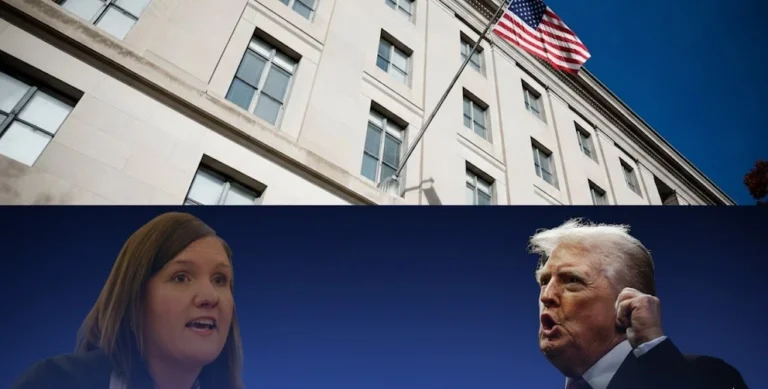
Charlie Kirk’s assassination on Wednesday has sparked urgent questions about whether fear will destroy the country we’re trying to save. The conservative firebrand from Illinois who built a movement around limited government and traditional values died doing what democracy demands – standing before crowds and speaking his convictions.
This tragic American tradition of political leaders killed by bullets forces us to confront a haunting question: Will fear overtake America? The answer lies in understanding how our nation has survived far worse periods of violence and division throughout history.
America’s Choice: Fear or Future
Charlie Kirk’s tragic death reminds us that America stands at a crossroads between fear and hope. History proves we’ve survived worse divisions – from the Civil War to the turbulent 1960s – by choosing courage over cowardice and unity over division. The question isn’t whether we can overcome this moment of darkness, but whether we’ll summon the collective courage to listen, understand, and rebuild the bridges that make us stronger together. Our shared American identity has always been more powerful than the forces trying to tear us apart.
Political Violence Reaches New Watershed Moment
Kirk’s assassination feels like a watershed moment, but America is not experiencing its most violent political era. Today’s political violence, troubling as it is, doesn’t approach the systematic bloodshed of the 1960s. That decade saw assassins kill President John F. Kennedy, Malcolm X, Martin Luther King Jr., and Robert F. Kennedy within five years.
The riots following King’s murder alone required federal troops to contain violence in hundreds of cities, with 43 people dying in the immediate aftermath. Yet even this unprecedented period pales before the Reconstruction Era, when organized white supremacist groups like the Ku Klux Klan systematically terrorized the freed Black population, killing at least 1000 Americans in what amounted to a campaign of political terrorism.
Historical Patterns Reveal Deeper Truths About Division
Three eras of American political violence share a pattern that creates these explosive moments. Each period coincided with massive technological and cultural upheavals that fundamentally threatened existing power structures. The Reconstruction Era brought railroads, telegraphs, and the end of slavery – changes that remade American society and economy.
The 1960s saw television brought into living rooms while social movements challenged everything from racial hierarchies to gender roles. Today’s era features social media, globalization, and demographic shifts that are reshaping American identity itself. In each case, the violence emerged in part from fear of losing a familiar way of life.
Modern Technology Amplifies Ancient Fears
The divisions that seem insurmountable today are amplified by new technologies that spread both information and misinformation at unprecedented speed. This creates conditions where political disagreement turns into existential warfare. Social media platforms transform policy questions into tribal battles where compromise becomes treason and listening becomes weakness.
Look at what we’re actually fighting about today: artificial intelligence, TikTok ownership, climate policies, gender identities, immigration levels, and educational curricula. These are policy questions, not holy wars. But fear merchants have transformed them into battles where understanding the other side feels like betrayal.
Democracy Demands Courage Despite Personal Risk
Robert F. Kennedy and Charlie Kirk could not have been more different. Kennedy was a liberal lion from Massachusetts who championed civil rights and fought poverty. Kirk rose from suburban obscurity to become a conservative voice willing to risk personal safety for causes he believed in. Kennedy quoted Greek poetry; Kirk quoted the Constitution.
Both men defy comparison, but their deaths illuminate something identical: they lived and died in eras when America’s divisions became so toxic that disagreement repeatedly turned to violence. Democracy demands that leaders stand before crowds, speaking their convictions despite personal risk. This courage defines what makes American democracy function.
Historical Lessons Offer Hope for National Unity
History shows us the antidote to fear-driven division. It’s the same radical American idea that built the railroad, won two world wars, put a man on the Moon, and created the internet. Strangers can become neighbors. Different voices strengthen rather than threaten the whole. Diversity becomes our superpower when we choose cooperation over conquest.
This means our media must reward bridge-building over bomb-throwing. Our laws must protect democratic norms even when breaking them might benefit our side. Our approach to technology must prioritize human connection over corporate profit. Most importantly, we must recommit to the hardest American ideal: listening to those we disagree with, not to change their minds, but to understand why they fear what they do.
The Path Forward Requires Collective Courage
Kirk’s assassination serves as a warning about what happens when fear of the stranger begins to govern us. If we let this fear overtake America, it will destroy not only those we despise – it will destroy us too. But if we choose the harder path of empathy and engagement, we can remember that America’s strength has always come from making room for the next wave of newcomers and their ideas.
Cheryl Kelley, a former senior government official with experience across five Cabinet agencies and author of “An Informed Citizenry: How the Modern Federal Government Operates”, argues that America can remain what it has always been at its best: a country that moves forward together. Even now, we can survive this moment by remembering that our shared American identity is stronger than the forces trying to divide us.