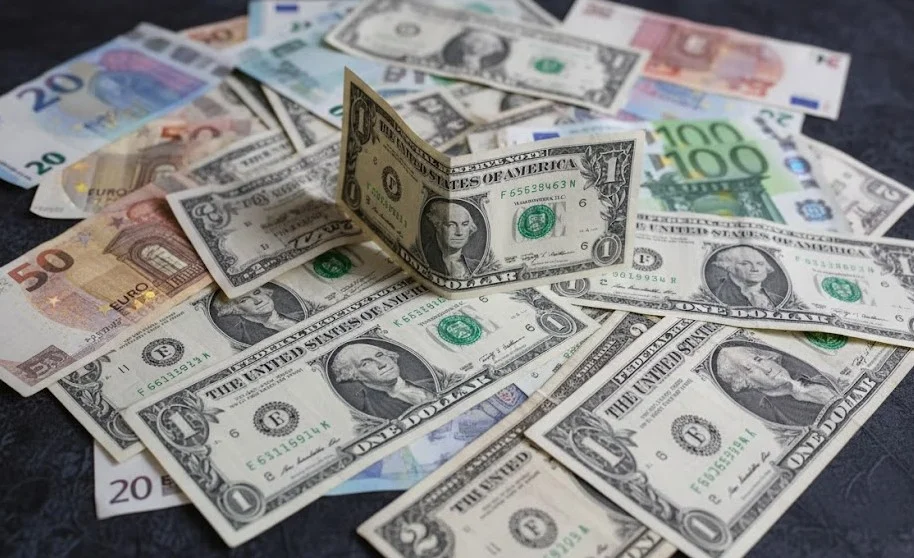
The U.S. dollar took a beating on Wednesday afternoon, sliding against major peers as the Federal Reserve rolled out its widely expected rate cut. Within minutes of the announcement, the greenback tumbled 0.58% versus the Swiss franc to 0.801, while dropping 0.4% to 156.24 against the Japanese yen. The euro jumped 0.39% to $1.167, and suddenly everyone in the FX market was talking about what comes next for the world’s reserve currency.
Here’s where things get interesting. The Federal Reserve lowered its benchmark policy rate by a quarter percentage point to the 3.50%-3.75% range, but three dissents broke out during the vote. That’s unusual. Chicago Fed President Austan Goolsbee and Kansas City Fed President Jeffrey Schmid both argued rates should be left unchanged—a clear hawkish signal. They’re worried about inflation coming back.
Then you’ve got Fed Governor Stephen Miran on the other side, pushing hard for a larger half-percentage-point reduction. He wanted 50 basis points, not just 25 basis points. That’s a dovish stance that says the economy needs more help right now. This kind of disagreement among voting members at an FOMC meeting tells you the monetary policy committee doesn’t have a clear path forward. The split decision suggests the Federal Open Market Committee is flying a bit blind here, trying to read economic tea leaves that keep changing.
The dollar lost ground the moment traders digested the news. We’re talking immediately after the Fed’s policy decision hit the wires. The currency decline wasn’t subtle either—trading desks saw the weakening spread across multiple forex pairs within seconds. The market response showed just how sensitive exchange rates have become to central bank moves.
Look at the numbers. Against the CHF, the dollar weakened to 0.801. That’s real depreciation in action. The JPY pair showed similar USD weakness, with the currency hitting 156.24. These aren’t just abstract figures on a screen. For companies doing business across borders, these trading levels mean their costs just shifted. The price action on Wednesday caught some traders flat-footed, especially those betting the greenback would hold steady.
The sell-off gained steam through the afternoon trading session. What started as a measured decline turned into something more pronounced as more players jumped in. That’s typical market reaction when the Fed surprises people—not with what it does, but with how divided it appears to be.
The dollar index painted an even clearer picture of the USD’s troubles. This benchmark index, which measures the greenback against a basket of currencies including the yen and euro, fell 0.38% to 98.84. The DXY—that’s what traders call it—serves as the go-to forex indicator for tracking overall dollar strength. When it drops, you know the currency depreciation is real.
Think about what a trade-weighted index decline means for regular folks. If you’re planning a European vacation, your dollars suddenly buy less. That 0.38% percentage decline might not sound huge, but it adds up fast when you’re converting thousands. The EUR/USD move tells the same story from another angle. The euro was up to $1.167, meaning European goods just got pricier for American buyers.
This relative value shift happens because other major currencies are now more attractive. When the Fed cuts rates while other central banks hold steady or even tighten, money flows where it can earn more. That’s basic financial markets logic, but it creates real currency movement that affects everything from gas prices to grocery bills.
The dissents at this meeting matter more than usual. Austan Goolsbee isn’t some fringe voice—he runs the Chicago Fed, one of the system’s most important regional banks. When he says the policy rate should remain unchanged, people listen. Same goes for Jeffrey Schmid at the Kansas City Fed. These aren’t junior staffers; they’re serious economists with real influence.
Stephen Miran makes the opposite case just as forcefully. His push for a larger reduction suggests he sees economic weakness that others might be missing. The fact that he advocated for 50 basis points again—meaning he’s been pushing this line before—shows this isn’t a one-off opinion.
This disagreement creates problems. Markets hate uncertainty, and a split decision at the FOMC broadcasts uncertainty loud and clear. The policy stance looks muddled when voting members can’t agree on something as fundamental as whether to cut rates at all. That confusion feeds directly into currency pairs and exchange rate volatility.
So where does the dollar go from here? The extended losses on Wednesday might just be the beginning if the Fed keeps cutting while other countries don’t. Currency depreciation tends to feed on itself. Once traders see USD weakness, they start betting on more weakening, which creates more decline. It’s a feedback loop.
The peer currencies look stronger by comparison. The Swiss franc, Japanese yen, and euro all gained against the dollar, and that appreciation could continue. For anyone holding dollar-denominated assets, this matters. Your purchasing power abroad just dropped. For exporters, though, it’s good news—a weaker dollar makes American goods cheaper overseas.
The benchmark policy rate now sits in the 3.50%-3.75% range, down from where it was. But here’s the question nobody can answer yet: Is this the last cut, or just the start of a bigger easing cycle? The monetary policy picture depends entirely on what inflation and employment data show over the next few months. If the economy weakens further, expect Stephen Miran’s dovish view to gain more support. If inflation ticks up, the hawkish camp led by Goolsbee and Schmid will push back hard on any more cuts.
The forex world doesn’t do well with mixed signals. Right now, the Federal Reserve is sending very mixed signals. The rate cut itself says one thing—the economy needs support. But the three dissents say something else—maybe we’re moving too fast, or not fast enough, depending on who you ask. That ambiguity shows up immediately in currency movement.
Traders watch the dollar index and individual forex pairs like hawks now. Every data release, every Fed speech, every hint about the next policy decision moves markets. The percentage decline we saw Wednesday could reverse quickly if economic numbers come in hot. Or it could accelerate if weakness appears. Nobody’s making confident predictions right now because the consensus inside the Fed has clearly broken down.