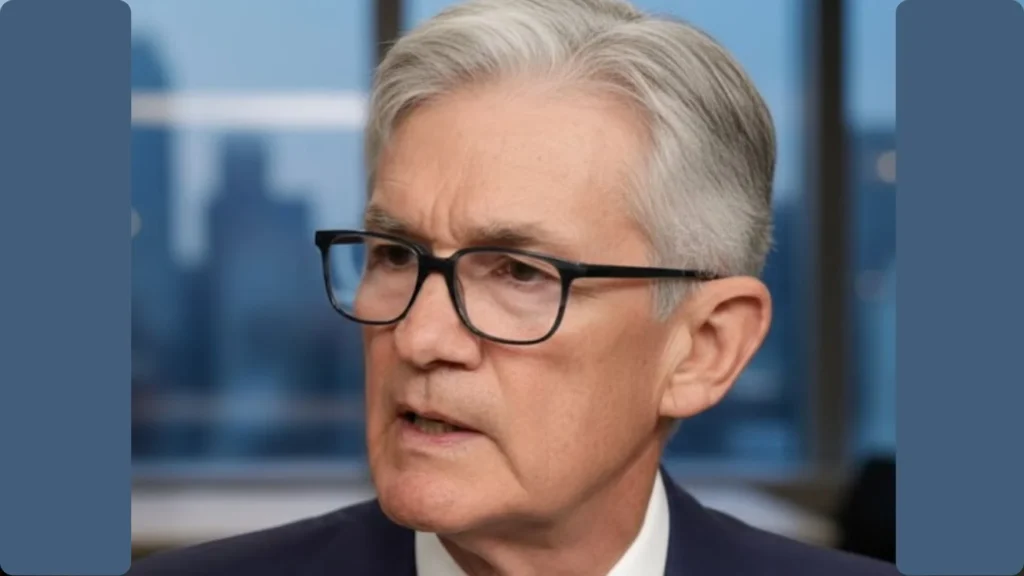
The Federal Reserve will slash interest rates Wednesday for the third consecutive meeting, setting up a pivotal confrontation as President Trump prepares to install a new leader at the central bank. The FOMC faces deep divisions over monetary policy while Trump rages against Jerome Powell and plots his replacement.
Fed Chair Jerome Powell stands at a crossroads as the Federal Open Market Committee prepares its December rate cut decision. The panel of Fed officials responsible for monetary policy remains deeply divided between supporting a sluggish labor market losing steam and fighting inflation lingering above the Fed’s target range. Fed analysts and traders predict the bank will err on the side of supporting the economy despite tumultuous uncertainty ahead.
Joe Brusuelas, chief economist at audit and tax firm RSM, wrote in his Tuesday analysis that the Federal Reserve faces “the difficult choice of either aggressively fighting inflation or hoping to revive a sluggish labor market and slowing economic activity.” While models estimating the Fed’s optimal policy rate don’t imply a rate reduction is appropriate at this time, the FOMC appears poised to cut anyway.
The impending decision likely marks the last before Trump announces his choice to succeed Powell next year. Though Powell’s term leading Fed doesn’t end until May, the president remains eager to replace him through unconventional measures to ramp up pressure. If Trump taps White House National Economic Council Director Kevin Hassett for the role, he could add a sympathetic voice to the Fed as soon as March.
Analysts at Beacon Policy Advisors noted in their research note that “Trump’s calls haven’t landed on deaf ears: the Fed has lowered rates twice this fall and appears poised to do so a third time tomorrow.” Enter 2026 with inflation above the Fed’s target, and the incoming Fed chair will face new significant challenges as the White House remains unlikely to further roll back tariffs despite increasing pressure from the electorate.
The government shutdown wiping out a month of key federal economic data leaves Fed officials attempting to chart a course for the economy based on delayed, incomplete and noisier data from a range of public and private sources. The September employment report was delayed more than two months amid the shutdown, eventually showing the economy adding a solid 119,000 new jobs that month alongside higher unemployment.
The report revised down the total number of jobs added in July and August, which were already disappointingly low. This combination of slowing job growth, higher unemployment, rising layoffs and sour consumer sentiment pushed the odds of a Fed rate cut higher since the FOMC’s last meeting in October. Powell said at the time the committee stood about evenly divided between those who supported a December rate cut given the sluggishness of the economy and those fearful of stoking inflation higher given uncertainty over how trade policy would develop.
Chair Powell and other FOMC governors have done nothing to push back meaningfully against the near-90% chance of a rate cut discounted in markets, suggesting the hawkish regional Fed presidents who made clear their preference for keeping rates on hold remain a minority. Samuel Tombs and Oliver Allen of Pantheon Macroeconomics wrote in their Tuesday analysis that these divides have appeared to soften as Wednesday’s decision approaches.
Trump has been itching to replace Powell, whom he elevated to Fed chief in 2017, since taking office again in January. After spending much of his first term threatening to fire Powell, Trump has raged against him throughout his second White House stint over the Fed’s handling of interest rates. The Fed entered 2025 poised to keep cutting interest rates with inflation down to 2.7 percent in November of last year, as measured by the consumer price index.
The Fed held off for months as Trump’s tariffs stoked inflation higher, creating a delicate balancing act for monetary policy. The weight of Trump’s tariffs and immigration cuts slowed the economy enough that the Fed issued its first cut of the year in September, following a string of dismal jobs reports. The cut provided cold comfort for Trump, who ridiculed Powell as “Mr. Too Late” and accused the lifelong Republican of manipulating the economy to support the Democratic Party.
Powell brushed off Trump’s attacks, saying he and his Fed colleagues remain driven only by their legal obligation to balance maximum employment and stable prices. He refused to leave the Fed before the end of his term as chair and insisted Trump has no legal authority to fire him, setting up a constitutional standoff that could intensify in coming months.
Though the Fed chair plays a key role guiding the FOMC to consensus, he or she cannot unilaterally direct the bank’s interest rate decisions. Whoever replaces him will have to deal with unusual divides among top Fed officials over the path of the economy. While much has been made of the unique dynamic that an early announcement of Powell’s replacement could create—something akin to the “shadow chair” proposal first raised by Treasury Secretary Scott Bessent—analysts note this sequencing could exacerbate the political divisions the chair in waiting will face.
Minutes from the FOMC’s October meeting showed the committee near-evenly divided between those who saw inflation as a short-term factor and supported cutting rates to stave off a recession, and those who feared further inflation driven by Trump’s trade policies. The December FOMC summit “will be a contentious meeting and there will be multiple dissents despite the outcome of the meeting, but these are normal and healthy,” said Ryan Sweet, global chief economist at Oxford Economics.
The challenge facing Fed next year centers on the potential jobless expansion—when GDP increases but employment gains remain modest, at best. This scenario leaves the economy vulnerable to shocks because the labor market serves as the main firewall against recession. As the Federal Reserve navigates these treacherous waters, the panel must weigh the risk of acting too aggressively against the danger of moving too late.
The central bank faces mounting evidence that the U.S. economy stands at a critical juncture, with the job market showing clear signs of weakness while inflation persists above comfortable levels. The FOMC’s ability to thread this needle becomes even more complicated as political pressure from the White House intensifies and the prospect of leadership transition looms over every decision.