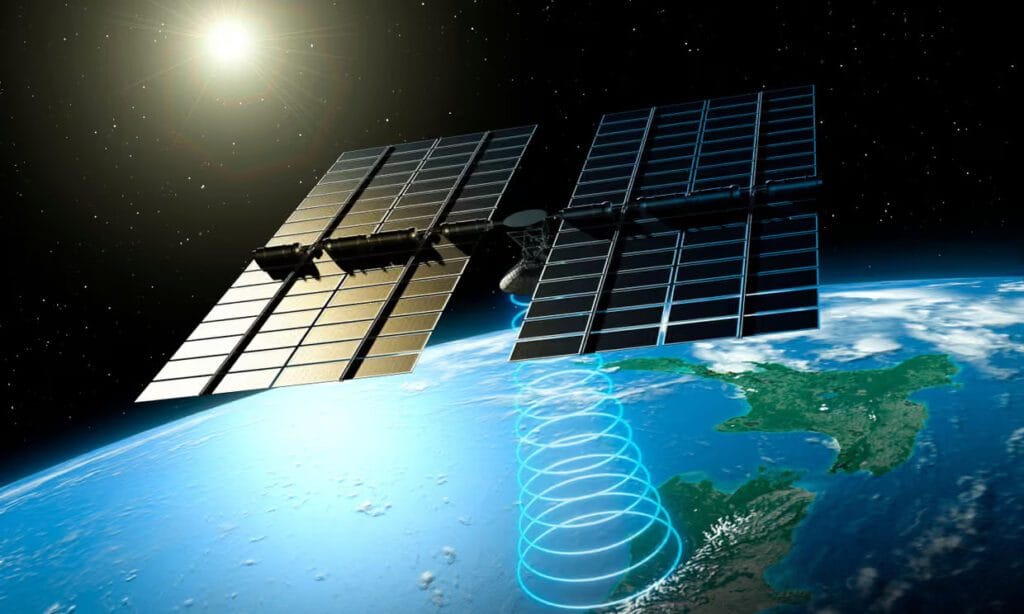
Aetherflux, a California-based startup led by Robinhood co-founder Baiju Bhatt, plans to launch satellite technology into orbit on a SpaceX rocket next year to beam solar power from space back to Earth using infrared lasers. The company has raised $60 million in total funding from investors including Bill Gates’ Breakthrough Energy Ventures, Andreessen Horowitz, Index Ventures, and New Enterprise Associates to make this science fiction concept a reality.
From Isaac Asimov’s Vision to Silicon Valley Reality
The idea of beaming energy from space sounds like something straight out of an Isaac Asimov short story from the 1940s, but Aetherflux is turning that decades-old dream into working technology. The startup is testing mini solar farms in the form of low-orbit satellites that will collect energy from the sun and transmit power wirelessly to ground power stations below. Baiju Bhatt, the CEO who previously built Robinhood into a financial powerhouse, now leads this ambitious venture that could transform how you get electricity.
What makes this approach different from traditional solar power is where the energy gets collected. In space, satellites can capture sunlight 24 hours a day without interference from clouds, weather, or nighttime darkness. The constellation of satellites will work together as a network, with each one projecting power to different locations on the ground as they orbit the planet.
How the Laser-Based System Actually Works
Bhatt explained that each satellite in the constellation will transmit power using lasers to small ground stations positioned across various locations. “You may have one satellite that’s projecting power to one location on the ground, and as it keeps moving around the Earth, it’ll find another ground station and start projecting power there,” Bhatt said. This continuous handoff ensures that energy flows steadily even as satellites circle the planet.
The benefits of this distributed approach are significant. Instead of relying on one monolithic structure in space, Aetherflux will distribute the power generation across multiple satellites. The infrared lasers can focus energy onto surprisingly small collection points on the ground, making the receiving infrastructure more affordable and easier to deploy. The satellite system becomes more efficient because you’re not putting all your eggs in one orbital basket.
Pentagon Becomes First Customer for Space Power
Aetherflux is working first with the U.S. Department of Defense, which faces a real problem on the battlefield: getting power to remote military operations. Currently, caravans of diesel generators rumble across hostile territory, becoming obvious enemy targets that put soldiers at risk. Bhatt said this military customer represents an important market because it needs a solution that traditional energy sources can’t provide safely.
This initial phase with the government proved attractive to investors who see the military contract as a path to rapid scale. Christian Garcia, managing partner at Breakthrough Energy Ventures, believes that if the company can serve this large and difficult customer, it can build a constellation that reaches scale quickly. “At that point, we will have dropped the cost of the technology such that we can expand into other customers,” Garcia explained.
The Economics Challenge of Space Solar
Bhatt acknowledged that the technology is expensive now, and the challenge will be making it cost-competitive with other energy sources you currently use. The cost of launching satellites, building infrared laser systems, and deploying ground power stations adds up quickly. However, advancements in launch technology—particularly from SpaceX—have made getting to space dramatically cheaper than it was even five years ago.
The maturation of key components represents another important factor in bringing costs down. As Aetherflux deploys newer versions of its satellite technology, economies of scale should kick in. The company expects that launching more satellites will progressively reduce per-unit expenses, similar to how mass production lowered prices for solar panels and batteries on Earth.
Growing Competition in the Space Solar Race
Aetherflux is not the only company exploring space-based solar farms. Cal-Tech, Virtus Solis, and UK-based Space Solar are all working on their own approaches to collect and beam energy from orbit. Each startup is testing different methods for beaming power back to the ground, with some using lasers and others preferring microwaves.
China announced a plan earlier this year to build a 1-kilometer-wide solar power station in space that will beam continuous energy back to Earth via microwaves. This international competition suggests that space-based solar power is transitioning from theoretical concept to practical reality across multiple countries and companies. The race to project clean energy from orbit is heating up, and you may soon have access to electricity that was beamed down from satellites hundreds of miles above your head.