SpaceX has disabled approximately 2,500 Starlink devices being used by cyber scam syndicates in Myanmar, marking a significant crackdown on criminal operations exploiting the satellite internet service. The tech company, owned by Elon Musk, took action after identifying equipment near suspected scam compounds along the Thailand border, where thousands of workers remain trapped in facilities running elaborate online fraud schemes targeting victims worldwide.
Lauren Dreyer, vice president of business operations at SpaceX, confirmed the company proactively identified Starlink Kits operating in the vicinity of suspected scam centers. She stated in a post on X that when the company discovers violations of its terms across markets where it operates, it takes appropriate action on the rare occasion such breaches occur. The announcement comes as regional authorities intensify efforts to combat the proliferation of scamming networks in this lawless corner of Southeast Asia.
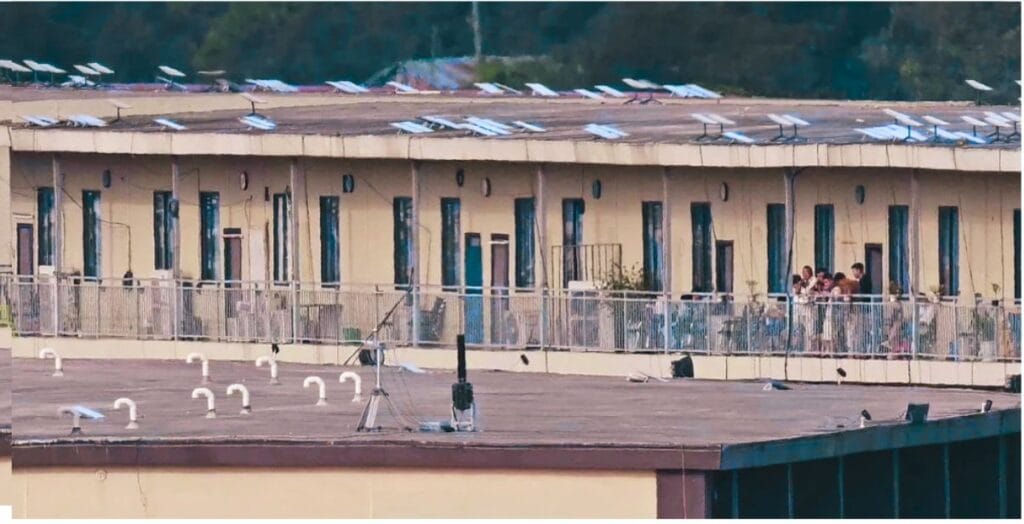
The military junta in Myanmar discovered 30 sets of Starlink receivers and accessories during a raid on a scam compound last week. This finding revealed how criminal organizations have been accessing high-speed internet service through SpaceX’s satellite network, which consists of thousands of satellites in low-Earth orbit. The technology was designed to provide connectivity to remote communities and global users, with the company’s website indicating it serves over 6 million customers worldwide.
The Starlink system provides reliable internet enabling these cyberfraud centers to reach victims across continents. Criminal operations have weaponized this advanced technology to execute sophisticated fraud schemes from Myanmar’s conflict-torn regions. Law enforcement agencies around the world are now working together to address this growing threat.
Regional authorities conducting crackdowns have identified at least 30 sprawling, purpose-built compounds dotted along the Myanmar-Thai border that are dedicated to scamming victims, including Americans who lose billions of dollars each year. An Australian Strategic Policy Institute report documented how workers are lured by the promise of well-paid jobs, then trafficked and routinely held against their will in heavily guarded facilities.
These victims are forced to carry out online fraud schemes within heavily guarded compounds where former detainees report beatings and torture are common. The criminal networks depend on reliable internet access to execute their operations, raising concerns in the United States for more than a year about Starlink receivers being installed on roofs of these facilities at a huge scale.
An Agence France-Presse investigation conducted by the news agency last month found evidence at KK Park, a notorious facility in the southeastern Myawaddy border town, where investigators uncovered nearly 2,000 workers trapped inside. Footage filmed in April and released Monday by Media sources showed the inside of this complex, featuring paved roads lined with trees and manicured lawns creating an image of a legitimate business district.
The compound appears complete with a hotel and billboards advertising gambling sites, masking the sinister reality of its operations. Multiple buildings house victims trapped inside who were confirmed just last night to be still being forced to scam people globally. An anti-human-trafficking field source who spoke to investigators revealed the situation, noting that while SpaceX has stopped some connectivity, many other access points remain active.
The global scam industry is growing at an unprecedented rate, according to the UN Office of Drugs and Crime, with criminal groups adopting artificial intelligence and using online cryptocurrency markets to move vast amounts of stolen money undetected. Southeast Asia has become a hotspot for romance and investment scams, particularly the practice known as pig butchering, named after the practice of fattening up prey before slaughter.
Myanmar represents an attractive destination for cybercrime networks because operators are shielded by widespread corruption following the military administration taking power in the 2021 coup. The regime maintains control over parts of the country while being fought in a brutal civil war by a patchwork of anti-junta and regional ethnic groups who challenge their authority.
Thailand authorities in February cut electricity supplies to several areas known to be home to scam sites in an effort to try to disrupt operations. This action preceded the release of approximately 7,000 workers who were victims released and repatrialized during a major operation conducted by Thai authorities between January 30 and October 19. During this period, officials arrested 9,551 foreign nationals found in scam compounds, repatriating most back to their home countries.
However, experts warned this number represents only a tiny fraction of the people trapped and working in these centers. Across the Moei River that separates the two nations, dozens of facilities remain still operating with business as usual, according to transnational crime expert Jason Tower.
Military Raids Face Criticism as Publicity Stunts
Jason Tower, a senior expert at the Global Initiative Against Transnational Organized Crime (GI-TOC), characterized the military raid as primarily a publicity stunt rather than a genuine crackdown. He explained the Myanmar military regime is responding to international attention and outrage over the scamdemic that is rising globally, essentially trying to skirt accountability while simultaneously transforming the Myanmar-Thailand border lands into a hub of criminality.
The US Congress Joint Economic Committee began examining Starlink’s alleged involvement after the AFP investigation revealed the technology’s widespread use. This scrutiny contributed to the massive law enforcement operation that has begun across multiple countries. The US and UK recently targeted a Cambodian criminal scam network, which likely pushed additional pressure on China to increase pressure once again on the Myanmar military regime to take further action, Tower added.
Regional Summit to Address Scourge of Scam Centers
The Association of Southeast Asian Nations meets for a summit later this year in Malaysia, where the scourge of scam operations will be a top issue on the agenda. Regional leaders are expected to discuss their position on continuing action against these criminal enterprises. Tower noted it’s likely the military seeks to establish more direct control over some operations, as the regime realizes how much illicit revenue is being brought in through this extremely lucrative form of criminal activity, he said.
The impact of ceasing Starlink operations in these areas is “not nothing,” according to experts, though they caution it represents only one piece of technology these sophisticated networks employ. Criminal organizations continue adapting their methods to maintain connectivity through alternative means. The disruption of Starlink services nonetheless sends a powerful message that major technology companies are responding to pressure to prevent their platforms from enabling human trafficking and fraud.