Thousands of climate protesters hit the streets of Belem this Saturday, sweating under the brutal Brazilian sun while negotiators inside the COP30 summit venue wrapped up their first week of talks. The march brought out Indigenous people, young activists, and civil society groups—all fed up with watching governments and fossil fuel industries drag their feet on saving the planet.
Cristiane Puyanawa came to protest for one reason. “Our land and our forest are not commodities. Respect nature and the peoples who live in the forest,” the Indigenous protester said. She wasn’t alone in that message. The crowds kept singing and playing musical instruments even as the sweltering temperatures got worse throughout the day.
Brazil’s environment minister Marina Silva showed up too, walking with the marchers. She explained what this demonstration meant for the bigger picture. “This is a place for us to march and draw up a roadmap for what needs to be done at this COP: a transition away from deforestation and the use of fossil fuels,” Silva told reporters.
The distance between the marchers and the actual COP30 summit building wasn’t far, but it might as well have been miles. Inside that venue, ministers and technical experts were arguing over documents. Outside, real people were demanding they stop talking and start doing something. The protesters who spent hours under the hot Brazilian sun wanted results, not more promises that go nowhere.
This two-week COP summit started back on November 10, and Saturday was designated as the official day for demonstrations. That gave everyone a chance to show up and make some noise about what matters to them. You could hear the anger in how loud they got, waving banners and chanting about the fate of the planet.
The security presence around the venue was massive—way bigger than it needed to be for a peaceful display. Military police in full riot gear stood around watching, even though the march route went nowhere near the building. But authorities had their reasons for being nervous.
On Tuesday, things got rough when some protesters tried to force entry into the summit location. That attempt ended in clashes with security, and nobody wanted a repeat. Then Friday morning saw a separate peaceful sit-in that blocked the main entrance, stopping people from getting in for a few hours. These myriad protests during the week showed how patience was running out.
The marathon COP30 climate summit was hitting its halfway point just as Saturday’s big march happened. Negotiators who’d been stuck in rooms all week had to report back on their progress—or lack of it. Now they’ll hand over their work to ministers who supposedly have the political power to overcome the remaining obstacles blocking real action.
But here’s the thing about these talks. They’ve been going on for three decades. That’s right, thirty years of meetings where countries gather, make speeches about climate action, then go home and keep burning fossil fuels anyway. The inch-by-inch process has delivered some results, sure, but nowhere near enough to actually reduce global warming at the speed we need.
Katharine Hayhoe isn’t buying the excuses anymore. The chief scientist at environmental non-profit The Nature Conservancy put it bluntly when she talked about what’s happening inside the Brazilian city this week. “As negotiators approach week two, they need to remember that climate action isn’t about abstract numbers or distant targets. It’s about people,” Hayhoe said.
She went further. “Every choice we make today determines the future we will share tomorrow.” That’s not just nice words for a press release. Hayhoe was calling out how these summit meetings get bogged down in technical jargon while missing the actual point.
The sprawling summit agenda covers everything you can imagine—a huge range of issues all connected to stopping the planet from cooking. The intention is building on progress from previous years, but the track record isn’t great. After all those decades of COP meetings, global temperatures are still climbing. The support that rich countries promised to help poorer ones deal with a warmer planet? Most of it hasn’t shown up yet.
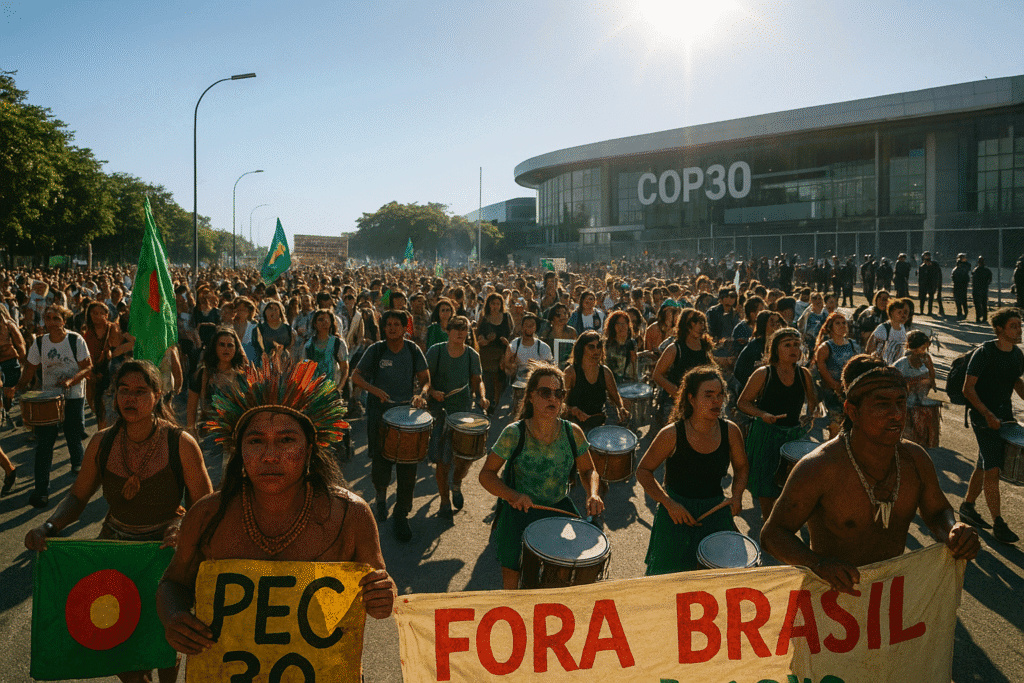
Walk around Belem right now and you’ll see the contrast everywhere. Inside air-conditioned conference rooms, diplomats argue about language in documents. Outside, protesters are literally sweating through their shirts under the sweltering temperatures, trying to get someone to listen. The crowds who showed up on Saturday weren’t there for a nice stroll. They wanted answers about why the transition away from fossil fuels keeps getting delayed.
The shape of what comes out of this summit remains unclear. That’s diplomat-speak for “nobody knows what’s going to happen.” The really controversial issues aren’t even being discussed in the official sessions. Instead, they’re happening in sideline discussions where the real wheeling and dealing goes down.
We’re talking about increasing climate finance—actual money, not vague commitments. There’s the question of moving away from fossil fuels permanently, which the oil and gas industry fights tooth and nail. And there’s a collective shortfall in emissions-cutting plans that nobody wants to talk about openly because it means admitting current promises won’t work.
The Brazilian COP30 presidency is trying to decide how much risk they want to take. COP30 President Andre Correa do Lago could attempt a high-stakes balancing act—try to come up with a political agreement that every country signs onto. In COP parlance, that’s called a cover decision, and it’s incredibly hard to pull off because you need all participating countries to endorse it.
When journalists asked do Lago about this possibility at a recent press conference, he didn’t commit to anything. “For a long time, I’ve been saying that we are not planning a cover decision, but I also said that if there is a movement from the countries to propose a cover decision, the presidency will obviously take it into consideration,” he told them. Then came the kicker: “So, let’s see how things evolve.”
Translation? They’re playing it by ear. After days of watching how talks develop, the Brazilian hosts are waiting to see if there’s any chance of getting something ambitious through. Ministers are about to take over from the technical negotiators, and that’s when the real political phase begins. That’s when countries stop hiding behind their diplomats and have to address these issues directly.
The protesters who marched on Saturday aren’t interested in the careful dance happening inside. When Indigenous leaders like Puyanawa talk about protecting their forest and land rights, they mean it literally. These aren’t abstract concepts for them—it’s about survival.
Brazil’s position as host makes this COP different. Marina Silva walking with protesters sent a signal, even if it’s unclear what that means for actual policy. The Brazilian COP30 presidency is steering these talks while trying to balance competing interests. Oil-producing countries want to keep fossil fuel money flowing. Island nations want climate finance to help them survive rising seas. Indigenous communities want their forest homes protected.
Getting everyone to agree on anything substantial seems almost impossible when you lay it out like that. The formal process moves slowly by design—every word in every document gets negotiated. But that careful approach is exactly what drives protesters crazy. They see the future getting worse while diplomats argue over commas.
The work that negotiators achieved this week now goes to ministers who have the power to make real political obstacles disappear—if they want to. Whether they actually will remains the big question hanging over Belem as the summit enters its second week. The protesters who endured the Brazilian sun have made their position crystal clear. Now it’s up to the people inside to decide if they’re listening.