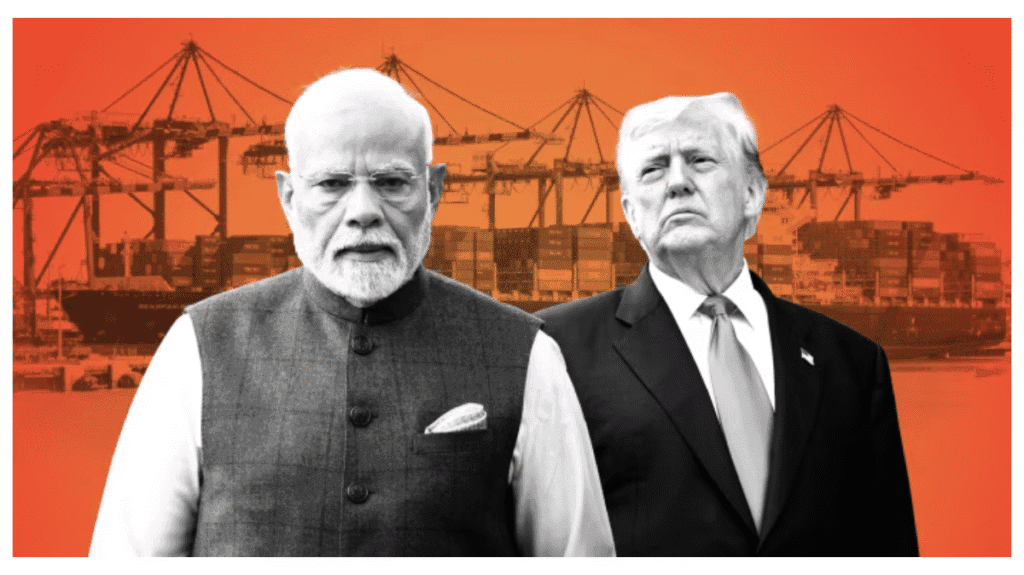
 Indian Prime Minister Narendra Modi and Donald Trump had a phone conversation on Wednesday, with the US president confirming they talked trade as both nations try to patch up relations that went off a cliff in August when Trump raised tariffs on Indian exports to 50 percent. The call matters because India and the United States have been trying to negotiate a deal for months now, but they keep getting stuck on the same issues — oil, visas, and who blinks first.
Trump brought it up during a Diwali ceremony at the White House on Tuesday, telling reporters he’d just gotten off the phone with Modi. “We talked about trade — we talked about a lot of things, but mostly the world of trade,” Trump said while lighting candles for the Hindu festivalz of lights. He seemed pleased, adding that Modi was “very interested in that.” Look, the timing wasn’t random. Announcing this during Diwali was clearly meant to signal that Washington still cares about its relationship with New Delhi despite everything that’s gone wrong lately. Modi responded on X, thanking Trump for the call and saying he hoped “our two great democracies continue to illuminate the world with hope.” Nice words, sure, but whether they actually lead to anything concrete is another story.
Things went south fast in August when the Trump administration didn’t just impose those tariffs — US officials accused India of financing Russia’s war in Ukraine by buying Moscow’s discounted oil. That really stung in New Delhi. Indian officials felt blindsided because they’d been among the first nations to initiate negotiations with Washington after Trump began his second term. The accusation felt particularly unfair given the reality of India’s energy situation. Here’s the thing — India is one of the world’s largest crude oil importers and relies on foreign suppliers for more than 85 percent of its oil needs. You can’t just flip a switch and change where you buy oil from when you need that much of it.
Traditionally reliant on Middle Eastern producers, New Delhi started buying heavily discounted Russian crude in 2022 after Western sanctions limited Moscow’s export options and suddenly there was cheap oil everywhere. The calculation for Indian policymakers wasn’t complicated. Why would they pay full price to Middle Eastern producers when Russia was practically giving away quality crude at huge discounts? India took advantage of a situation where Russia needed buyers desperately and India needed affordable energy to keep its economy running. Those purchases helped control inflation and kept factories humming. But Washington saw every barrel of Russian oil that India bought as funding for Moscow’s war effort in Ukraine. The Trump administration basically wanted India to sacrifice its economic interests on principle, which went over about as well as you’d expect.
Trump has been saying since October 15 that India would cut Russian oil purchases. He keeps repeating it. But New Delhi has neither confirmed nor denied any policy shift, and there’s a good reason for that vagueness. Making firm commitments about stopping Russian crude purchases without having cheaper alternatives lined up would be economic and political suicide for Modi. The policy shift that Trump keeps demanding would cost India billions and potentially mess up its energy security. Whether Modi will actually walk away from these bargain prices just to make Trump happy remains the central question as both countries negotiate a deal that honestly might not happen at all.
India still hasn’t managed to secure a formal trade deal with the United States despite jumping on talks early. That’s genuinely frustrating for New Delhi. Being first in line and still not getting a deal makes India look weak and makes Trump look impossible to work with. And there are plenty of other sources of friction that have strained the relationship this year beyond just trade disputes and oil politics.
Trump’s assertions that he achieved a ceasefire between India and Pakistan to end a four-day conflict over the contested region of Kashmir in May didn’t go over well at all. Modi came out and said there was no such mediation by a world leader, which in diplomatic language is pretty close to calling someone a liar. When two leaders can’t even agree on basic facts about whether a ceasefire happened the way one of them describes it, that’s a sign that trust has completely broken down between Washington and New Delhi. The Kashmir issue is incredibly sensitive for India — it’s not something they want Trump or anyone else claiming credit for solving, especially when Modi’s government says it didn’t happen that way.
And then last month the Trump administration hiked fees for H-1B skilled-worker visas to $100,000, hitting Indians harder than anyone since they make up roughly three-quarters of all H-1B recipients. For Indian tech workers who’ve spent years preparing for careers in America, that $100,000 fee hike is absolutely crushing. It prices out most Indian professionals unless their employers foot the bill, which many simply won’t do. The timing is baffling if you believe Washington and New Delhi are seriously trying to repair ties and build something stronger.
Trump and Modi may yet meet this month at the ASEAN summit of Southeast Asian leaders in Malaysia, which Trump is set to attend. A real sit-down at the ASEAN summit would give both leaders their first proper chance to work through all these problems face to face. Phone calls are fine for keeping channels open, but the hard negotiations — the kind where you actually resolve things — those happen in person where you can read the room. Whether they can actually mend the accumulated damage from tariffs on Indian exports, Russian oil disputes, H-1B visa fees, and everything else depends on how much each side will actually compromise.
India wants better market access and fewer obstacles for its workers going to the United States. Trump wants India to drop Russian crude and throw open its markets to American goods. Neither seems ready to budge much. And the stakes here go way beyond bilateral trade numbers or photo ops in Malaysia. This affects global energy markets, tech industry flows, and the entire balance of power in Asia. India needs the United States as a counterweight to China, but not if it means sacrificing energy security or economic stability. Trump needs India as a democratic partner against Beijing, but he keeps undermining that partnership with policies that feel like punishment to New Delhi.
The Diwali phone call was good optics. The talk about “two great democracies” sounds nice. But Modi and Trump need actual compromises on real issues — tariffs, Russian oil, visa fees, market access. Right now neither leader seems willing to give much ground, which doesn’t suggest they’ll reach any formal trade deal anytime soon. The world of trade that Trump mentioned needs to move from talking points to actual policy if this relationship is going anywhere productive.