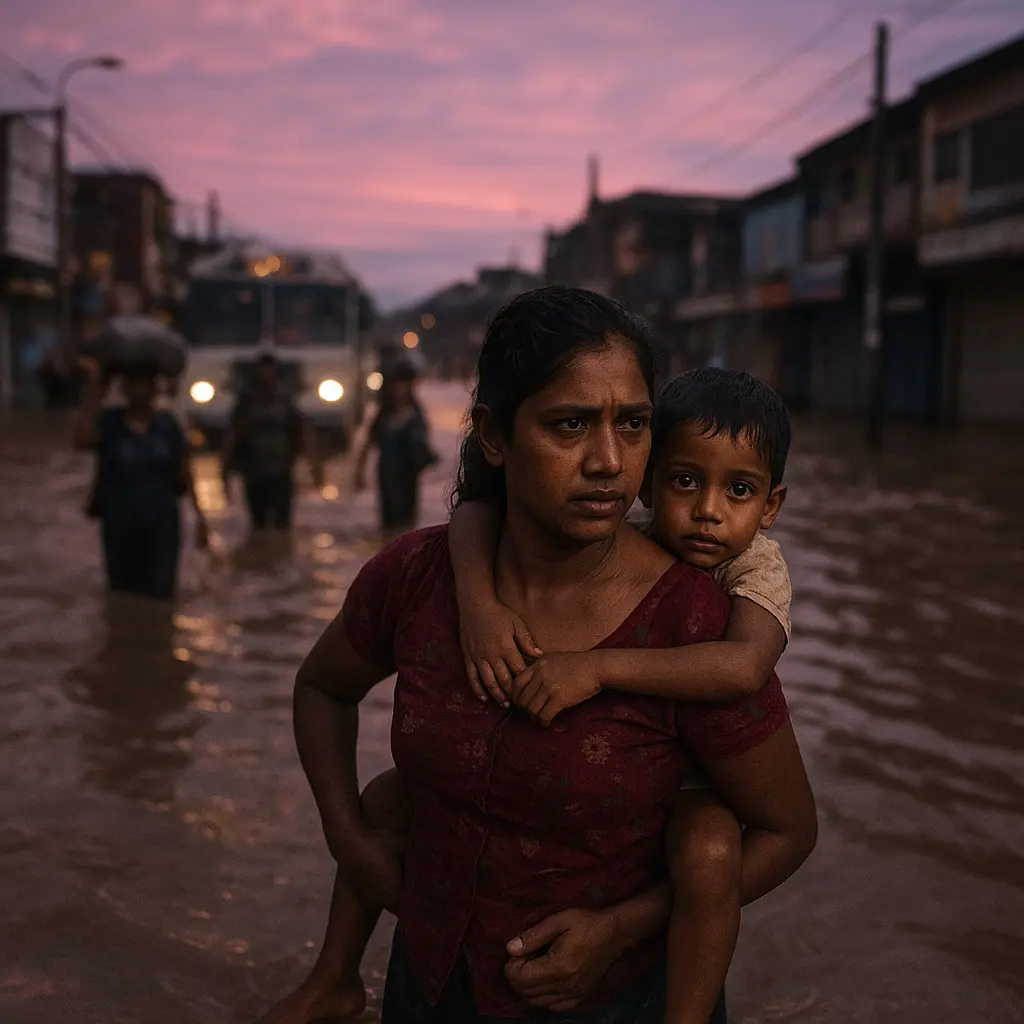
Hundreds of people dead as Sri Lanka faces worst floods in decades. That’s not a headline anyone wanted to wake up to, but it’s the reality right now. Cyclone Ditwah smashed into the island nation on Nov. 28, and honestly, the damage is almost impossible to wrap your head around. We’re talking 355 people confirmed dead. Another 400 missing. Rescuers are out there digging through mud and collapsed buildings, but it’s a battle they’re barely winning.
President Anura Kumara Dissanayake came out Sunday and declared a state of emergency. He didn’t sugarcoat it either. Called it the largest and most challenging natural disaster the country’s ever seen. Remember, this is Sri Lanka — the same place that got hit by the 2004 Asian tsunami. That disaster killed around 31,000 people and left hundreds of thousands homeless. So when they say this is the worst in decades, they mean it.
The Hills Are Burying People Alive
Up in the central mountainous districts — Kandy, Badulla, Nuwara Eliya — things are absolutely devastating. These aren’t just random places. They’re tea-growing regions, famous worldwide. Gorgeous green hills covered in plantations. Or at least they were. Now they’re death traps. Severe mudslides have basically erased entire neighborhoods from existence.
Azmi Sheriff from Akurana saw it happen. His whole area got hit. There’s this spot called Rambuke-ela where maybe 20 houses used to stand. Used to. “About 50 people are dead, buried under all that mud,” he said. The rescuers pulled out a few bodies, but getting to the rest? Nearly impossible. The ground won’t stop moving. More landslides keep threatening the teams trying to dig people out.
The Disaster Management Center keeps updating numbers, but everyone knows it’s going to get worse. Way worse. There are still hundreds missing under collapsed homes across the worst-affected areas. Some families won’t ever find their loved ones.
200,000 People With Nowhere to Go
More than 200,000 people are packed into 1,500 government-run safety centers right now. Let that sink in for a second. That’s like displacing everyone from a decent-sized city. And get this — a full third of the entire country has no power. No electricity. No running water. Nothing. The catastrophic flooding from Cyclone Ditwah’s landfall destroyed infrastructure across Sri Lanka. Power grids. Water systems. Roads. Everything that keeps society functioning just… gone.
Silmiya Yusuf knows exactly what that feels like. She’s a teacher who was visiting family in her ancestral village over in Kurunegala district — the north-central part of the island. When the storm hit, she got completely cut off. No phone service. No internet. Zero connection to the outside world. Took until Monday before the network finally came back and she could call anyone.
“Thanks to Allah, we are still alive,” she told reporters. “Without any connection to the world, it felt like dark days in everyone’s life. Only now, after seeing social media, I realize how many incidents happened around us.” She literally had no idea how bad things were just miles away because there was no way to find out. Imagine sitting there in the dark, wondering if the whole country’s underwater.
The Capital’s Turn Now
Here’s the really scary part. Cyclone Ditwah already moved back out over the Bay of Bengal. Storm’s gone, right? Should be getting better? Nope. All that heavy rain upstream is now causing fresh flooding down the Kelani River. And guess where that goes? Straight through the northern part of Colombo, the capital. Water levels are rising fast, and the Irrigation Department’s already issued evacuation warnings for anyone living near the river’s basin.
Anver Sadath lives in Wellampitiya, a suburb outside Colombo. He didn’t wait around to see what happens. Already moved his family farther from the river. Smart move. “The water does not seem to be receding,” he explained. “Instead, I can see the level rising in the neighboring Kolonnawa area, which may gradually flow into Wellampitiya.”
The whole situation in Colombo feels pretty gloomy right now. People genuinely feel unsafe sleeping in their own homes. Anver mentioned everyone’s been scrambling to move vehicles to higher ground — places like Dehiwela — because they’re fearing overnight floods might hit while they’re asleep. Nobody wants to wake up with water up to their windows.
Government Calling for Help
President Anura Kumara Dissanayake isn’t pretending Sri Lanka can handle this solo. The island’s facing something unprecedented here. They need international aid, and they need it yesterday. The state of emergency gives them extra powers to move resources around, but here’s the problem — there aren’t enough resources to move.
Think about the economic hit too. Those tea-growing regions in Kandy, Badulla, and Nuwara Eliya? That’s not just farmland. That’s one of Sri Lanka’s biggest money-makers. Entire plantations are sitting underwater now or completely destroyed by landslides. Recovery’s going to take years. Maybe decades.
It’s Monday afternoon now, and rescuers are still out there battling through dangerous conditions. 355 confirmed dead. 400 missing. And probably hundreds more we don’t know about yet. The casualties from this natural disaster have already made it the worst thing to hit since that 2004 Asian tsunami.
And here’s the really terrifying part — it’s not over. Not by a long shot.