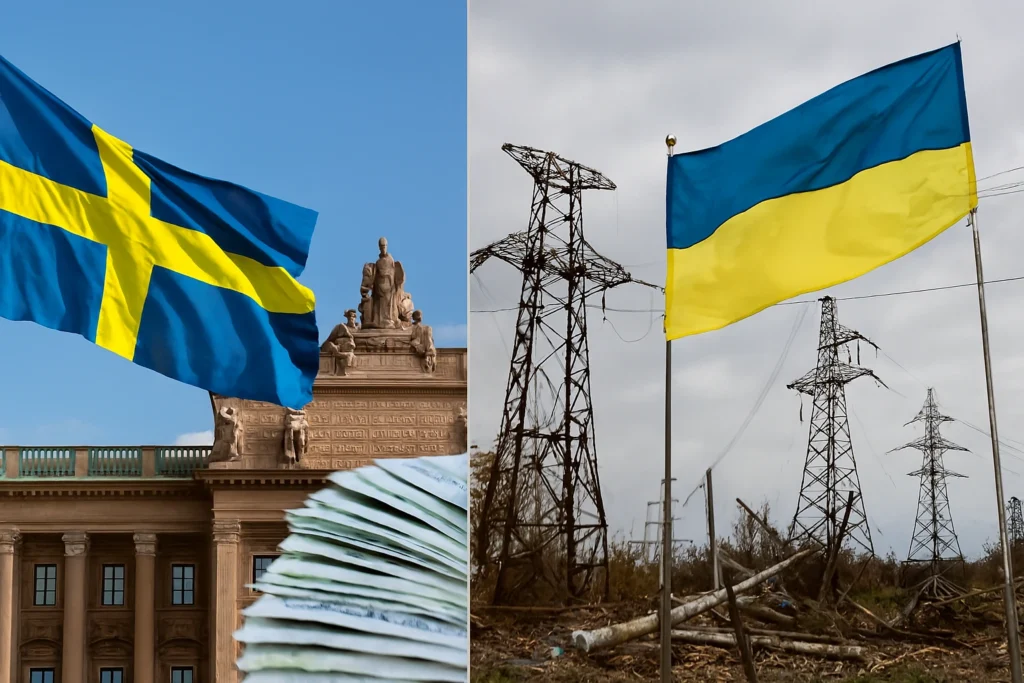
Sweden made a tough call this Friday—cut development aid to five countries and send that money straight to Ukraine instead. The government says it’s phasing out help to Zimbabwe, Tanzania, Mozambique, Liberia, and Bolivia over the coming years, which will free up more than 2 billion crowns in the next two years alone.
Minister for International Development Cooperation and Foreign Trade Benjamin Dousa didn’t sugarcoat it. “Ukraine is Sweden’s most important foreign policy and aid policy priority,” he told reporters, adding that the government is going to increase aid to at least 10 billion crowns ($1.06 billion) by 2026. He made it pretty clear this wasn’t an easy decision, saying there isn’t a “secret printing press for banknotes for aid purposes” and “the money has to come from somewhere.”
So why Zimbabwe, Tanzania, Mozambique, Liberia, and Bolivia? The government hasn’t spelled out every detail, but the writing’s been on the wall for a while now. Since the current government took power in 2022, Sweden has already cut aid to more than 10 countries, including Burkina Faso and Mali. It’s part of a bigger picture where the Nordic country is rethinking who gets help and why.
These five countries aren’t conflict zones right now. They’re not making daily headlines. That seems to be the point. Sweden is reprioritising spending toward places where the need feels more urgent—and nothing feels more urgent in Europe right now than what’s happening in Ukraine. The measures announced Friday basically confirm what many suspected: traditional development aid relationships are taking a back seat to immediate crises.
For Zimbabwe, Tanzania, Mozambique, Liberia, and Bolivia, this means scrambling to find other major donor partners. Swedish funding supported projects ranging from healthcare initiatives to education programs. Now those projects need new backers, and there’s no guarantee they’ll find them quickly.
Let’s talk numbers. Sweden plans to divert those 2 billion crowns over the next two years directly into Ukrainian rebuilding efforts. The focus? Energy infrastructure. Russian strikes have hammered Ukraine’s power grid repeatedly, leaving millions in the dark during brutal winters. Swedish funds will help restore that country’s energy infrastructure, which isn’t glamorous work but absolutely critical for survival.
By 2026, total Swedish support for Ukraine hits 10 billion crowns—that’s roughly $1.06 billion. For context, Sweden operates as a major donor of development and humanitarian aid globally, with a budget that’s been running around 56 billion crowns a year for the last three years. But even for a generous donor, 10 billion crowns represents a massive chunk of change going to one place.
The government has said it will cut the overall aid budget to 53 billion crowns annually for the period 2026-2028. That’s about 3 billion crowns less per year than before. So Sweden isn’t just moving money around—it’s actually spending less overall while concentrating more on Ukraine.
Here’s where things get complicated. Sweden isn’t just cutting aid to phase out support for Zimbabwe, Tanzania, Mozambique, Liberia, and Bolivia. The government has reprioritised the entire aid system, and some of that money now goes toward domestic issues. Specifically, Sweden is using some of the money to pay for costs related to immigration and repatriation of migrants.
Minister Dousa didn’t dwell on this point, but it’s right there in the announcement. The Nordic country has dealt with significant immigration pressures in recent years, and paying costs for processing asylum claims and repatriating people who don’t qualify adds up fast. Critics will probably argue this undermines Sweden’s reputation as a champion of international cooperation, but the government seems willing to accept that trade-off.
What does this mean for you if you’re watching European politics? Sweden’s move signals how quickly aid policy can shift when domestic politics and security concerns collide. Countries that relied on predictable Swedish support now face uncertainty, while Ukraine becomes the overwhelming priority.
Sweden built its reputation as a major donor over decades, consistently allocating substantial resources to humanitarian aid and development worldwide. That reputation won’t vanish overnight, but it’s definitely changing. The government maintains the 53 billion crowns annual budget for 2026-2028 still makes Sweden one of the world’s most generous donors per capita. Fair point—but the five countries losing funding might not find that particularly comforting.
Benjamin Dousa emphasized Ukraine remains the top foreign policy priority, suggesting this direction won’t reverse anytime soon. As long as the war continues and rebuilding needs remain massive, expect Sweden to keep funneling resources there. The Minister basically said the quiet part out loud: traditional development aid relationships matter less right now than immediate crisis response.
For Zimbabwe, Tanzania, Mozambique, Liberia, and Bolivia, the clock’s ticking. Sweden hasn’t announced exact timelines for phasing out each country’s assistance, but “coming years” suggests this happens gradually, not immediately. That gives affected nations some breathing room to find alternative cooperation partners and adjust their budgets accordingly.
The real test comes in 2026 when Sweden’s Ukraine funding hits that 10 billion crowns target and the reduced overall budget of 53 billion crowns takes full effect. Will other donors step up for the five countries getting cut? Will Sweden’s focus on Ukraine prove sustainable long-term? And will this divert resources from other crisis zones that might emerge?
Those questions don’t have answers yet. What’s clear is that Sweden just made a bet—that concentrating resources on Ukraine’s energy infrastructure and rebuilding matters more than spreading aid across multiple stable but less urgent partnerships. Time will tell if that calculation pays off.