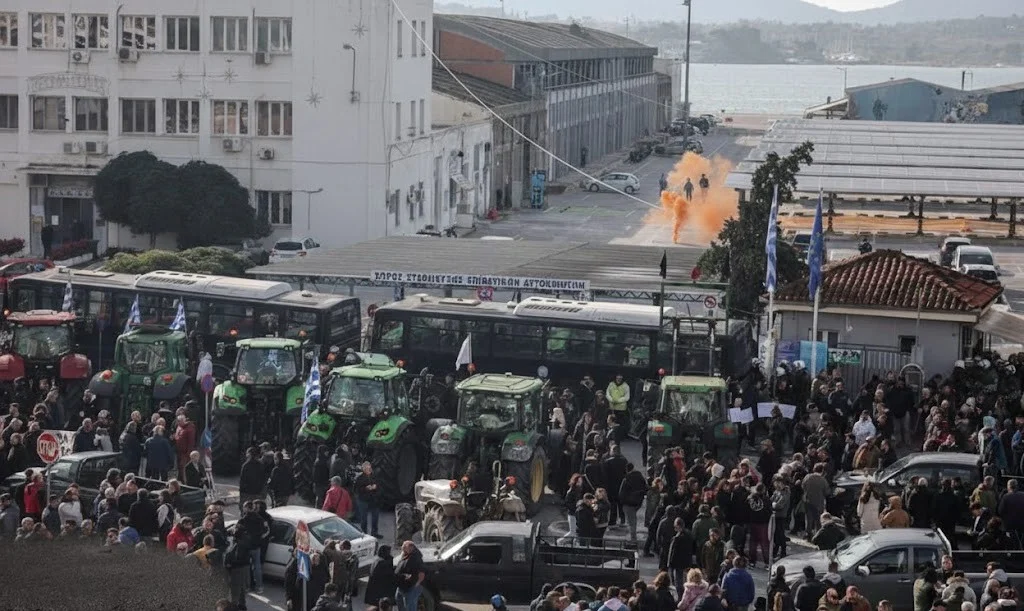
Protesting Greek farmers brought port operations at Volos to a standstill on Wednesday, parking thousands of tractors outside the facility’s main entrance. The move marks day five of nationwide blockades choking traffic across Greece, as desperate agricultural workers demand 600 million euros in overdue farm aid payments trapped by a widening corruption scandal.
The demonstrations didn’t start overnight. Farmers across Greece have been waiting months for European Union aid that never arrives. Right now, dozens of tractors and trucks sit blocking major motorways and border crossings, creating long queues that stretch for kilometers.
The shortfall has reached 698.58 million dollars in payments—real money farmers need for seeds, livestock feed, and worker wages. Some have been waiting since those brutal 2023 floods that devastated Thessaly, the agricultural region producing most of the country’s food. Those floods destroyed crops and killed thousands of animals, yet compensation remains stuck somewhere in the bureaucracy.
Then came the sheep pox outbreak. This animal disease forced farmers to cull hundreds of thousands of sheep and goats. Imagine having to destroy your livestock without knowing when you’ll receive money to rebuild. Costas Sefis, who farms near Malgara in the northern region, told public broadcaster ERT: “We’re not backing down. If they want to arrest the thousands of protesting people, let them come and arrest us.”
Those aren’t empty words. Sefis speaks for many who feel they’ve got nothing left to lose.
Here’s where things get messy. Investigations uncovered that some farmers, working with corrupt state employees, faked land ownership documents to qualify for payouts they didn’t deserve. The scam worked for a while—people claimed fields they didn’t own, collected euros meant for real producers, then disappeared.
Now everyone pays the price. Authorities launched ongoing audits of thousands of claims, which slowed legitimate disbursements to almost nothing. The centre-right government of Kyriakos Mitsotakis is catching heat from all sides. Honest farmers who played by the rules can’t get their money, while the corruption scandal keeps growing.
These protests aren’t random—they’re carefully planned. In Volos, farmers drove their tractors to the port and parked them for hours outside the facility. Police blocked their path to passenger and cargo terminals, but the message got through. The city’s economy depends on that port.
Up north, things look messier. At the Promachonas border crossing with Bulgaria, protesting groups intermittently restricted traffic late Tuesday. Commercial trucks formed massive queues as drivers waited to cross. Several junctures along major highways show similar scenes. The blockades don’t completely halt movement, but they create enough disruption to threaten the transport networks that keep Greece’s economy running.
A Greek Supreme Court prosecutor tried breaking the stalemate Tuesday, ordering authorities to immediately detain anyone creating traffic safety hazards. This legal attempt to limit the protests hasn’t worked. Farmers say they’d rather face arrest than watch their farms collapse.
The Mitsotakis government acknowledged the delays and said payments will come soon. Officials urged farmers to halt the blockades and join open discussions about solutions. That sounds reasonable until you remember farmers have heard similar promises before.
Sefis points out that compensation for the 2023 disaster was limited and arrived too late to prevent financial ruin for many families. Trust has evaporated. The protest organizers want concrete action, not more meetings. They want the audits finished and money flowing again. They want help dealing with production costs that keep rising while crop prices stay flat.
The demonstrations continue to expand. What started as a few dozen tractors has grown into a movement thousands strong. The economic impact grows each day. Cargo sits undelivered. Passenger traffic gets rerouted. Border communities watch their economies suffer.
Meanwhile, farmers in Thessaly and across the agricultural heartland wait for someone in power to understand their desperation. They’ve lost livestock, crops, and years of income. The sheep and goats they culled during the outbreak represented generations of breeding work. The fields the floods destroyed took decades to build properly.
They’re not asking for charity. They want the European Union aid they’re legally entitled to receive. They want the state to process claims efficiently instead of punishing honest producers for others’ fraud. Most of all, they want to farm without wondering if this year’s disaster—whether floods, disease outbreak, or bureaucratic incompetence—will finally destroy them completely.