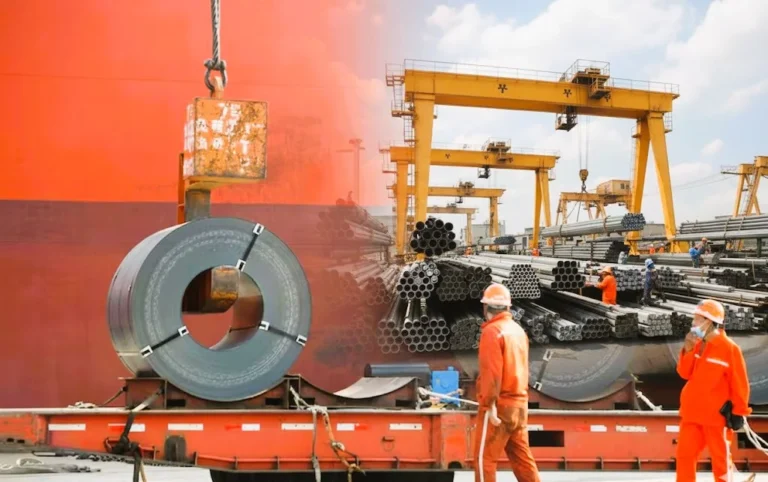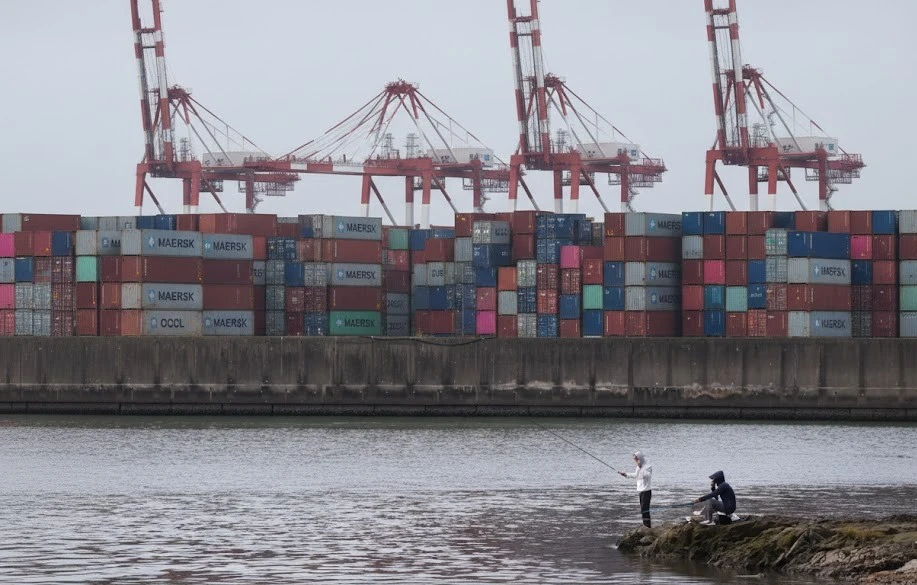
China’s trade surplus smashed through the $1 trillion mark in just 11 months, hitting $1.08 trillion by November even as shipments to the United States crashed by 29%. The numbers tell a remarkable story: while trade with United States keeps sliding down—now in its eighth straight month of double-digit declines—China has quietly built a record high by selling everywhere else.
China’s exports bounced back hard in November, climbing 5.9% higher than last year to reach $330.3 billion in dollar terms. That’s a massive swing from October, when exports actually shrank by 1.1%—something that caught most economists off guard. The customs data released Monday showed the recovery beat market estimates by a comfortable margin.
Here’s what makes this interesting: imports also grew, up 1.9% to $218.6 billion, which sounds good until you realize it’s still pretty weak. The property sector keeps dragging things down, and that’s killing consumer spending and business investment across China. People aren’t buying as much at home, but factories keep humping product overseas.
The widening gap between what China sells abroad versus what it buys tells you everything about where the economy stands right now. Official data compiled by FactSet confirms this trade surplus beats the $992 billion total for all of 2024—and we still have December to count.
So if shipments to the US have fallen for most of the year, where’s everything going? Turns out, China has surged into other destinations in a big way. We’re talking Southeast Asia, Africa, Latin America, and the European Union. These markets are eating up what America won’t buy.
The shift didn’t happen by accident. When one door closes, China kicks open five more. Nearly every region outside North America saw growth in November, which explains how the overall numbers look so strong despite the US collapse.
Think about it this way: losing 29% of your biggest customer would normally wreck your business. But China’s manufacturing machine is so massive that it just found new buyers. That’s not luck—that’s strategy.
In late October, US President Donald Trump sat down with Chinese leader Xi Jinping in South Korea and hammered out a year-long trade truce. The US agreed to cut tariffs on China, while China promised to halt export controls on rare earths—those materials that go into everything from phones to missiles.
Sounds great, right? Maybe not. Lynn Song, who works as chief economist for Greater China at ING Bank, wrote in a report that November’s numbers probably don’t show the full impact yet. “It’s likely that November exports have yet to fully reflect the tariff cut, which should feed through in the coming months,” she noted.
But here’s the problem: China’s factory activity contracted again in November—that’s the eighth month in a row, according to an official survey. Economists said it’s still early to determine whether there’s a real rebound in external demand following the US-China agreement. Right now, it looks more like a pause than a peace treaty.
Chi Lo, who’s a Global Market Strategist at BNP Paribas Asset Management, doesn’t buy the happy ending. He thinks a stable global trade environment won’t last long because China-US relations “remain in a stalemate despite their temporary trade truce.” Translation: enjoy the calm while it lasts.
Chinese leaders know they can’t rely on making cheap T-shirts forever. At a high-level meeting in October, they outlined a focus on advanced manufacturing for the next five years. We’re talking electric vehicles, robotics, and batteries—the stuff that’ll define the next economy.
Xi personally led an annual economic planning meeting held Monday to map out economic growth plans for 2026. State news agency Xinhua reported that Chinese leaders reiterated their commitment to “pursuing progress while ensuring stability”—government speak for “we’re changing things but slowly.”
With exports still going strong, economists generally expect China to hit its economic growth target of around 5% for this year. That’s not spectacular, but it’s steady. The bet is that advanced manufacturing and high-growth sectors will carry the economy forward even if traditional markets shrink.
The Big Picture: China’s Expanding Footprint
Morgan Stanley predicts something big: by 2030, China’s market share in global exports will reach 16.5%, up from about 15% currently. That might not sound like much, but we’re talking about trillions of dollars. Chetan Ahya, Morgan Stanley’s Chief Asia Economist, said in a recent note that “Despite persistent trade tensions, continued protectionism, and G20 economies taking up active industrial policies,” China will keep gaining share in the global goods export market.
How? The edge in advanced manufacturing gives China an advantage that’s hard to copy. Building electric vehicles or batteries at scale takes more than just cheap labor—it takes infrastructure, supply chains, and expertise that took decades to build.
Still, some economists believe the path forward gets rocky. Persistent trade tensions aren’t going anywhere. Countries worldwide are taking up their own industrial policies to protect local jobs. And that US-China stalemate could explode into something worse if the temporary peace falls apart.
But the November numbers show one thing clearly: China has options. When America buys less, Asia, Africa, and Latin America buy more. That’s the new math of global trade, and it’s fueled by China’s ability to make what the world needs at prices it’ll pay. Whether this continues depends on politics as much as economics—and right now, nobody’s making predictions they’d bet real money on.