The West scrambles to fill heavy rare earth gap as China rivalry deepens, creating unprecedented challenges for U.S. manufacturers seeking to build domestic magnet production capabilities. Nevada-based MP Materials faces critical shortages of dysprosium and terbium, threatening ambitious plans to produce super-strong magnets vital for electric vehicles, defence technology, and wind turbines despite receiving billions of dollars in government support.
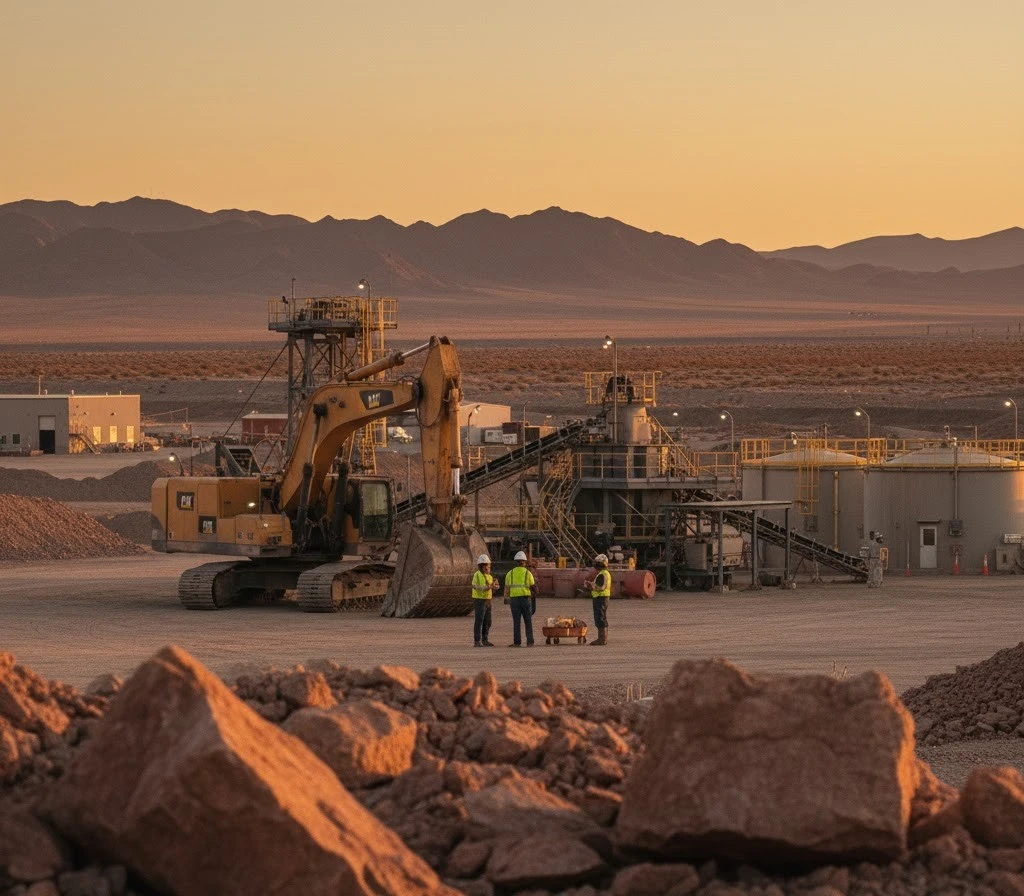
The United States and allies are racing to create an alternative supply chain to reduce reliance on China, but the scarcity of heavy rare earth elements poses what analysts call an Achilles heel for Western ambitions. MP Materials, backed by massive U.S. backing, trumpeted success this month with a 51% quarter increase in light rare earths output, yet its Mountain Pass mine in California contains only traces of the critical heavy elements needed for high temperatures applications in EV engines.
Ilya Epikhin, senior principal with consultants Arthur D. Little, warns MP Materials faces a formidable challenge in securing heavies from Brazil, Malaysia, or African states—a process that could take a lot of time. The West’s push to build a home-grown magnets supply chain encounters immediate obstacles as companies scramble to find resources beyond Chinese control.
Chief Operating Officer Michael Rosenthal revealed during a November 6 conference call that the company remains actively engaged with potential feedstock providers, though he declined to name specific partners. Another source of heavies will come from recycled materials supplied by Apple under a $500 million deal to supply the tech giant with finished magnets. Matt Sloustcher, executive vice president of corporate affairs, told media the company believes it is well positioned despite mounting industry concerns.
This high-profile example reveals the impact of continued dependency on China for heavy rare earth processing, according to consultancy Benchmark Mineral Intelligence. Western nations will rely on China for 91% of needs by 2030, down only slightly from 99% in 2024—a marginal improvement that underscores the depth of geopolitical turbulence affecting critical minerals access.
Chinese export restrictions imposed in April targeting heavy rare earths in magnets have suspended operations at auto plants, jolting the West into action. Beijing agreed on October 30 to delay new controls under a U.S.-China deal, providing temporary relief but highlighting ongoing vulnerability. The proportion of heavy rare earths in deposits remains much smaller than other elements used in magnets, with the relative ratio in global mines only half that required for permanent magnets production.
Pricing Gap Reveals Market Distortion and Supply Constraints
The scarcity of heavy rare earths outside China becomes evident in the price differential for dysprosium oxide in Rotterdam at $900 per kg—more than triple the $255 China price, according to data provider Fastmarkets. Erik Eschen, CEO of Germany’s Vacuumschmelze (VAC), emphasizes the urgency: “If you talk about critical resources, it’s really the heavies, the heavies, the heavies—all the rest we will get.”
VAC, one of few rare earth magnet producers outside China and Japan, has been busy inking deals with miners that produce heavy rare earths to supply its new U.S. plant in South Carolina that recently opened. The company agreed supply arrangements with Canada’s privately-held Torngat Metals from its Strange Lake project in Quebec and Aclara Resources from its Carina project in Brazil. “Even with limited capacity in the West, we’re succeeding at securing the capacity we need,” Eschen confirmed.
Magnet production capacity outside of China and Japan is expected to hit 70,000 metric tons per year by 2030, requiring 1,650 tons annually of dysprosium oxide, according to critical minerals consultancy Adamas Intelligence. “Heavies are definitely the next piece of the puzzle that needs to be dealt with to unlock widespread Western magnet production at scale,” said Adamas managing director Ryan Castilloux.
Despite a flurry of recent deals and rhetoric in the West, mines are forecast to meet only 29% of heavy rare earths consumed in auto and wind sectors by 2035, according to London-based commodity consultancy CRU. “To close this gap, more mine supply will be needed with costs higher than the current supply base,” warned Piyush Goel at CRU. This deficit in supply/demand balance threatens to constrict the entire campaign to forge an independent industry away from Chinese dominance.
Major Projects Timeline Extends Years Into Future
A wide range of companies have been publicising new projects and processing facilities for heavy rare earths, but most will take many years to come to fruition. The two biggest Western firms in the sector—MP Materials and Lynas Rare Earths of Australia—are both looking for additional ore to process since their own mines are not rich enough in heavy elements.
Lynas kicked off heavy rare earth separation earlier this year in Malaysia, becoming the world’s first such producer outside China. The Australian group announced last month it would expand output to 250 metric tons of dysprosium and 50 tons of terbium per year, but gave no timeline, saying it depended on regulatory approvals. CEO Amanda Lacaze told analysts on a call in October 30 that Lynas planned to source heavy rare earths from both its Mt. Weld mine in Australia and Malaysia, where its processing plant is located. “We have a team whose job it is to work with various Malaysian partners on that development process.”
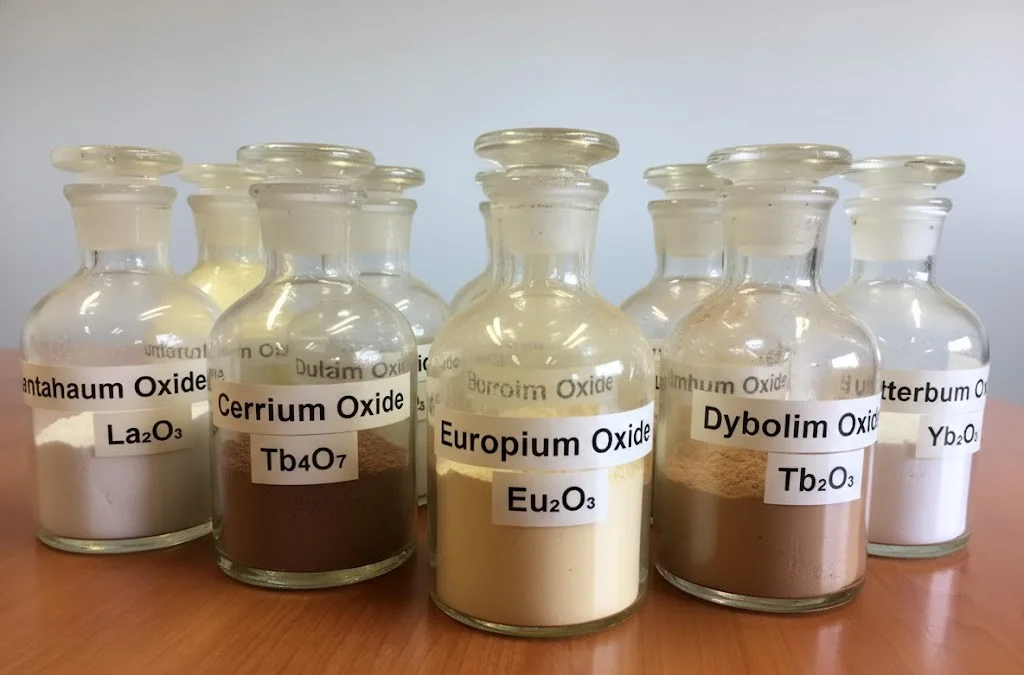
This timeline contrasts with the global deficit forecast by CRU for 2035 of 2,920 tons in dysprosium and terbium oxides. Another Australian company, Iluka Resources, is building a refinery at Eneabba in Western Australia that will eventually be able to process up to 750 tons per year of heavy rare earths. The facility is expected to be commissioned in 2027.
The company told media it has moderate amounts of heavy rare earths in its own material and has agreed a deal with Northern Minerals to supply heavy rare earths from its new mine in Western Australia, due to start production in 2028. Meanwhile, MP Materials, which owns the only U.S. rare earths mine, aims to eventually lift magnet output to 10,000 metric tons per year. The company plans to launch a heavy rare earth separation facility next year that will eventually be able to produce 200 tons per year of dysprosium and terbium.
MP Materials’ mine produces mainly light rare earths, with its deposit containing less than 1.8% medium and heavy rare earths. The company has stockpiled several hundred tons of medium and heavy rare earth concentrate in preparation for magnet production, but this only contains 4% dysprosium and terbium, according to the company’s website. These small quantities underscore why feedstock providers remain critical for achieving ambitious plans to integrate the entire supply chain from mining to finished components.
The July deal comprising billions in support buoyed expectations, yet the processed output improvements in light rare earths don’t address the fundamental problem with heavy elements availability. These elements help magnets retain magnetic qualities under the high temperatures found in electronics, electric vehicles, and wind turbines—making them vital for everything from consumer devices to defence technology applications.
Brazil is emerging as a major heavy rare earth (HREE) ore exporter, but the real challenge lies in processing capacity, said Neha Mukherjee, a rare earths analyst with Benchmark Mineral Intelligence. “While the technology for HREE refining is expected to be available globally by 2029, costs outside of China remain 5–7 times higher,” Mukherjee explained.
Higher amounts of heavy rare earths are found in ionic clay mine deposits, where the standard extraction technique involves flushing the deposit with chemicals. In Myanmar, this has caused contamination of water supplies and deforestation. Western miners say they use environmentally-friendly extraction methods, but have sometimes met with scepticism and opposition from residents to mine plans. Rare earth mining of deposits from monazite ore includes radioactive elements uranium and thorium, which can be difficult to dispose of safely. “A key bottleneck for new production will be the higher negative impact of heavy rare earth mining and processing on the local environment,” CRU’s Goel said.
Some companies, including VAC, have produced magnets without heavy rare earths, but they have limited applications, such as slow-moving wind turbines, said Eschen. “The moment you go into other applications—for example, a motor for EVs, turning very fast, going 120, 140 degrees Celsius—then you need the heavies.”
This technical requirement explains why the West scrambles to fill heavy rare earth gap as China rivalry deepens across geopolitical lines. The number of potential solutions remains constrained by resources, time, and environmental considerations. As Western nations make progress toward alternative supply chains, the retain of magnetic qualities at extreme operating conditions continues demanding these critical heavy elements that remain concentrated in Chinese processing capabilities and select international deposits.